Remembering What Matters Most by Christine Mason Miller

I have become a worrier. Within five minutes of leaving our house, whether it is to run a quick errand or go out of town for five days, I immediately start scrolling through a mental checklist. Did I leave any candles burning? Is the back door locked? Are there any stray objects on the floor that Tilda could choke on? One after another, I try to put myself back in the moment of handling these tasks. Oh right, I blew out the candle before I took a shower, I think. Oh yes, I remember locking the door this morning.

I’m not sure when or why this started, but it has become a bona fide part of my daily routine. It isn’t the kind of worry that creates stress, per se; it has more to do with not wanting to invite disaster or create chaos due to my inattention. I don’t want to lose something precious because of a minor oversight. I want to take good care of what I treasure most.

Being on the verge of fifty, and watching many of my closest friends care for their dying parents, I feel myself entering a new phase of life that isn’t about my early-twenties fearlessness and dare-to-dream-big bravado, but about a visceral awareness of the fragility of life. That sounds like a phrase that belongs on a postcard with a picture of a sunset or a babbling brook, right? Life is so precious. We only have to much time. How many times have we read or heard these phrases? In their repetitiveness, they feel trite.

But with every piece of news that has words like cancer, dementia, and hospice – with every request for a prayer for someone who is not long for this world – I pause, and I take a deep breath. It feels important to stop whatever I am doing and acknowledge that I, too, will face these experiences – with loved ones, for myself. I float upward, able to take in a wider perspective of my past, present, and future, and I see what’s coming on the horizon – possibilities that are now much closer to me than they were when I moved to the west coast at the age of 27, graduate degree in hand, ready to take on the world.

That spark in me is not gone – I still have grand ideas and imaginings related to creativity, travel and work – but I have become much more methodical in the decision-making process. I actually think I’ve become a bit too careful as of late, but this shift is something I’m still working out. I have allowed myself to lean toward the opposite extreme of my usual “Let’s do it!” attitude in order to see how far I need to go to find the right balance between my longings as an entrepreneurial, artistic being and as a woman with a husband, family, and home. For many years, it felt like these were in a battle for my time, attention, and energy. It is only in the last year that I have managed to settle down their quarrels, a mediation I’m still figuring out.

A while ago, someone asked for my advice on a work-related issue. There was a job offer on the horizon, one that would have taken her away from home five days a week – away from home as in an entirely different state. She was grappling with the feasibility of a long-distance commute and the impact that could have on her marriage, home, and family. My advice to her was simple: Get clear on what she treasured most in the world, and then decide whether or not taking the job would support and strengthen that or diminish it.

This is the question I ask myself constantly these days – any opportunity, idea, or endeavor is weighed against a very short list of personal priorities. Which, if I’m honest, doesn’t necessarily make things easier. It requires great compromise and sometimes saying no to things I would otherwise leap at. But I simply don’t want to wake up five or ten or twenty years down the road wishing I’d done a better job caring for what I loved most in the world.

Which brings me back to the worrying, which isn’t just about the doors being locked or the candles burning, but also about how long my husband has been out on a motorcycle ride with calling me or whether or not my mom is having a restful day. I want to make sure everything and everyone within this tiny realm of home and family is taken care of. I want to enjoy every bit of all these things I love most, and appreciate them while I can.

Beyond the worry, my treasured routines are very simple. I rub Tilda’s belly before I get out of bed, I make a frothy cafe au lait every morning. I almost always stop whatever I’m doing to assist my husband if he tells me he needs me. I talk to my best friend on the phone nearly every week. I wash my face every night, and always hang up my jacket when I come back home from a walk. In those routines, I am reminded that being alive is about the very small things, the very tiny experiences. And in those peaceful respites from the feeling that the world’s traumas are rapidly closing in on my tiny haven in Santa Barbara, California, I balance out those moments of fretfully reviewing my just-left-home checklist. I remember it is all OK. I recognize how fortunate I am.

About the Author: Christine Mason Miller

Christine Mason Miller is an author and artist who has been inspiring others to create a meaningful life since 1995. Signed copies of her memoir, Moving Water, are now available at www.christinemasonmiller.com.

Dear Blinking Cursor by Tabitha Grace Challis

Copyright: peshkov / 123RF Stock Photo

Copyright: <a href='https://www.123rf.com/profile_peshkov'>peshkov / 123RF Stock Photo</a>

Dear Blinking Cursor,

Yes, I see you. I know that you sit there waiting. “Great things are to come,” you seem to telegraph as if you were an 18th century Morse code. My head spins with stories. They have since I was tadpole-like in my ability. I have scattered words from there to here and yet, you still blink.

I’m no Euripides. No one will probably be reading this tangled web of beautiful lies I spin thousands of years from now. I will not be quoted and misquoted on Facebook like Mark Twain when all that’s left of me is dust.

And yet, you blink. Eager to be fed.

Do you not know I have a kid who needs another glass of milk? A husband with lips made just for kissing? Do you not see my hands full of bags of cat food?

You relentlessly wait. Wearing at my mind. I close my eyes and yet you are there. I’m renaming you Godot. Curse you, cursor, and your all-the-time-in-the-world stare at me.

Sometimes I imagine that you’re the entrance to a black hole. If I could just unlock you, the words would come out on their own. It’d be so easy. Less effort. Less feeling like I was letting you down. Tap into the deep part of my brain, o blinking one. Release the wild things.

I’m so tired of disappointing. I picked up this perfection mantle at age 10 and have been unable to drop it. It is tattered, frayed and worn. I want to do it all, be it all, see it all, taste it all. Yet it leads to nothing.

The whispers I ignore tell me that I’m a writer. I was meant to tell those stories. But the siren’s call (the loud kind, not the irresistible one) of life’s essentials pulls me away from you, cursor. There’s piles of laundry to tackle, dishes to clean, a dog to wash, bills to pay, and floors to vacuum.

Life happened while I was busy making plans to return to you.

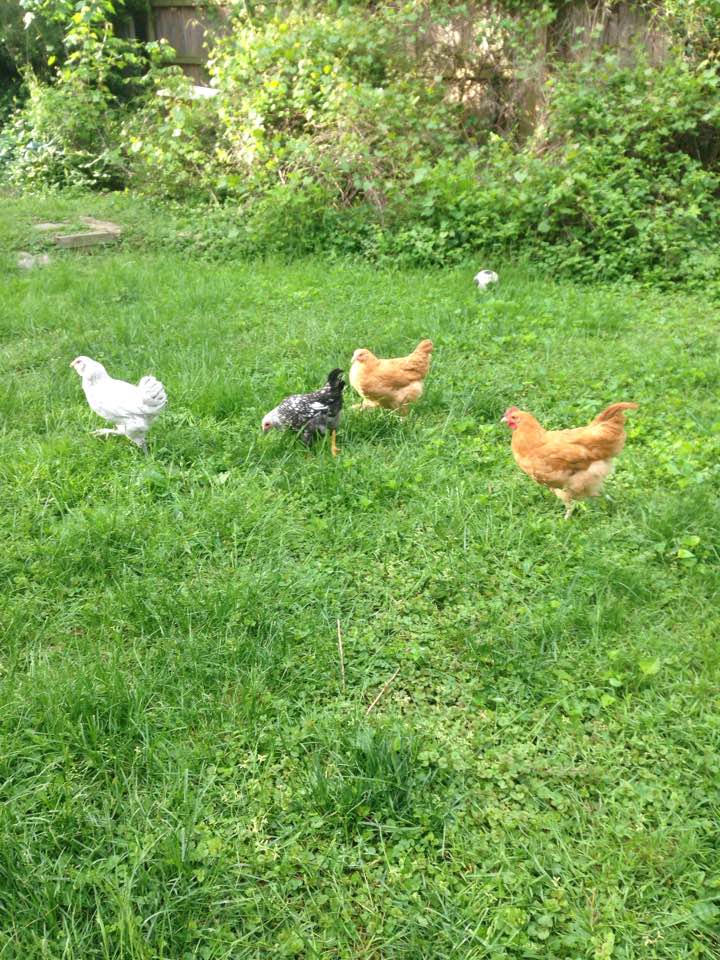
Don’t give up on me, please. There are tales that I need to tell you of chickens that live on the roofs of odd buildings. I long to lose myself to chasing you across the page. I ache for there to be more and more and more words that follow you like Orpheus chased Eurydice. Were that my ending were not so tragic.

I like to think I’d give up so much just to please you. I’d sacrifice time and effort and energy. Yet, I’m spent. There are days when I can barely lift my thought process beyond survival.

Could you wait? Or will this be like the pot of water that’s been left to boil on the stove too long? Empty. Charred. Will my words burn away and be of no use to anyone?  Will you keep blinking your slow, patient  S.O.S. that calls to me? I want to be like my author heroes. I want to stick to a page until the story unfolds. I want to chase you from here to the end. The spirit is willing, but the flesh is so weak. I binge watch old TV shows as you sit in a sea of white. I play games on my phone to drown out the noise of your silent requests.

Don’t lose hope, little cursor. Together we will do great things. Perhaps we will attack them like they did on D-Day. A full-scale invasion will march forth and you will not have blinked in vain.

Too much?

Then I’ll be truthful.

Please wait. I’m coming. In the snatches of time before falling asleep. In between the rush and bustle of the every day, you and I will dance. I will find the quiet times to put thoughts to words, inaction to action, and magic to paper.

And it will be beautiful.

About the author: Tabitha Grace Challis

Tabitha Grace ChallisTabitha is a social media strategist, writer, blogger, and professional geek. Among her published works are the children’s books Jack the Kitten is Very Brave and Machu the Cat is Very Hungry, both published under the name Tabitha Grace Smith. A California girl (always and forever) she now lives in Maryland with her husband, son, and a collection of cats, dogs, and chickens. Find out more about her on her Amazon author page or follow her on Twitter: @Tabz.
Listen by Pat West

My parents died
when I was a baby.
Family and friends passed me around.
Nine cities in six years.
Never stayed in one place
long enough to sign a lease.
You want to know more?
Before my grams died,
she told me when an intruder
appears in my dreams, it’s an omen
to move. First time, in San Francisco
I missed the signal. Next day,
an earthquake caused a fifty foot section
of the Oakland Bay Bridge to collapse
right behind my car. In Miami,
after Andrew blasted through my apartment,
I paid attention. I’m not making this up.
Thought about Toledo, but nothing happens
in that town, so I headed north
to Boston just in time for Fleet Week,
and a long string of dull men
with tattoos of serpents and dragons.
This time I didn’t wait for an intruder,
tossed a coin between here and Portland,
Seattle won. Grams also said,
when I came close to home
she’d send me a sign. Few days later,
I heard her whisper, Stay a while,
find a man to yawn with in the morning.
Then you saunter into my life.
You think I’m crazy. Here’s crazy.
When you look at me, I’m an exotic belly dancer.
When you touch me, I hear wolves.
When you kiss me, I’m one of them.

About the Author: Pat West

PatWestBio

Pat Phillips West lives in Olympia, WA. A Pushcart and Best of the Net nominee, her work has appeared in Haunted Waters Press, Persimmon Tree, VoiceCatcher, San Pedro River Review, Slipstream, Gold Man Review and elsewhere.

Spaghetti Tuesday by Julie M. Terrill

It must be 6:30 am. My eyes are still closed but I can feel her looking at me.

I know that when I open them Bee’s nose will be millimeters from mine and her chocolate brown eyes will be watching me intently, tail wagging happily. In silence I meet her gaze and smile. She is a Rhodesian Ridgeback mix and even with my bedframe on risers we are nose to nose. She reminds me of the lion statues that stand sentinel at the doors of The Chicago Art Institute. She remains still until I say in a barely audible whisper, “you are invited.”

With a bound she joins me for our routine belly rub in silence. It is not that I am grouchy. I just don’t like to talk for a while. My family knows that a smile and a wave is the extent of my communication for the first few minutes of my morning. My mom says this has always been the case.

Bee and I enjoy our quiet snuggle and then I hear it… Rain! I love the rain and don’t want to waste a moment of it. I rush out the back door and dance barefoot in the grass. My flamingo-print pajamas are soaked and I sing “Happy” by Pharrell Williams. Bee watches and waits on the dry porch.

Provided there is no lightning, it is a pretty safe bet that if it is raining I am outside dancing.

Back inside I heat some water and go dry off. I steep my favorite tea, purchased during a recent trip to Ireland, and make a mental note to order more soon. I am enjoying my Irish Breakfast Tea in the dragonfly mug I received from my friend McGillicuddy. With a nod, I raise my mug to her and send a quick text telling her so.

The rain falls harder and the wind picks up.

After tea, a bagel and some blueberries it is time to get down to the business of Spaghetti Tuesday.

Not long ago I was a photographer and writer paralyzed with fear, unable to muster the courage needed to hit the send button on the growing number of email queries and pitches that were instead relegated to my draft folder. I had quite a collection of essays, photographs and stories that waited unseen.

I was unaware that gathering the basic tools and materials needed to build my dream of a creative life was not enough. I did not yet possess the skills to utilize those tools. Fear of ridicule, rejection and dismissal reinforced my state of inertia. I desperately needed to change and was referred to writer and business coach Christine Mason Miller. Christine re-framed the process for me.

You know how some people throw a piece of spaghetti at the wall to see if it sticks and is ready? Christine told me to throw my creative spaghetti out into the universe and see what sticks. Undercooked spaghetti is not a personal rejection; it simply needs a little more time.

Brilliant! Spaghetti Tuesdays are now a part of my weekly schedule.

Today’s spaghetti-throwing menu features half a dozen photo submissions to the stock agency, two article pitches and two applications for Artist In Residency programs. I update my Curriculum Vitae, compose both Artist’s Statements, Project Proposals and upload my portfolio. One of the AIR programs is in Europe and it is likely that I will not hear from them, but that’s okay. It’s just spaghetti.

I laugh as I remember the photo I sent to Christine of the words “Throw Spaghetti” written in purplish lipstick on my shower wall.

The rain stops and dark clouds hang low, heavy with the promise that this lull will not last long. I grab my sneakers, Bee’s leash and harness and we head out the door. Bee, as always, is incredibly curious and I indulge her. We slow to check out every puddle and I rescue each wayward snail lured onto the pavement by the storm. My house is in sight again when the raindrops resume and I, of course, dance. Bee is far less amused and picks up her pace now eager to return home.

We dry off and I wash up before I head to the kitchen to begin chopping fragrant herbs and colorful vegetables. Red roasted peppers, purple onions, deep orange carrots, golden corn kernels and bright plum tomatoes paint a colorful swirling palette in my stock pot. While the soup gently simmers and the glass lid clouds with condensation I work in my office space that sits adjacent to the kitchen. On one desk sits the gourd I have been working on for three weeks. Already etched with the wood burner, carved by hand and lightly sanded, today it is ready to begin staining. Slowly and meticulously I daub the tan stain over the uncarved portion of the gourd’s hard shell until my family returns home. I ladle supper into colorful soup mugs that were a Christmas gift.

I am pleased by the anachronism as I reach for the antique silver soup spoons that I love to use, chuckling at how my kids won’t use them because they were purchased at an antique store and were “used.”

It has been a good day, rainy days and Spaghetti Tuesdays usually are.

About the Author: Julie Terrill

julieterrill_bio

Julie Terrill is a photographer and writer with a passion for travel. For ten years, she’s told stories of empowerment through the lens of her camera in an array of unique landscapes, environments, and projects – from a shelter for children rescued from trafficking in Thailand to Faces of Courage, complimentary portrait sessions she offers to cancer patients in her community. She is a photographer and facilitator at Beautiful You and Soul Restoration retreats.

Connect with her at: JMTerrillImages.com

Counting My Losses by Sheryl Cornett

Lately I’ve been losing things: car keys, umbrellas, reading glasses, a cherished leather coin purse bought in London’s Camden Market twenty years ago. I kept only British pounds sterling in that purse, as a reminder that the next trip “home” to the Bloomsbury neighborhoods was just a few months away. I go there regularly to escape the oppressively humid North Carolina summers paying my way by teaching and writing.

Classes finished, deadlines met, I wander daydreaming through Regent’s Park or along the Thames’ South Bank leg of the Jubilee Greenway. I walk miles when in that beloved city, and my fit bit holds me accountable like an exercise partner. We have a daily conversation, in real activity-tracking numbers, about how life-giving and liberating these miles are. I record the miles in a moleskin journal as an affirming reminder-log. We check in with each other often.

So, last month when I climbed out of an airport shuttle at five in the morning, I heard the leather coin pouch tumble out of my bag, spilling change on the asphalt. I searched hurriedly in the dark for the three-inch purse. American Airlines was announcing Now Boarding, creating panic as I scoured under the oafish sixteen passenger van—but the purse apparently fell into a black hole.

Let it go. You can get another one next trip.

Later that same trip, the fit bit disappeared from my bra where it was snuggly clipped in place. Somewhere in Dallas Fort Worth’s ginormous Terminal D it worked loose and went AWOL. I hope someone who really needs one found it.

This loss is a reminder to all that I’ve been counting as well as losing in the past year.

I count steps-into-miles, as I mention. I track dollars, British pounds sterling, and euros while teaching study abroad. I count numbers of students in my classes and the number of semesters taught: autumn, spring, and summer, seventy-five semesters to date! I count calories and carbs; check my weight and blood pressure, mindful of the fluctuation of each.

I count pages and chapters written by me, and those read and re-read by me, written by my favorite authors and sister-writers. I count psalms and poems by friends dead and alive that resonate in my soul like music that lingers and won’t leave the room; poems that bring joy and wisdom and a place to share our humanity. Louis MacNeice’s lines from Autumn Journal surface to remind me that my “vitality leaps” among “[t]rees without leaves and a fire in the fireplace.”

Segue here to the biggest loss of all this year—loss of a spouse through divorce. The fit bit represents this in a quirky way: my former husband used to be (a lifetime ago), my walking partner; in fact, that’s how we courted back when we were both broke and single parenting.

The fit bit that went AWOL at DFW surprised me with its loss, at how unmoored I felt.

I realized it has been—for quite a few years—my most steadfast walking companion. A way to make sure I’m actually getting as much exercise as I tell myself I am, something that a walking or jogging buddy can confirm or challenge. It’s also my creative thinking, and head-clearing, and list-making time. Random thoughts of gratitude often bloom in me while getting in my steps. I also vent, sort out teaching conundrums, and compose emails while taking paths through the urban college campus where I work; while meandering through country parks and river walks.

So, in counting my losses along with these other things, I’m finding that counting them mindfully, being intentional and aware of the letting go, of the moving on is, in fact, cutting my losses in the best way. There are fewer and fewer flash floods of anger mixed with sadness. Let it go. No marinating regrets, no festering bitterness. The absence of a regular walking partner is a small shadow in the big-sky clouds of divorce. The silver linings are the friends, colleagues, and (serendipity!) even my adult children that I now call or who contact me to make a walking date, when schedules allow. What a gift! And how hard to get consistently on the calendar.

But my friend the fit bit is always available.

Earlier today, I laugh in sudden awareness of the beauty of solitary walks as well as the companionable ones.

It’s bright mid-winter, I’m trekking the Thames Path at high noon along Oxford’s banks. I spy a kingfisher swoop into the woods; the river scintillates in wavelets. I breathe in, lift up my face to the pale sun. My heart is firmly fixed in this moment. Then I remember: I’m meeting my daughter (who has flown to England to visit me on this research trip) on the other side of the river for a hike further along this same footpath. We’ll go the full eight miles to a neighboring village and then stop for dinner at a country pub. We’ll sit by the open fire for several hours sometimes talking, sometimes staring at the flames. After writing a few letters and postcards, we’ll catch the last bus back to London.

Cutting losses has evolved into counting blessings: the gifts of faith, family, and vocation.

The riches of friends and fellowship. The treasure of genuine, healthy relationships and the ongoing healing they confer; the gift of life fully lived, apart from another’s emotional and financial behaviors that, for many years, stormed my days like a cycle of North Carolina hurricanes. Luckily, I found a fit bit on e-Bay for the right price.

We’re back in stride, the pair of us. We’ve moved forward through the stained glass autumn leaf color into the sculptural beauty of winter-trees without leaves, into the next season of finding “gains” better than those losses; in counting joys, pleasures, and the blessings that abound if only I have the eyes to see their numbers.

About the Author: Sheryl Cornett

Sheryl Cornett teaches at North Carolina State University, where she is the 2014-2017 University Honors Program Author Scholar-in-Residence. Her recent poems, stories, criticism, and creative non-fiction appear in Art House America, Southern Women’s Review, North Carolina Literary Review, Image, Pembroke Magazine, Mars Hill Review, and The Independent Weekly among other journals and magazines; and in anthologies such as In a Fine Frenzy: Poets Respond to Shakespeare, The Global Jane Austen, and Christmas Stories from the South’s Best Writers. Visit her at www.sherylcornett.com

The Truth by Æverett

Sea of Fog by Yannick Pulver via Unsplash

Sea of Fog by Yannick Pulver via Unsplash

It dies slowly, panicking, shivering in the threadbare sheet of its own skin.

The light fades and the cold creeps in.

It begs. Begs for air.

There is no air. The others have stolen it all away. So it will suffocate.

Suffocate under the dense weight of fear and hopelessness.

Suffocate with the world in all Her glory.

About the Author: Æverett Æverett

Æverett lives in the northern hemisphere and enjoys Rammstein and Star Trek. He writes both poetry and fiction and dabbles in gardening and soap making. She has two wonderfully old cats, and a dearly beloved dog. He also plays in linguistics, studying German, Norwegian, Russian, Arabic, a bit of Elvish, and developing Cardassian. Language is fascinating, enlightening, and inspirational. She’s happily married to her work with which she shares delusions of demon hunters, detectives, starships, androids, and a home on the outskirts of a small northern town. He’s enjoyed writing since childhood and the process can be downright therapeutic when it’s not making him pull his hair out. It’s really about the work and words and seeing without preconceptions.

How I Start Each Morning by Felicia C. Sullivan

When you live in an era where smartphones have become appendages, conversations are emoji-based and reactive, and we’re suffering from information overload and choice paralysis, it can be challenging to sit down and just think.

Attention, not information, is our greatest commodity and it seems as if everyone’s vying for a piece of our day with news alerts, notifications, emails, texts, status updates, and phone calls. They want us and they want us now, and sometimes it can feel downright exhausting to be a participant in such a frenetic culture, during such a divisive (and frightening) political time. Yet, in following the law of diminishing returns, it is possible to know too much, to be too connected, to hyper-publish and battle in 140 characters or less—all at the expense of our sanity and the art we need to so desperately and fervently create.

Sometimes you might think, why bother? I’m just one more cog in the wheel, another voice amidst the noise, but I think it’s healthy, even necessary, to withdraw from the world, create and share that which is real and honest, and be guardians of our time as much as we can.

Although it seems as if people are up and tweeting 24 hours a day, I have found a pocket of time, in the early morning, where I can create something that has a longer, and more potent, shelf life than a status update. Waking early also helps me set an intention for my day. I normally wake at 5 and I don’t bolt out of bed. Instead, I lie awake for 15-20 minutes, calmly breathing, cozying up to my cat and mapping out the day ahead of me. This slower pace allows me to consider each task deliberately and with intention and on a more practical level I don’t feel like I’m having a panic attack before my morning coffee.

Since I have to balance the demands of an always-on consulting practice with novel writing, I tend to devote 2 hours every morning to anything that will move a personal or creative project forward. I’ve found that setting aside time for creative work, even scheduling it, rarely makes me feel resentful of the work that “pays the bills” because everyone now plays harmoniously in the proverbial sandbox. My morning time isn’t simply about writing, rather, it’s about all the things I need to do to bring a project to life. On good days I write. I never worry about the quality of the work (that’s for later when I’m breaking out my pen and feeling particularly surgical); I only care that I’m working. I close out my WIFI because I’ve found that texts and notifications still find a way to weasel me away from the page.

I know the world is out there, possibly aflame, but I’ll get to it in due time.

On the days when I’m blocked, I focus on research, organization, brainstorming, writing exercises, reading, or editing—all essential tasks that are needed to complete a project. At the end of the two hours, I feel productive regardless if I’ve written a single word. My morning process focuses on creation and organization and the evenings are devoted to review, editing, and refining. And the cycle continues anew on the following day.

The information culture is pervasive, so much so that you can get caught up on clickbait, fake news, hot takes, and opinion pieces that are simply noise. After I’ve spent time creating or working on a project, I make a point to read long-form articles and essays on everything from politics to brain science. I think we’ve shifted to writing that’s sometimes too succinct, and I feel relieved in the moments when I’m able to spend time reading through a comprehensive, thoroughly researched point-of-view. Doing this makes me less reactive and more methodical and thoughtful in all my tasks throughout the day. Even if you have 5-10 minutes, listen to a podcast during your commute, read one long-form article, take the time to allow your attention to linger. I’ve also found that I’ve regained the attention span I previously lost.

Remember a time when you were able to read a book for hours and not have the TV blasting or dealing with the blow-up that is your smart phone?

I often think we make too many goals and to-do lists, which invariably set us up for failure. After I do my ‘thinking’ work and read, I write down one thing (yes, one) that I want to achieve for the day. The task will be specific and realistically achievable. For example, I hate organizing my bills and bank statements, so I’ll devote an hour to the task. Regardless of what happens in the day, I know that it’s probably feasible for me to complete one task.

Creating, reading, and intention-setting –this is how I start each morning. Some days, it works beautifully and I’m productive. Other days, I’m tethered to my email putting out a fire. However, what matters most is that most of my days are comprised of the former instead of the latter. Most days I’m focused on living mindfully and that seems to even out the days that erupt in total chaos.

About the Author: Felicia C. Sullivan

Felicia C. Sullivan is the award-winning author of the critically acclaimed memoir The Sky Isn’t Visible from Here (Algonquin/Harper Perennial) and the founder of the now-defunct but highly regarded literary journal Small Spiral Notebook. She maintains the popular lifestyle blog lovelifeeat.com. Born and raised in New York City, she now lives in Los Angeles, CA.

Follow Me Into the Dark is her first novel.

Tuesday by Patricia Wellingham-Jones

Every Tuesday the ritual unfolded:
the basket of willow rods,
Dad’s white broadcloth shirts
stiff with starch, the coke bottle
with sprinkler head attached,
the careful folding of dampened lengths
rolled into long sausages—
shirts, napkins, tablecloths, blouses,
the full cotton skirts in their gardens
of red and yellow, blue or green checks,
Scottish plaids gathered into a circle
on a tight waistband.

Even on Tuesday in July’s broiling sun,
that female figure bent over the narrow board,
left hand crimping and smoothing the cloth,
right arm in long sweeps of the hot iron, pushing
the tip lightly into the points of collars,
the box of pleats, the hundreds of gathers.

Every Tuesday of my childhood
I watched my mother turn down lunch dates,
tell friends she was busy, dodge my father’s caresses,
put away card games, rub her arthritic arms
with deep sighs. I saw her regard the slim board
with a look I couldn’t decipher
while the hangers of fresh crisp cottons
waited for the next wearing,
the first spill, the curl-up-in-a-chair crease.

By the time I reached twelve, I vowed
I would wear wrinkles and
Tuesday would be a day
made for fun.

About the Author: Patricia Wellingham-Jones

PatriciaWellingham-JonesPatricia Wellingham-Jones is a widely published former psychology researcher and writer/editor. She has a special interest in healing writing, with poems recently in The Widow’s Handbook (Kent State University Press). Chapbooks include Don’t Turn Away: poems about breast cancer, End-Cycle: poems about caregiving, Apple Blossoms at Eye Level, Voices on the Land and Hormone Stew.

The Smell and Taste of Things Remain Poised a Long Time by Pat West

After a line by Marcel Proust

Winters my mother stirred her rustic root vegetable stew
in a kitchen dizzy with steam. The aroma of rosemary
and turmeric saturating the entire house.

That scent of sawdust circled my grandfather.
A man who used lathe, grinder, chisel, plane
and rip saw. A man with hands rough as a rasp.

A summer evening in Kentucky
visiting my sister. Glasses of Shanghai silk
merlot, savoring black cherry, currant, cedar
and green olive, still so clear on my tongue.

Damp air, heavy with seawater,
sunlight cathedraling through a torn place in the clouds.
My husband and I on the north cusp of Pike Place Market,
where we shared Etta’s Dungeness crab cakes
with tomatillo cocktail sauce, tangy yet sweet.

The smell of fresh-cut grass that June evening
we spread a blanket in the backyard,
under a sky whose wide-apart edges
would spend all night coming together.

On mornings when my muscles harbor a rusty ache,
my husband’s old, blue sweatshirt feels like a hug.
Even though he’s been gone twenty-five years,
and it’s been washed hundreds of times,
I inhale his cologne, fresh, spicy oak moss.

About the Author: Pat West

PatWestBio

Pat Phillips West lives in Olympia, WA. A Pushcart and Best of the Net nominee, her work has appeared in Haunted Waters Press, Persimmon Tree, VoiceCatcher, San Pedro River Review, Slipstream, Gold Man Review and elsewhere.

Instant Mystic: Stirred, not shaken by Jeanette McGurk

Stealthy and luxurious.
The original super spy.
It creeps in unnoticed until it is everywhere,
thick,
quick sand of the air.

You see something,
an arm reaching out to take you within.
But it is only a tree branch.
A lonely blanket heavy with chill.

It feels deceivingly safe.
Right until CRASH!

Then it is gone.
No trace left behind.
Only the memory of a lover’s breath on the back of your neck.

About the Author: Jeanette McGurk

jeanette_mcgurkJeanette McGurk is a Graphic Designer who entered the world of writing through advertising. She discovered writing a lot of truth with a little fluff is a lot more fun than the other way round. Now that she is no longer spending time making air conditioners, tile floors, IT and Botox sound sexy, she writes about the unglamorous yet wonderful moments of life for people like herself; in other words, anyone looking for interesting ways to put off cleaning and doing laundry.

She is a curmudgeon and doesn’t Twit or Instagram. She has heard the blog is dead but since she has finally figured out how to do it, that is the museum where you can locate her writings. http://jmcpb.blogspot.com/.