Using Essential Oils as an Aid in Seasonal Transitions by Bella Cirovic

Instrumental_Care of Creative Soul

I absolutely love this time of the year. We are not quite out of the grips of winter, but we can see spring on the horizon, like the light at the end of a long tunnel. After an indulgent season of nesting, catching up on movies, TV series, and audio books, I feel like I’m ready to dip back into my creative writing and photography.

For me, the cold months were a time of deep rest and rejuvenation with limited social commitments and absolutely no work deadlines. My work feels like it’s on the verge of deepening into its next evolution. I’d really love to explore this a bit more but my body is finding it difficult to match the pace that my mind is moving at.
Bella Oil Article 2When this happens, I rely on my sacred essential oils to aide in lifting me out of one season and ushering me into the next. There are a couple of different ways I use the oils and I’d like to share them with you. But first, let me explain what essential oils are.

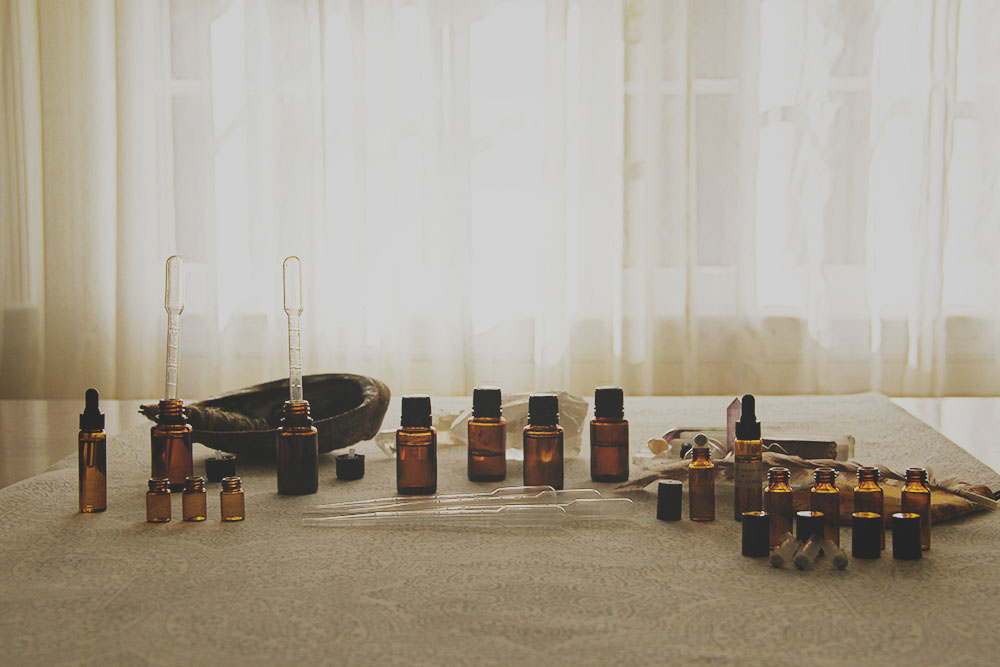
Therapeutic grade essential oils are derived from plants via steam or dry distillation. They carry the pure essence of plants which makes them highly potent and alive. Essential oils have been used for centuries for healing purposes. A therapeutic grade essential oil will come in a dark colored glass bottle to shield it from sunlight which can alter its potency.

Essential oils can be used in multiple ways. They can be added to a spray bottle with water or witch hazel to create a room spray, they can be added to an oil diffuser to permeate a room with scent, they can be diluted with a carrier oil to create a perfume, or they can be directly applied to the skin (be sure to patch test prior to check for rash or reaction).

There is so much information that can be found online with regard to essential oils and their uses. I have spent many hours researching and taking notes on which oils will help with a particular ailment or feeling I’m having. It’s really helpful to have this information at hand and in a pinch when it is needed. However, another way to choose an oil would be to tap into our intuition and ask ourselves this question: “What do I need right now?” I have found that each oil I choose this way has been the best oil for me at that time.

I love the scent of lavender oil. It’s calming and relaxing, exactly what I need just before bedtime. Instinctively I know just by how it makes me feel that when I am in an overactive or excited state of mind and I need to calm down, I can reach for lavender oil. I highly encourage experimentation and play as a way to get to know the oils better.

So in the transition from winter to spring, my intuition tells me to reach for citrus based oils. I think it’s Bella Oil Article 1because they remind me of summer and sunshine. Bergamot, lime, orange, and lemongrass have been my go to scents to diffuse at home and at work. It is said that citrus scents are energizing, uplifting, and they increase our mental awareness. Yes please! Because citrus fruit grows on trees, I feel like they pair well with a wood scent.

At my office I have been diffusing a combination of grapefruit and sandalwood which is said to aide in calming anxiety. This combination works really well in keeping me aware of my surroundings while feeling relaxed enough to begin writing.

I created a lime and cedar wood combo in a spray bottle with water that I spritz around the house when I get home from work. The lime is tangy while the wood is earthy and warm. It’s a vibrant and welcoming scent that piques my curiosity and imagination which is perfect for when I am ready to cook dinner.

Pairing citrus with woods has worked really well for me at the end of this cold weather season. It helps prepare my mind, body, and soul for the warmer weather that is just around the bend and it infuses my work with a fresh perspective. I daydream a little bit longer which creates space for ideas to grow. Essential oils play a huge role in the expansion of my creative work and tend to my spirit through any transition. They are playful healers and I encourage you to give them a try to see how they enhance your creative life.


About the Author: Bella Cirovic

Bella Cirovic BioBella Cirovic is a photographer and writer who lives with her husband and daughter in the suburbs outside of NYC. She writes on the subjects of self care, body love and nourishment, crystals, essential oils, and family life. Catch up with Bella at her blog: She Told Stories
Sunday Brunch: Guitar Journey

Sunday Brunch With Melissa Bartell

There’s something magical about walking into a store that sells musical instruments, even if you’re not a musician. Maybe it’s because all the wire and wood, all the skins and snares, represent more than just the instruments they compose, but the music they will eventually produce. Maybe it’s because bows and sticks and mallets and pics whisper to the most innocent, childlike, fun-loving parts of our brains, telling us, no – urging us –  just to play.

Maybe it’s because we know that when we’re sitting at a piano keyboard, stretching our arms out to get a violin ‘fitted,’ or cradling the curves of a cello against our bodies we’re not just considering the purchase of a musical instrument, we’re buying possibility.

I hadn’t been into an instrument shop in years, but last August, I recognized that it was finally time to follow through on a dream: after 31 years of cello, I was finally going to take the guitar journey I’d been flirting with, and never committing to, for years.

I was going to buy a guitar.

I started on the internet first, of course, researching types of guitars, and learning a bit about the instrument so that, at the very least, when I entered a brick and mortar store, I’d be able to speak intelligently.

My research taught me that I wanted a six-string acoustic guitar. My taste informed me that I wanted an instrument that would be good for folk music. My history with my cello, and the process of shopping for that told me that I wanted a guitar that had as much real wood as possible. Guitar HandsMy size – I’m exactly five feet tall and have fairly small hands – made a smaller instrument seem like the wiser choice. My budget dictated that I not spend more than $500 for my first guitar.

Armed with this information, recommendations from friends, and a few things I’d learned from a guitar blogger who also reviews instruments, I went to my local Guitar Center.

At first, I was a little daunted. Most of the people in the room were sporting visibly edgy looks – I saw piercings that surprised even me – and the vast majority were twenty-something males. I was expecting them to look at me, short, round, white, old (although I still get carded), hobbling because of a recent knee-injury, and not give me the time of day.

I was wrong of course, mostly because I’d forgotten the bond of musicians, the one that is just intrinsically there. It’s this little undercurrent that says I know you even if you’ve never met the other person, and even if you play drastically different instruments.

“I’ve played cello forever,” I said, “but I’ve always wanted to play the guitar.”

The long-haired sales clerk who sported a few very well-placed tattoos on his muscular arms and had the piercings in his ears filled with discs the diameter of quarters, smiled at me. “Okay, let me ask you some questions.”

And he did.

What kind of music did I want to play? Was I looking to record or just have an instrument to learn on. Had I tried any guitars already? Was there a make I had in mind? How much did I want to spend?

I answered his barrage of questions and he led me to a room full of guitars. “There really isn’t that big a difference between a ‘travel’ guitar like the Little Martin that Ed Sheeran uses and a full-size guitar, but those few millimeters can make a difference. Try some out, let me know if you have questions.”

My husband had come with me for support and consultation. Like me, Fuzzy is a musician, but not a guitarist. He’s not even a string player! His instruments are piano, trumpet, and accordion. (No, really, accordion.)

Still, it was nice to have someone there to help me lift the guitars off the racks, and give me an external opinion that wasn’t colored by my initial overwhelmedness – I mean, a room full of guitars – really.

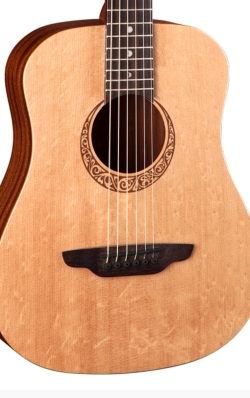
I strummed about five guitars that day. Luna Safari I had no intention of buying one on the first outing unless I fell in love with it, and left pretty much thinking I’d be back in a week to get the solid spruce-top Little Martin. It was at the top of my price range, but Martin is a good brand and I liked the feel of it.

I’m glad I waited to buy it, though, because in the meantime, I discovered a brand called Luna, that specialized in guitars that were designed by, and marketed toward, women. The Luna guitars that I looked at online had everything the Little Martin had, but they were also pretty.

Obviously, what a guitar looks like does not affect its sound in the slightest, but when I bought my cello, I was able to customize it so that the fittings are rosewood, which gives it a more feminine look. Was it wrong, all things considered, to want my guitar to be sort of pretty and feminine also?

My next issue was that the spruce-top travel guitar Luna wanted was not in stock at any of the instrument shops near me. I could have ordered it from Zzounds (a company I highly recommend for recording gear), but even when you think you know what you want, you should never buy an instrument without trying it first.

I did more research, and finally, the day before my birthday, Fuzzy and I drove to the Guitar Center in Dallas (as opposed to the suburban branch I’d initially visited), where a man who was a dead-ringer for Anthony LaPaglia (back when he played Joe in Empire Records) greeted us.

“I know you don’t have the Luna I’m looking for,” I said. “But you have a Luna travel guitar that isn’t spruce-top and it will, at least, let me see how it feels.”

He showed me several smaller guitars, including a Baby Taylor, that was too pricey and not as pretty, and then I played the laminate Luna.

It sounded like a cigar box.

But it felt like I’d met an old friend.

(Just for fun, even though I’d just made my choice, I also played a cotton-candy pink Luna electric-acoustic, but I didn’t like it nearly as well, even though it looked cool.)

We went back to talk to not-actually-Anthony-LaPaglia and he said, “Oh, we can special order the model you want. If you have it delivered to your local store, there’s no shipping fee.”

Four days later, I was holding my Luna Safari Supreme in my hands, tuning it with an app I’d downloaded to my iPhone, and taking my first guitar lesson via a collection of YouTube videos. I haven’t started formal lessons with a live teacher yet – that will probably be this summer’s project – but I’m enjoying the challenge of learning a new instrument after all these years.

I’m also enjoying telling people about my guitar shopping experience, which is best summed up thusly: When I told not-actually-Anthony-LaPaglia that I’d played cello for decades and wanted to take up a new instrument, he looked at me like I was some kind of musical goddess.

“I tried the cello once, a long time ago,” he confessed. “I couldn’t figure it out. Dude… cello’s hard.”

I don’t remember what my response was, but I know that my journey with this guitar – with the wire and the wood, and learning a whole new way of using my hands and fingers, feeling this instrument become part of me – is only just beginning,   and I can’t wait to find out where it takes me next.

I mean, anything’s possible.

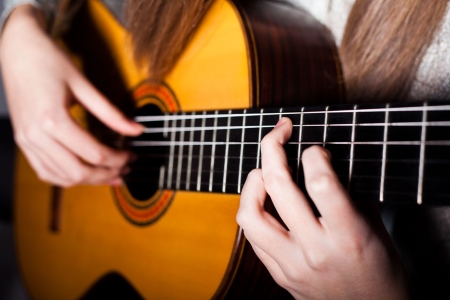
(Image credits: Guitar Player is from djoronimo / 123RF Stock Photo; Guitar Face is from Luna Guitars.)

About the author: Melissa A. Bartell

Melissa A. BartellMelissa is a writer, voice actor, podcaster, itinerant musician, voracious reader, and collector of hats and rescue dogs. She is the author of The Bathtub Mermaid: Tales from the Holiday Tub. You can learn more about her on her blog, or connect with her on on Facebook, Instagram, or Twitter.
Experience Being Seen by David Lazarony

Through the Lens

I’m curious, it is part of my human nature. One day while looking at one of my paintings, I felt like the person was looking back at me. How is this possible? How could a few brush strokes of paint cause me to feel like I was being seen? Then it occurred to me that I was doing the seeing. Since then I realized that each of my paintings, whether it was a portrait, a still life or a landscape is really a self-portrait. You dear viewer are experiencing the world through my eyes and my hand. I hope my paintings are able to convey the feeling I was experiencing while I was painting them. Yet no matter how pure my expression once you view my paintings your life history literally enters the picture and your experiences reflect in how you experience the paintings. Let’s go on a little tour of a few of my paintings together and I’ll show you what I mean. But before I tell you about each painting, first just notice how each painting speaks to you. How does viewing the painting make you feel? What thoughts enter your mind?

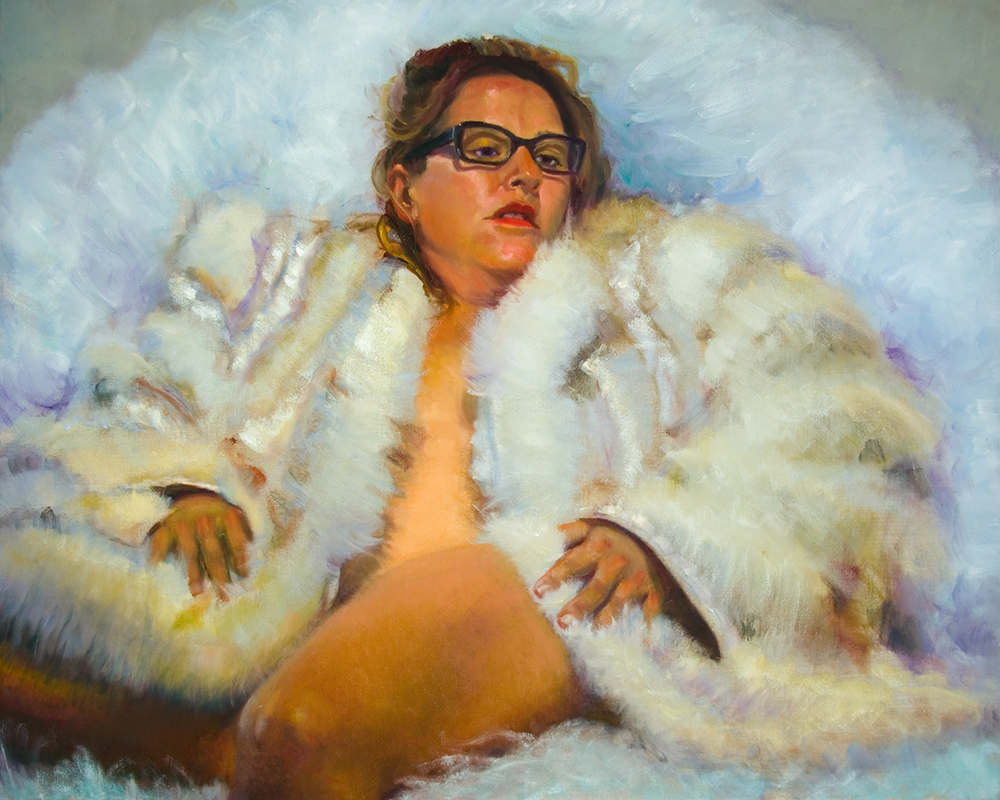
2014-10-14-Fluff by David Lazarony

Fluff oil 30” x 24”

Fluff was an experiment in exploring textures. The smoothness of her skin compared to the softness and fluffiness of the coat and chair. I also was exploring creating a sense of depth. I wanted her to feel like she is sinking into all that fluff. She is there, yet not paying you any attention. Why?

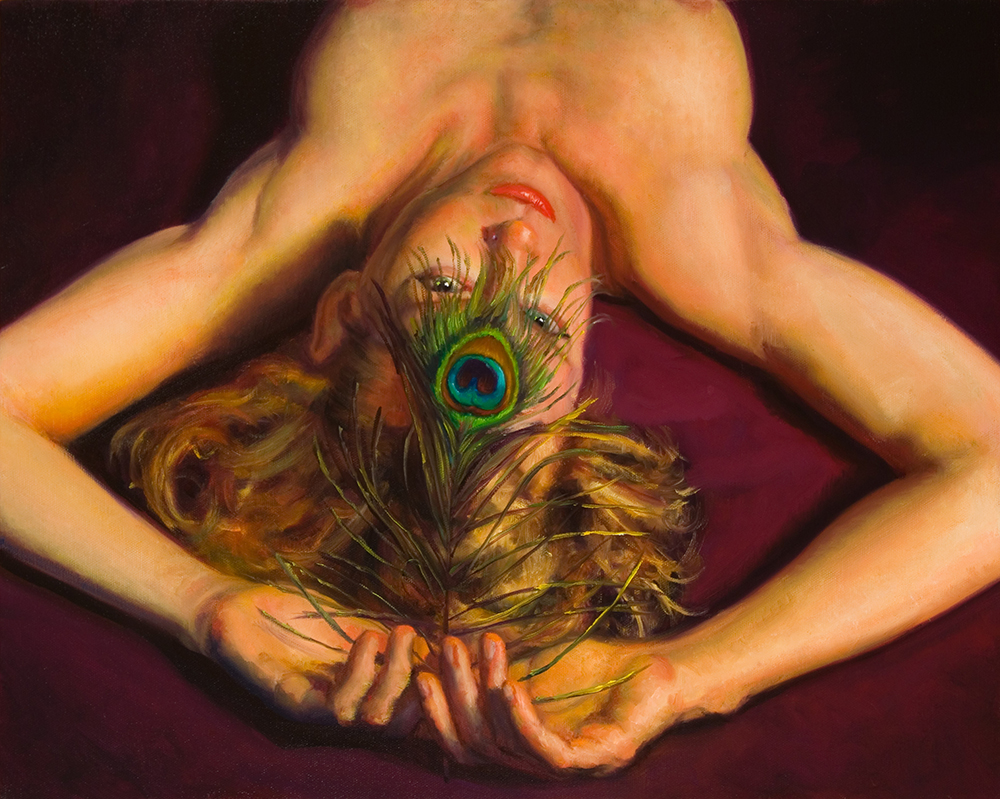
2011-09-01 The Alluring Stranger

The Alluring Stranger oil 20” x 16”

The Alluring Stranger is all about creating a sense of intrigue with the peacock feather at her third eye. The third eye is usually about awareness, but here it actually obscures more than it enlightens. This adds to the sense of mystery. Yet the real surprise is how she appears when the painting is viewed upside down. Go ahead, try it!

2010-05-10 Contemplating Despair

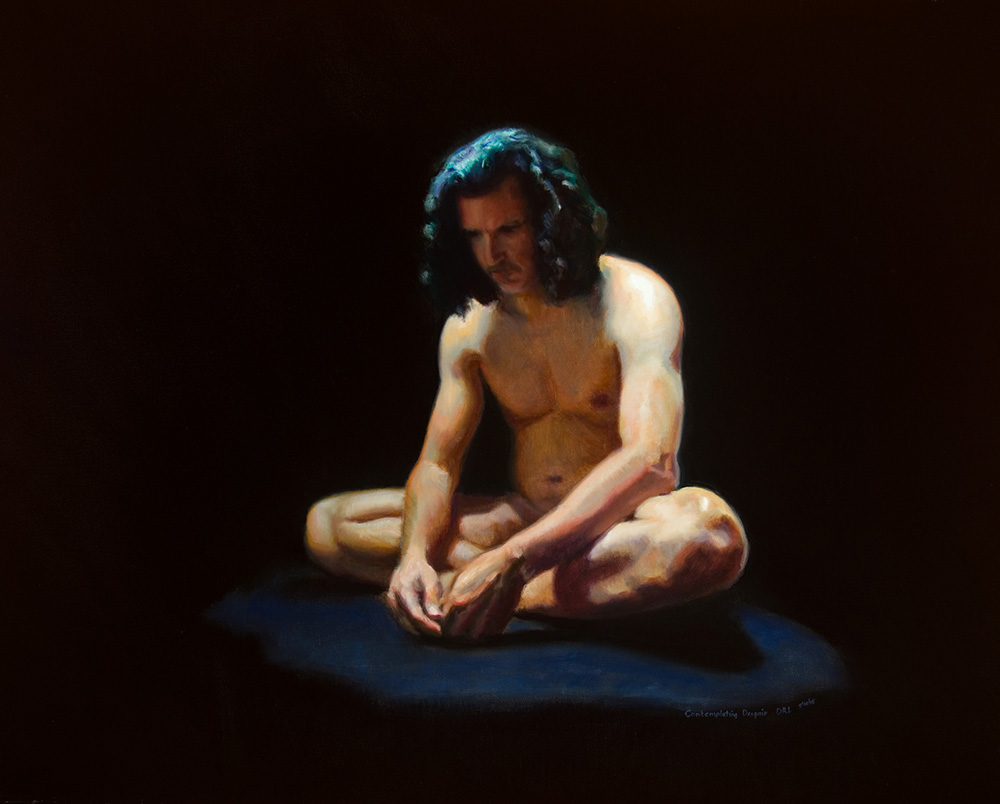
Contemplating Despair oil 30” x 24”

Contemplating Despair is a true self-portrait composed while I was going through some dark times. Yes, it felt like I had the weight of the world on my shoulders, yet isn’t it interesting how there is light all around me. I wasn’t consciously aware of the light at the time. Yet it was there. I painted it.

2009-03-10 Well

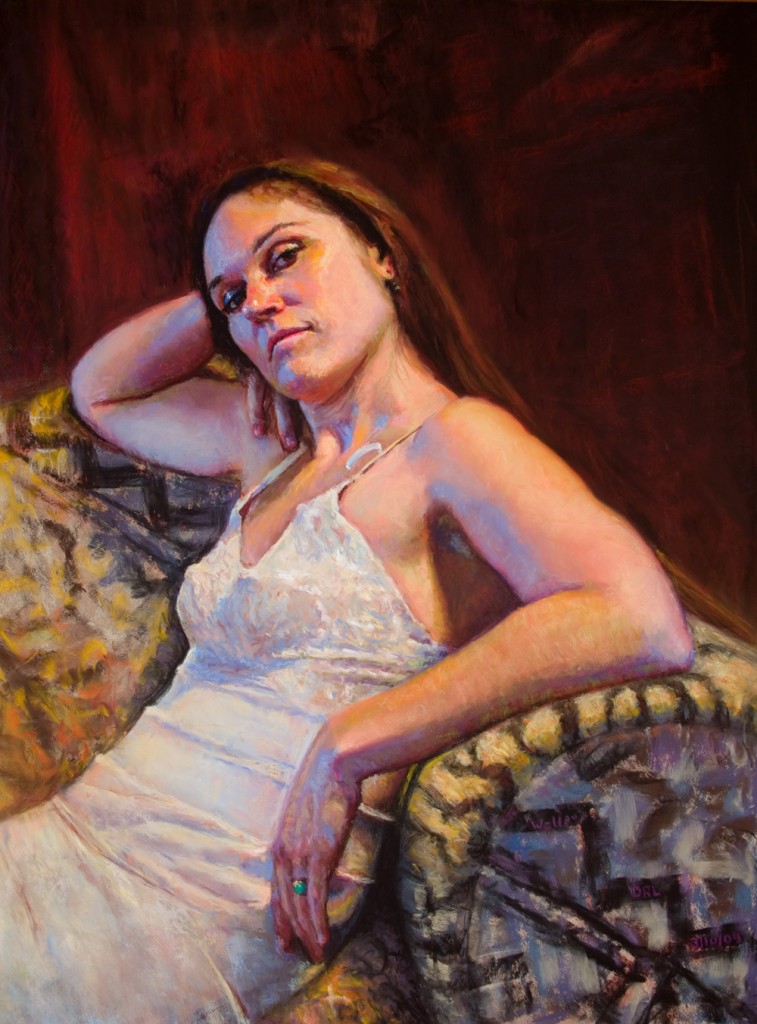
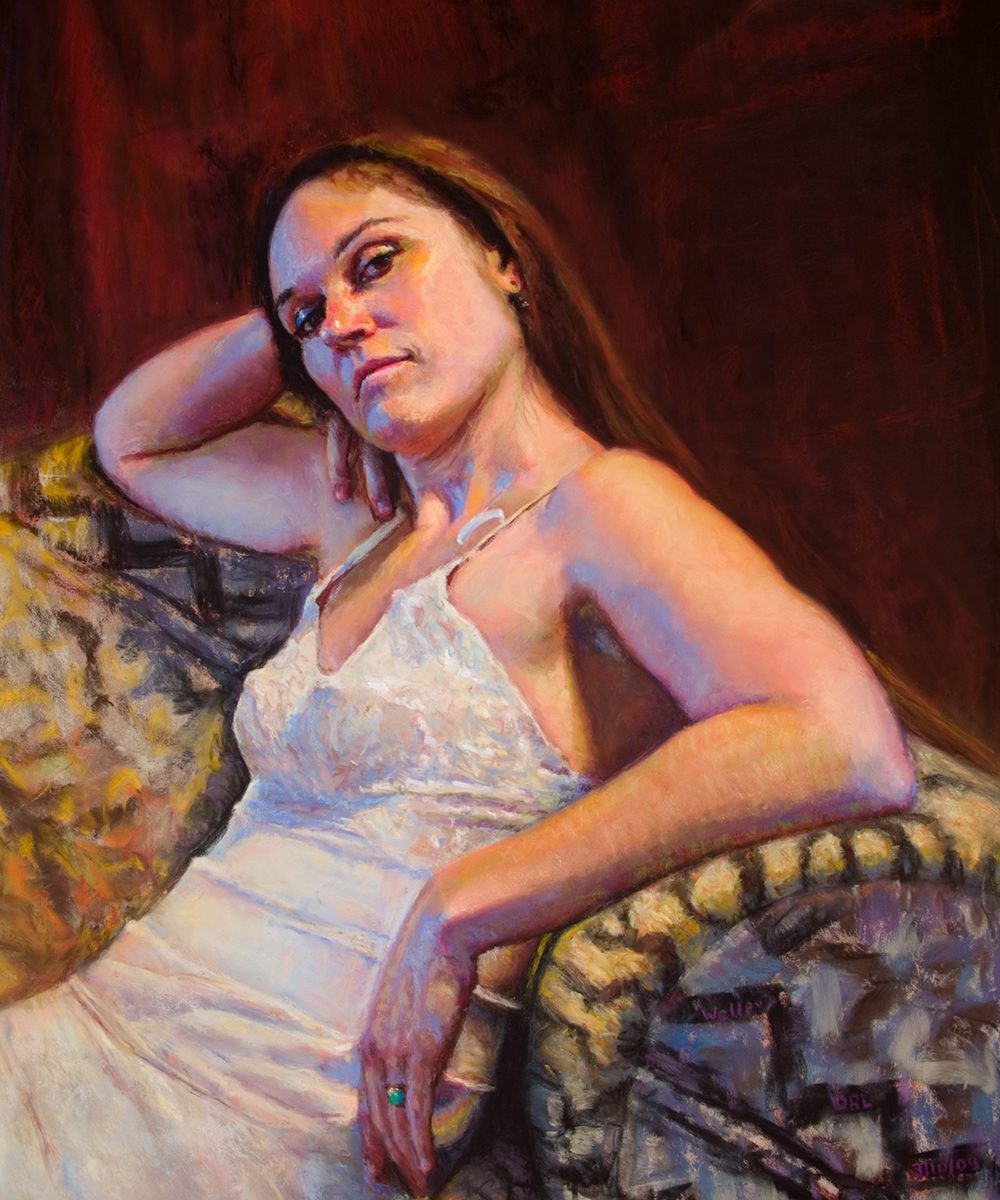
“Well?” pastel 18” x 24”

“Well?” was the painting I was talking about at the start. This was my first painting that was literally a mirror for me and my emotions. I’ve heard every emotional interpretation of this painting from angry to bored to seductive. How does she make you feel?

2002-08-26 Verenique

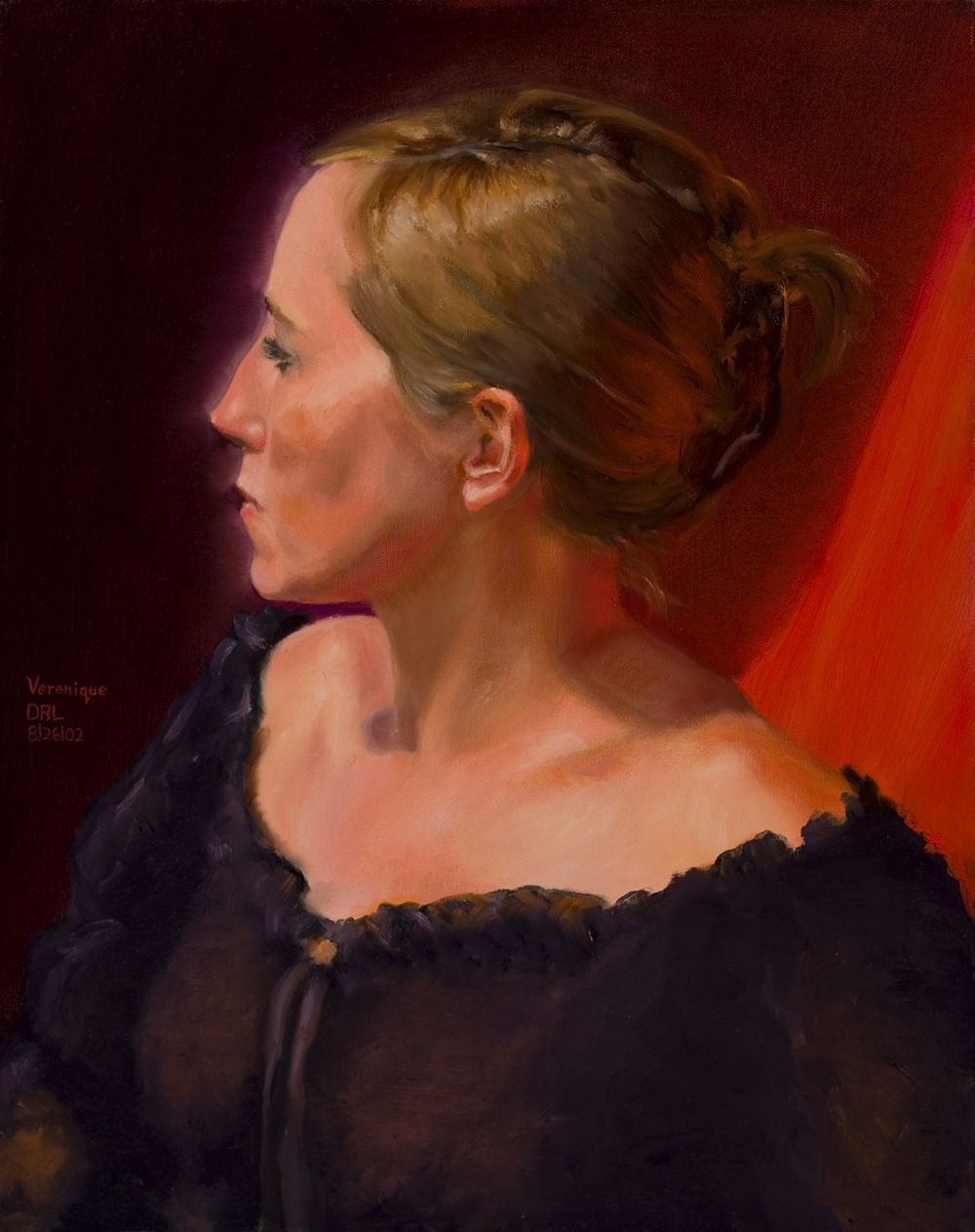
Verenique oil 14” x 18″

Verenique was the first portrait that I painted that really conveyed a sense of feeling and presence. This painting was the beginning of me exploring our human condition in paint.
As I continue to explore our shared human experience through my painting I keep running up against my own limiting beliefs about myself and what it means to be human. The more I simplify the expression down to simply light falling across the human form, the deeper I seem to be probing into our humanity. It is ironic that as I strip away the outer world and simply paint the stark naked figure bathed in light, I get closer and closer to experiencing what it feels to be human.

I hope you enjoyed this short tour of my paintings.

About the Artist: David Lazarony

davidlazaronybioDavid Lazarony grew up curious.  As a young boy, he was intrigued by the world around him, constantly asking questions and determined to figure out tangible solutions for everyday problems.

David challenged himself to build models, write computer programs, and explore his creative genius. When it was time to choose a profession, rather than becoming a “starving artist,” he choose a high-tech career instead.
Formally trained at The Ohio State University as an Electrical Engineer, he spent more than a twenty years working in computer graphics and technology.

In 1999, David answered a call from his creative muse, taking classes for seven years to move his art beyond craft to concept, as well as translate his view of the world into a tangible art form.

David believes that his paintings are the mirrors to the soul; and it’s his strong desire to evoke emotion in others that fuels his creativity. He also views the art of painting as a silent meditation, encouraging him to live a more authentic and elegant life, full of never ending curiosity.

Find out more – and connect at DavidLazarony.Com

[hr]

Editor’s Note: Our Through the Lens series explores how the things we make reveal new and interesting things about us as makers. What does your creative work express about YOU, the artist? How are the things you make like looking through a lens into your heart and soul? What have you seen in your creative viewfinder that surprises, delights, or perhaps frightens you? As we follow along with you on that journey, we may be inspired to look at our own individual creative projects in very new ways.

What Comes Next by Patricia Wellingham-Jones

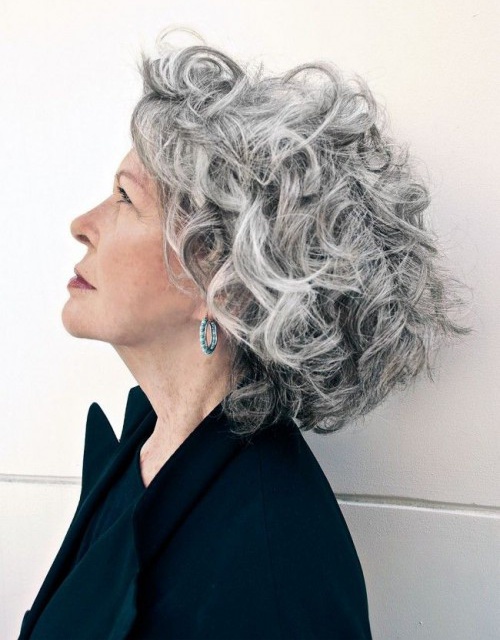
confidentgreycurlsShe wandered past the perimeter
of midlife, replaced blond curls
with natural iron-ore gray.
At this new stage of life
she wondered
at all those efforts
over all those years
to be the aunt with gifts
she thought her sister’s kids
would love. To be the person
expected.
Tired of trying
to satisfy others
she sighed and slid with relief
into her next decade.

About the Author: Patricia Wellingham-Jones

PatriciaWellingham-JonesPatricia Wellingham-Jones is a widely published former psychology researcher and writer/editor. She has a special interest in healing writing, with poems recently in The Widow’s Handbook (Kent State University Press). Chapbooks include Don’t Turn Away: poems about breast cancer, End-Cycle: poems about caregiving, Apple Blossoms at Eye Level, Voices on the Land and Hormone Stew.

Threads by Bernie Brown

Like hunger, the urge to create nags me and growls at me until I satisfy it. I know that any creative project will bring me just as much pain as it does pleasure, but my imagination works overtime, anyway. And sooner or later, what is happening in my head demands to be turned into reality.

Let me tell you how one sewing and one writing project both frustrate and fulfill me.

My heart beats a little faster when I walk into a fabric store: the Hawaiian prints, the embroidered denims, and the Needleandthreadslush velvets all put possibilities in my head. Even the neat little packages of zippers, thread, bias tape, and buttons—arranged rainbow-like—delight me. I want to buy them all, but time and money won’t let me. So I work one project at a time.

Two years ago, the sweetest, smartest, most adorable granddaughter on the planet arrived in our lives, our Helen. When she turned a year old, I imagined sewing a custom-made playhouse for her, a cloth cover that would turn an ordinary card table into a magical cottage with windows, a door that works, a roof, a bird’s nest, some flowers, butterflies, ladybugs, a mailbox, and a few garbage cans. Then I pictured Helen crawling in and out of this playhouse and wearing a smile that lit up my heart. For the past several months, that masterpiece has been taking shape.

At the same time, I have been writing a novel. Sitting down at my computer to write is like a visit to a fabric store. Just like all the bolts of fabric tempt me, a blank computer screen begs me to fill it with the stories of love affairs, family squabbles, heroes, villains, suburban homes, and country cottages. But I can’t write them all. I need the characters, setting, and conflict that will tell the story of Weaver Days.

Most days I help the book and the playhouse move forward, side by side. But some days, my projects disappoint me. Something just doesn’t click, doesn’t match my vision. That’s when I have to step back, even when that’s the last thing I want to do.

The first chimney for the playhouse, made of fabric printed with puzzle pieces, didn’t look at all like the whimsical chimney I envisioned. Instead, it just looked like a colorful box stuck to the roof. I fretted over the loss of several evenings’ work and my inability to bring my vision to life. But the thing had to go. My sewing machine whirred and I said naughty words and cried as I cranked out a second, more ordinary chimney of plain red cloth.

The novel proved equally uncooperative at times. In the first draft, several chapters near the end took one of the small town characters to a big city for spring fashion week. How could that go wrong? Up to-the-minute clothing styles filled the scenes. An eccentric, minor character enjoyed a bittersweet annual romance that would win readers’ hearts.

But no. The fashions and the eccentric’s love affair weren’t the real story. Like the colorful chimney, they had to go. In a bold move, I gritted my teeth and cut five thousand words, whimpering the whole time. I had spent countless precious writing hours and creative energy on those chapters.

Each time I stepped back on the sewing or the writing project, the finish line looked further and further away. But soon I found my rhythm again. I knew that someday I would finish both. I will watch Helen crawl in and out of her custom cottage, talking to imaginary friends, involved in adventures she created. And some day I will hold a published copy of Weaver Days with my name on the cover. In each case I will shout, “I did it!” and dance around the living room.

The thrill of personal goals achieved will satisfy me for weeks. But sooner or later, after I tire of resting on my laurels and patting myself on the back, other projects will take shape in my head, projects that demand attention. In spite of plans going awry, in spite of backslides and sidetracks, in spite of cuss words and tears, I won’t be able to resist the siren songs of the fabric store and the blank computer screen.

And I will ask myself, “What next?’

And the whole painful and wonderful process will start all over again.[hr]

About the Author: Bernie Brown

berniebrownI live in Raleigh, NC where I write, read, and watch birds. My stories have appeared in several magazines, most recently Every Writer’s Resource, Still Crazy and the Raleigh News and Observer. I am a Writer in Residence at the Weymouth Center. Get to know me better my website and connect with me on Facebook.

Unaccompanied by Melissa A. Bartell

Copyright: belchonock / 123RF Stock Photo

Below the melody, I can hear the pressure of his fingers, blunt force pushing the string down to meet the fingerboard. Pale flesh meeting ebony wood with wire sandwiched between.

Copyright: belchonock / 123RF Stock PhotoThe actual piece doesn’t matter. It’s something by Bach, of course, baroque and brooding, an elegy at times, a discourse at others. I know that it’s Bach in the same way most people know the difference between the Beatles and the Rolling Stones, but the name of the specific piece eludes me.

Between the notes, I hear him draw a breath. If I were watching him, I’d probably see him reposition his bow in that same moment. As it is, I hear the air being released from his lungs, from his lips, just before the bow attacks the strings.

I can’t watch him.

I look at my phone, observe the deep claret colour of the wine in my glass, devote close study to the remains of the dark chocolate mousse cake on my plate.

Anything to avoid his eyes.

Behind the music I catch the rasp of his sleeve where it brushes against the bridge on an up-bow. I lift my eyes – just for a second, I tell myself – and drink in the crisp white of his shirt, the jet black of his tie.

Finally, I am caught, trapped in the warm brown of his eyes.

He notices me staring at him, but his playing never falters, though there’s a slight quirk of his brow that just matches the note he flourishes.

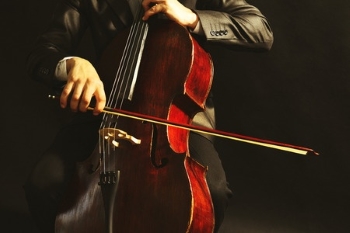
Beneath the chords, I hear the faint buzz, not quite a wolf-tone, from the titanium strings, and discern – barely – the soft contact of his thumb resettling itself in the saddle of his cello.

As he lifts his bow from the strings, the faint tang of sweat and rosin assaults my senses. I lick my lips, anticipating the moment when he leaves the stage and joins me at my table.

People warned me about dating a musician. “You’ll be alone at all his gigs,” they said. “You’ll feel like a groupie; you’ll lose your identity.”

They were wrong.

I’m never alone, merely… unaccompanied.

About the author: Melissa A. Bartell

Melissa A. BartellMelissa is a writer, voice actor, podcaster, itinerant musician, voracious reader, and collector of hats and rescue dogs. She is the author of The Bathtub Mermaid: Tales from the Holiday Tub. You can learn more about her on her blog, or connect with her on on Facebook, Instagram, or Twitter.
First Letter: March 8 , 2016

Dear Friend,

I am excited about our project of letter writing, of sharing our thoughts about this creative process that is so much a part of our lives. With our letters, we join a long history of other writers and artists who have used personal correspondence as a way to inspire and support one another.

I’m writing this letter early in the morning, in that fresh and open space right after Letterwaking up before the demands of daily living hijack my thoughts. This is what I want to tell you today.

Recently I had coffee with a friend – not a writing friend, but one who has always had kind things to say about my work. We talked of our lives, our families, our past experiences, some plans for the future. As we were finishing the last sips of coffee and wrapping winter scarves around our necks, she asked me this:

“What are you writing about now?”

I sighed heavily before I answered. “I’m not really writing at all,” I admitted. “I can’t seem to get anything on paper these days.”

She looked at me thoughtfully for a moment, before saying: “Well then, what do you think you might write about if you were writing?”

Such a good question.

If I were writing, I told her, I would write about how suddenly my world has become consumed with caring, of thinking about ways to physically and emotionally support the people in my life who are struggling with their health and well being. If I were writing, I might describe the ways my life has narrowed in the past 10 years, how much less I have and how much less I do, and how I am so very fine with all that. If I were writing, I would write about the ways technology has become a pervasive and disruptive presence in the world, how the noise from it hurts my ears, steals my attention, and fractures my time. If I were writing, I would relate my fears for this nation of ours, this America with its bold dreams and promises, and how this election year has revealed a dark underbelly to the place I’ve always been proud to call home.

But I am not writing. I am wondering – what do YOU do when suddenly the words don’t come? Do you feel as I do now – washed up, useless, spent?

Here’s the truth I know about myself: When the world is too much with me, it’s hard to find a way into the words, even if the words are the very thing that can save me.

I read something today, and found it helpful and insightful. It’s from a small book called Art & Fear, by David Bayles and Ted Orland. Maybe this idea will speak to you as well.

The hardest part of art-making is living your life in such a way that your work gets done, over and over – and that means finding a host of practices that are just plain useful. The details of art-making we recognize tend to be hard-won practical working habits and recurrent bits of form we can repeatedly hang work on.”

Like Frederic Chopin and J.S. Bach, composers who wrote piece after piece in certain formulaic patterns – Chopin with his Mazurka’s and Waltzes, Bach with his Preludes and Fugues in each of the 24 keys – there are artists who know the value of having a familiar and successful place to start.

So maybe this is what I need. Instead of looking for a new thing to inspire or motivate me, instead I should be looking back at those “recurrent bits of form” that provided reliable gateways in the past.

Maybe “what’s next?” is really “what used to be” – the writing I made part of my daily routine in the past, but have abandoned lately in the midst of many upheavals in regular life: writing morning pages, religiously every day; writing blog posts, once or twice a week at least; putting good sentences in my ears with inspirational books. These are my Mazurka’s, my Preludes and Fugues. They bring me to the page, prime the creative pump, and start the well of words flowing.

And who knows? It may turn out that these very letters I’m writing to you will be something new to “hang work on” in the future.

“Over time, the life of a productive artist becomes filled with useful conventions and practical methods so that a string of finished pieces continues to appear at the surface. And in truly happy moments those artistic gestures move beyond simple procedure, and acquire an inherent aesthetic all their own. They are your artistic hearth and home…”

I like the idea of an “artistic hearth and home,” work I can return to time and again and where I feel comfortable and safe. I think we need those kinds of havens for work and for life, in order to muster the courage to go forward and try those things that feel risky and dangerous.

The discovery of useful forms is precious,” write Bayles and Orland, “and once found they should never be abandoned for trivial reasons.” So here’s what I want to ask you, dear friend. What are your practical habits, your Mazurka’s and Preludes, your artistic hearth and home? Are you returning to them regularly, and letting them nourish you on your creative journey? I hope so.

Until next time,
Becca

About the Author: Becca Rowan

beccarowan_bio2Becca Rowan lives in Northville, Michigan with her husband and their two dogs. She is the author of Life in General, a book of personal and inspirational essays about the ways women navigate the passage into midlife.  She is also a musician, and performs as a pianist and as a member of Classical Bells, a professional handbell ensemble. If she’s not writing or playing music you’ll likely find her out walking with the dogs or curled up on the couch reading with a cup of coffee (or glass of wine) close at hand. She loves to connect with readers at her blog, or on Facebook, Twitter, or Goodreads.
New Moon Creative: Moon in Pisces

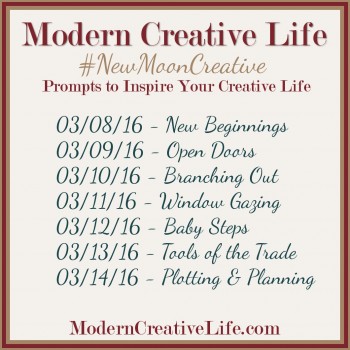
What would happen if you were to commit to your own creative life each month? How would you feel if you nourished your own need to create? How excited would you be if you didn’t just create something, but also shared your creation with other people who were also stepping into their creative lives?

While all of us at Modern Creative Life hope that each of our readers is indulging their creativity (even if it’s in small ways) frequently, we are also dedicated to the idea that we get to choose our own paths to creative living each and every day of the year, by writing, painting, cooking, or even making and artful arrangement of the books on our shelves.

As well, we believe it’s important to honor the cycles of life that form currents through all our lives. As part of our ongoing celebration of those cycles and currents, we will be releasing a collection of prompts to inspire you on your creative journey.

Since the New Moon is traditionally been a time of new beginnings, we’ll be sharing those prompts on the date of each month’s New Moon. This month (March) that date is the 8th.

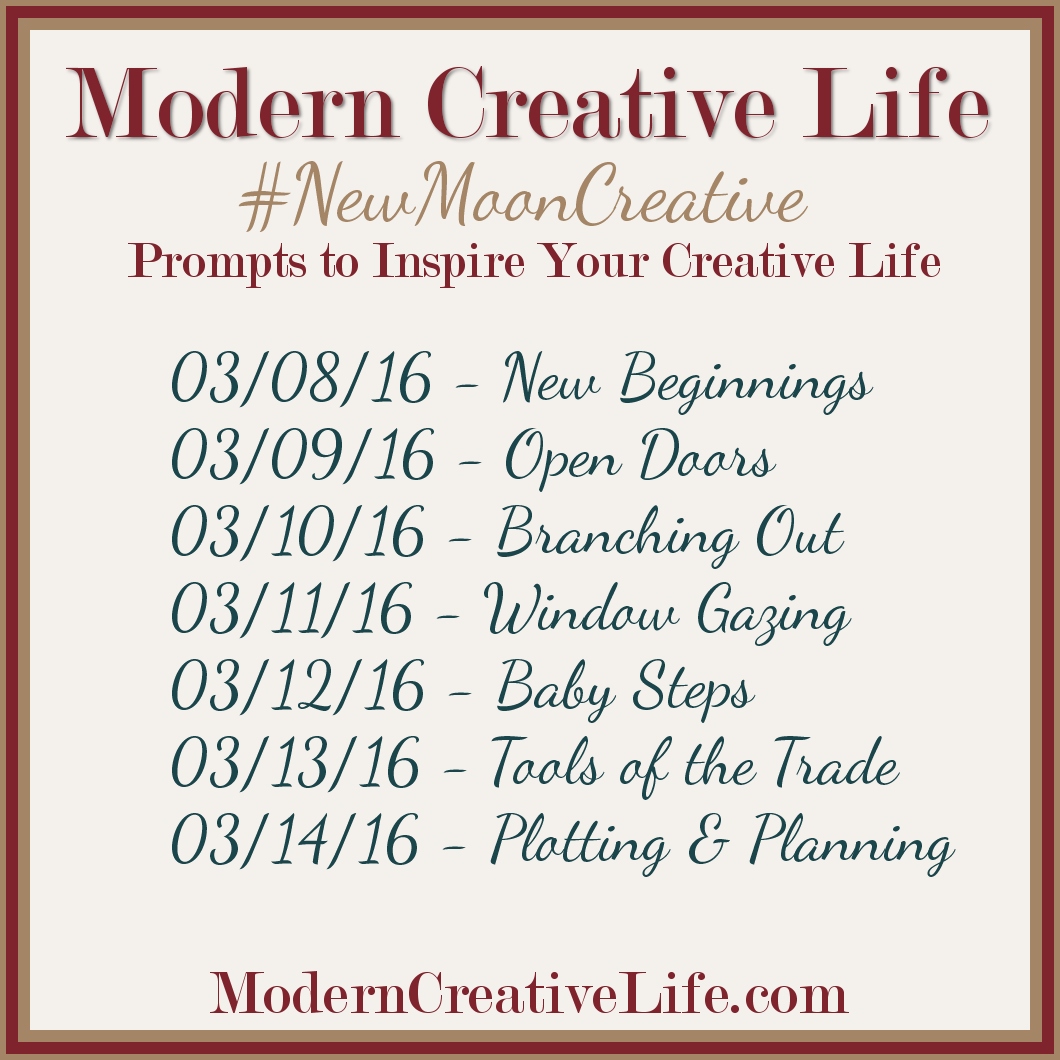
Here is our first round of prompts:

New Moon Creative: Moon in Pisces

Write a poem, essay, or short story. Take a photograph and leave us with the image alone. Create a photo essay.

Post your creation in your blog and/or share your work on Social Media, be it Facebook, Twitter, Instagram, or all of those spaces. Use the tag #NewMoonCreative so we can find you. Leave a comment here (with a link) so we can read your words and lovingly witness what and how you are creating.

On the Full Moon (March 23rd), we’ll post a collection of the work that was inspired by these prompts and post them here, with links back to the full work (and you).