I was in a good mood the day I had an interview scheduled with Kimberly Wilson. I’d had the pleasure of being interviewed by her twice before, had hosted her in my home for an event celebrating the release of one of her books, and I knew we were going to have a great conversation. After running some errands in the morning, I came home and set things up in my studio for our early afternoon Skype session in happy anticipation of the interview.
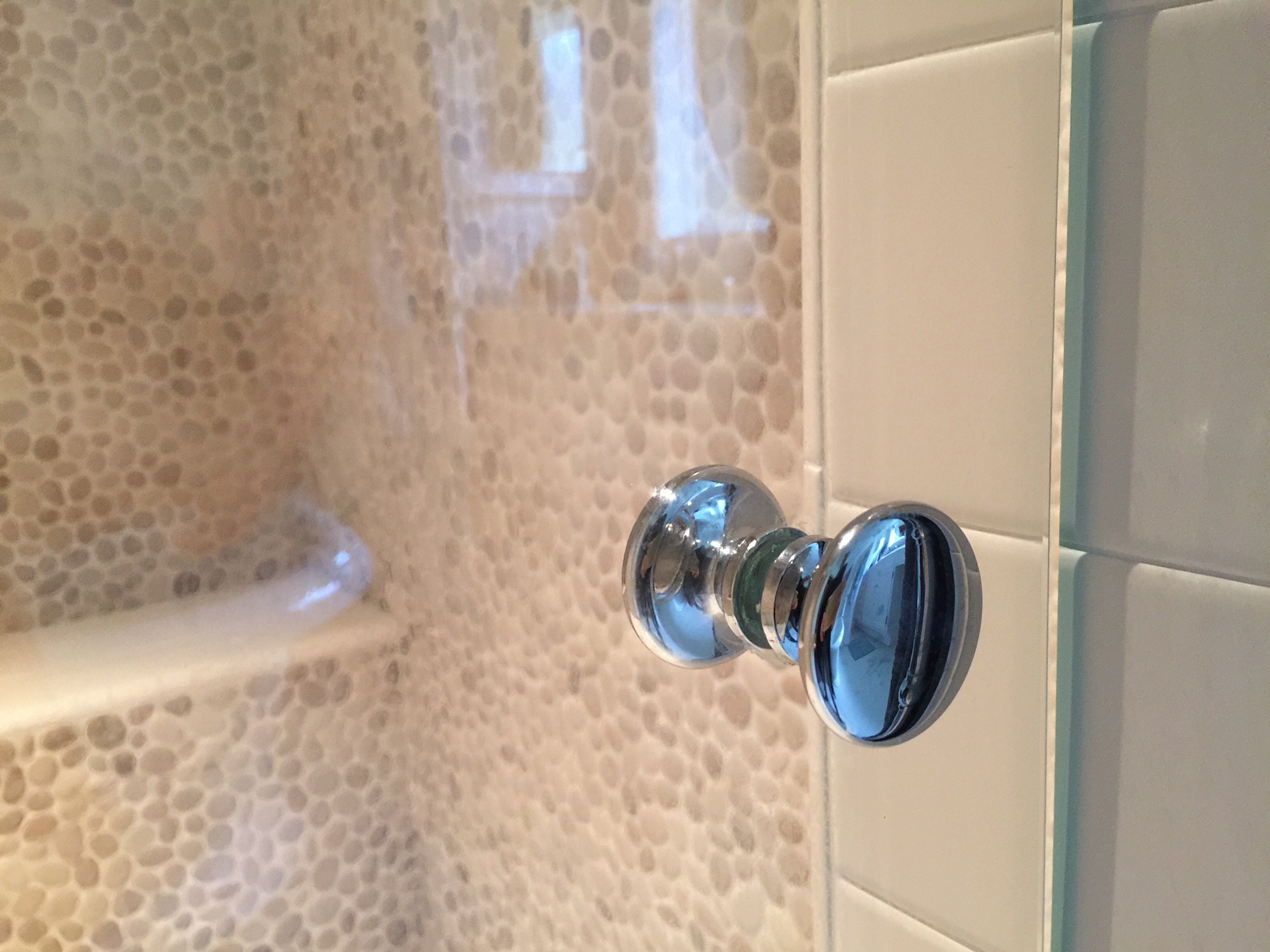
As I flitted about the house, my brain was all abuzz. Why, I don’t remember. About what, I don’t recall. All I know is that less than an hour before our call, my mind was distracted enough that I got my middle right finger caught between a heavy glass shower door and a tiled bathroom wall at the precise moment I was swinging the door toward me to open it.
I could explain the physics of this mishap, but then I’d just be distracting from the good stuff – the part about the blood. Because the result of this seemingly small bit of inattention was one of harrowing pain and a howl that made my dog run for cover under our bed. It was so shocking and painful I wasn’t even able to cry. All I could do was walk around in circles moaning and hyperventilating. The only thing that jolted me out of my stupor was realizing I needed a paper towel. Immediately.
The cut on my finger wasn’t terribly deep, but there was a lot of blood. Despite being a little woozy, I was still fascinated at how quickly one paper towel after another was transformed from a pristine white landscape to a bright red mess within seconds. When the bleeding finally settled down, I wrapped two more paper towels around my finger, put an ice pack on top and then sat down at my computer to type a one-handed text message to Kimberly. Explaining I’d just smashed my finger with a heavy glass door and was debating a visit to the ER, I told her I might need to postpone our interview. Ever the gracious host, she responded with a, “No problem,” and encouraged me to take care of myself. So I took a deep breath, put down my phone, and sat still for a few minutes.
After watching the birds outside my window cavort in our garden for a bit, I unwrapped my finger and saw that it wasn’t terribly swollen. I could still bend it and move it back and forth, and decided I probably did not require Emergency Room attention. So I sent another text to Kimberly letting her know I was still game for the interview. Within fifteen minutes, I was upstairs in my studio and we were connected on Skype.
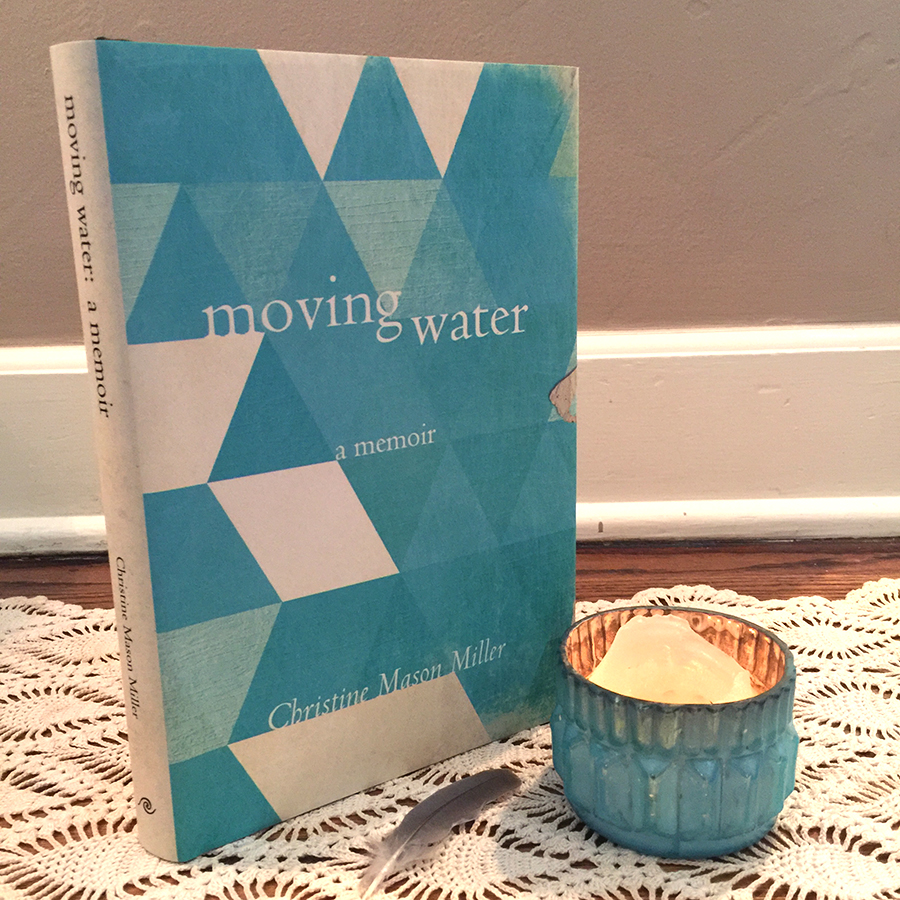
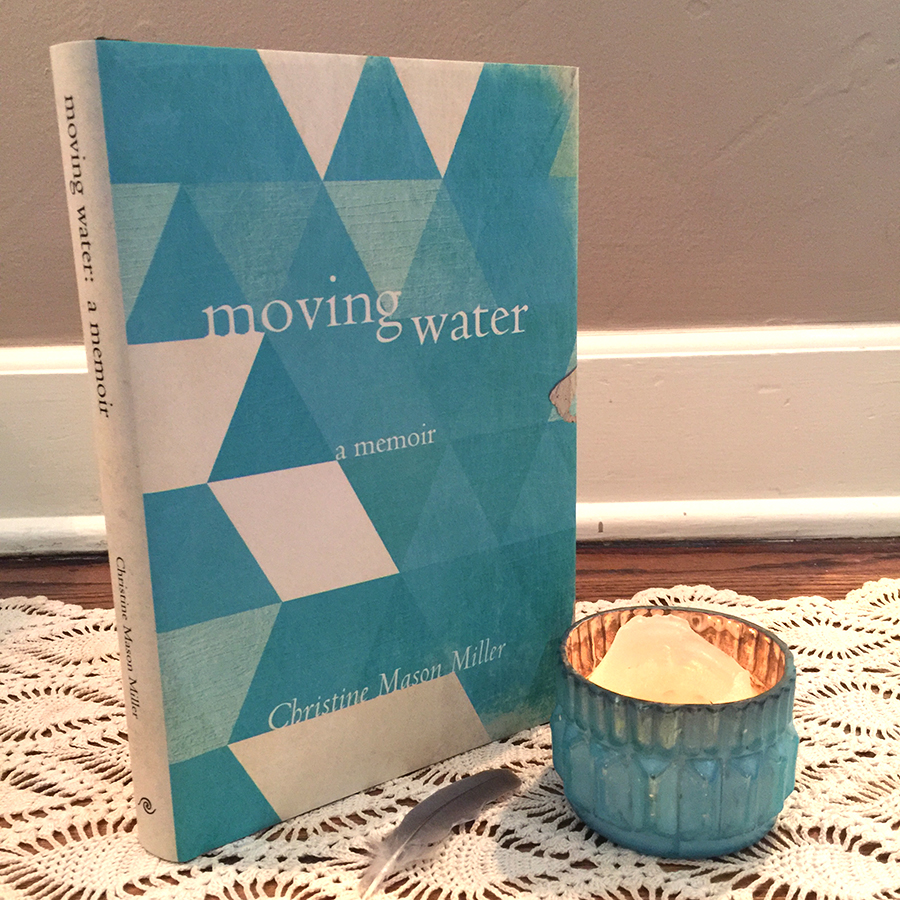
Kimberly had suggested this interview because she wanted to discuss Moving Water, my new memoir. The book tells the story of my journey from believing I didn’t belong in a family to the realization that breaking through and dismantling that belief was my soul’s most important work. I finished the book in early 2016, and over the summer had published and given away about a hundred advance copies. Kimberly was one of those readers, which meant the questions she prepared for our interview were related to specific passages of the book.
One of Kimberly’s first questions had to do with the parts of my family history that led to my belief that I wasn’t meant to have a family. On a “normal” day – as in, a day when I didn’t almost break a finger in half – I probably would have talked a little bit about my parent’s divorce, the breakdown of another blended family, and other family estrangements. But on that day I did almost break a finger in half, so even though I had regained enough composure to go through with the interview, my finger was all bandaged up and my insides were still a little wobbly. To put it another way – I was vulnerable, exposed, and raw.
Which is why, I think, I answered Kimberly’s question the way I did – a response that took me completely by surprise and required me to quickly articulate a thought that was being formed in my psyche in that moment. My answer – and I’m paraphrasing here because I haven’t yet heard the final interview – didn’t mention divorce or loss or broken families. Instead, I started talking about the way so many of my stories and memories had been transformed – how, through the act of writing, I’d ended up releasing the versions of them that had inspired me to write about them in the first place.
Are you with me?
I knew writing the book had healed many of my deepest emotional wounds, but it wasn’t until my conversation with Kimberly that I realized writing the book actually altered my cellular memory of them. The pain I experienced during my parent’s divorce was real, but it was pain I didn’t need to carry anymore. It was painful then, but this was now. More to the point – I believed, until I wrote Moving Water, that certain memories and experiences maintained a certain potency throughout my life only because they held my deepest sadness and most significant losses. What I discovered is that they’ve also, all along, contained the mechanism I needed to remove their charge, and to heal.
~
It was only recently that I made the connection between the bloody mess I had on my hands (literally) just a few minutes before my interview with Kimberly and the fact that this revelation hit me when it did. But now that I’ve connected those two experiences it makes perfect sense. Perhaps in my off-balance, vulnerable state, everything in me softened enough to let a door swing open (maybe even a heavy glass shower door) that would have otherwise remained closed. Maybe the decision to show up for the interview despite feeling messy and clumsy and slightly fragile made it possible for my attachments to certain versions of my own story loosen more than ever before. Maybe when I agreed to show up despite having an ice pack on my finger, I extended an invitation to something deep inside of myself that hadn’t yet found a way to be expressed. Maybe being less “on my game” enabled me to tap into something real, something exquisite, even if it wasn’t possible to formulate what was happening into a tidy soundbite while I was being recorded.
It took more than two years to write Moving Water and it is taking nearly a year to prepare it for its release into the big, wild world. Despite all the work I’ve already done for the book, and all the transformations that have taken place along this journey, its gifts and lessons are still being revealed to me. I am still learning, still healing, still figuring things out. The stories I am being called to tell as I share Moving Water with the world aren’t necessarily the ones I thought I’d be offering, but boy are they good. I can’t wait to see what happens next.
To hear Christine’s interview with Kimberly Wilson, click here.
About the Author: Christine Mason Miller
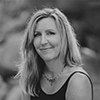 Christine Mason Miller is an author and artist who has been inspiring others to create a meaningful life since 1995. Signed copies of her memoir, Moving Water, are now available for pre-order at www.christinemasonmiller.com.
 three-year hiatus in 2004, he hired nearly a dozen former employees within two months. My husband’s identity is fueled first and foremost by his role as a father, but as far as making his mark on the world, it was his career that steered the ship.
 Aside from travel and the occasional business dinner, when he came home at the end of the day, he was home. When we went on vacation, we were on vacation. He never brought his laptop to bed and he never spent a Saturday on a golf course with clients. So when someone proclaimed he would end up being bored without his work, we both laughed, knowing these comments were more likely a reflection of what the prospect of a life beyond work and career would mean for them rather than what was true for my husband.
 cookbook while chatting with his best friend – a chef who helped ignite my husband’s passion for cooking.
 first shocking numbers and then despair as they rise over the next few hours like floodwaters in a basement.
 people, as if being seen is something they weren’t expecting and aren’t accustomed to. I get double-takes, I get sheepish smiles, I see an immediate softening, I see tears well up.
 feeling that way for weeks, and the first day of 2016 was no exception.
 Where is your next retreat? What will you write about next? I prided myself on always having an answer. I’d have my next show lined up. My next retreat would already be on the calendar. A book proposal would be waiting in the wings. Being able to confidently, immediately answer the question “What’s next?” meant I was a mover, a shaker, a woman who made things happen. But over time, it also meant I was a woman who was tired, and frequently left wondering why I felt like my time to rest was always just beyond whatever my answer to the question happened to be that day. Right after regaling my listener with all the impressive feats I was about to accomplish, I would—without fail—follow it up with, “And after I finish that I’ll finally have some down time!”
 question, “What’s next?” is “Nothing”, I am still me. I am still whole and worthy and enough.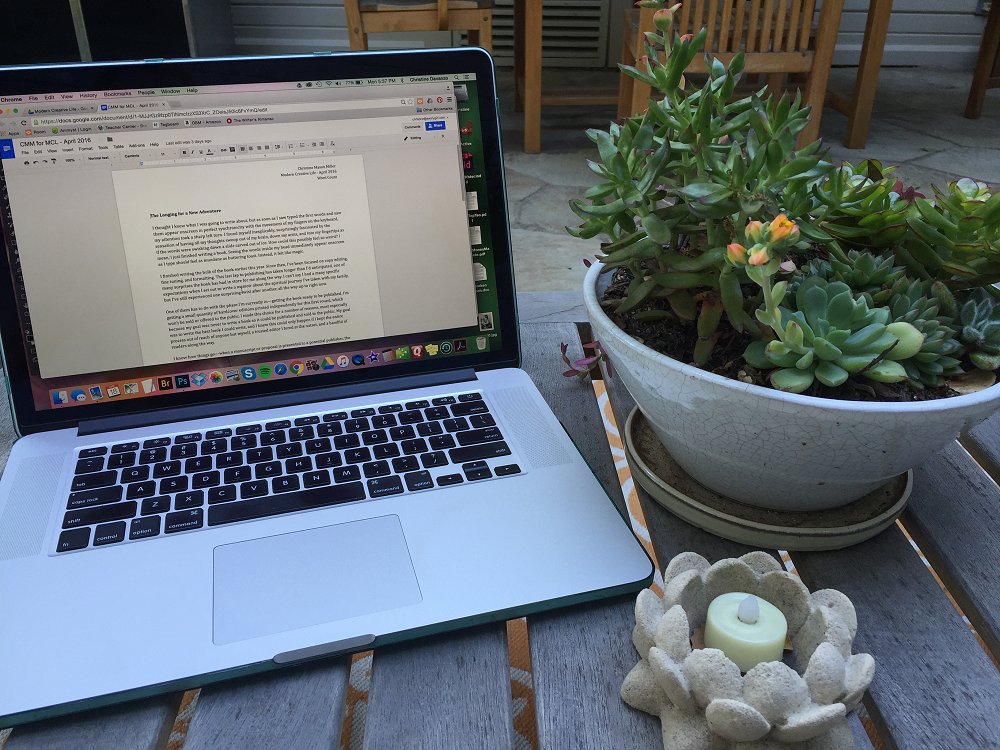
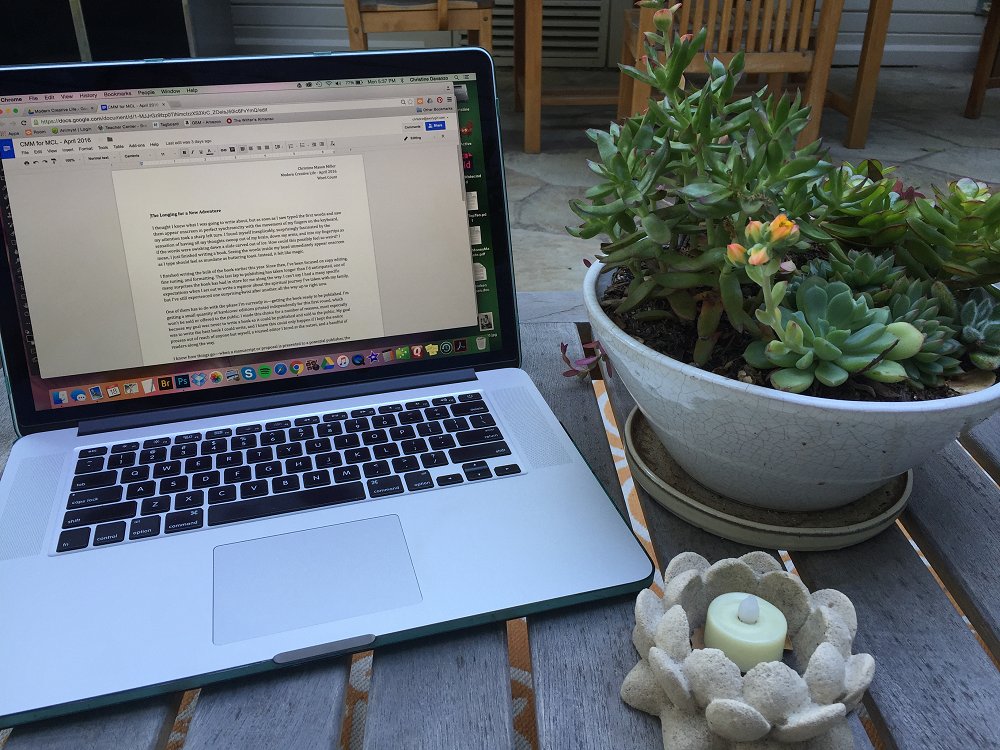
 turn. I found myself inexplicably, surprisingly fascinated by the sensation of having all my thoughts swoop out of my brain, down my arms, and into my fingertips as if the words were swishing down a slide carved out of ice. How could this possibly feel so weird? I mean, I just finished writing a book. Seeing the words inside my head immediately appear onscreen as I type should feel as mundane as buttering toast. Instead, it felt like magic.
 quantity of hardcover editions printed independently for this first round, which won’t be sold or offered to the public. I made this choice for a number of reasons, most especially because my goal was never to write a book so it could be published and sold to the public. My goal was to write the best book I could write, and I knew this could only happen if I kept the entire process out of reach of anyone but myself, a trusted editor I hired at the outset, and a handful of readers along the way.
 and I needed to write it in my own way, on my own terms, in my own voice.
 complaining frequently. And I’ve let myself get easily distracted in an attempt to avoid thinking about all the little things that still need to be done. But today I turned another corner, which has me mapping out a timeline that ends at the actual finish line, the one that involves holding the book in my hands and giving a private reading in our home. Where the book will take me after that is anyone’s guess.