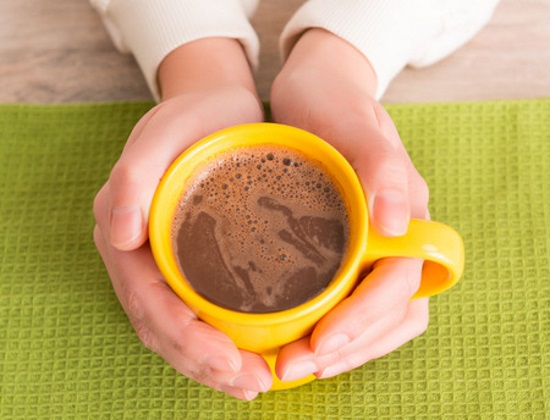
When I imagine my mother, she’s always holding cup of coffee. Her hands are square-ish, sturdy, with the calloused fingers and tiny cuts to the palms that are inherent to women who often work with fabric. (She calls herself a ‘sewist’ these days, because a ‘sewer’ is something where dirty water goes, and a ‘seamstress’ implies that she works in a hot, noisy factory.)
Coffee is one of my mother’s touchpoints. I was practically weaned on the stuff, and I have more than one memory of choosing a mug for her as a gift, making sure to pick one with a handle large enough to comfortably fit three fingers.
If you asked me, I would tell you that she prefers her hair short, that she likes tailored cuts the same way she likes tailored clothes, that her eyes are brown and that her brows are shaped in soft arcs, unlike mine, which are angled like flattened carats.
I can hear her voice in my head, but when I think of her, it’s her hands that I think of first. I remember (vaguely) the way her hands kept me upright when I was learning to walk, and the way her grip kept me close when we went out together.
I am familiar with the length of her fingers and the Dutch Tulip color of her nail polish and the blue tinge of the subcutaneous lump on one wrist, the remains of some childhood accident.
What I don’t remember, though, is when I became ‘too old’ to hold her hand in public, and when I finally became ‘old enough’ to reclaim the practice.
I remember holding hands with my grandmother no matter what my age was. Her hands were nothing like my mother’s. She had slender fingers, the tips slightly angled from age and arthritis, the nails incredibly strong, and ridged from base to tip.
“Your hands are so warm!” She would say, folding hers into mine, as if she could absorb all the warmth I had to offer.
“Cold hands – warm heart,” I would tease her.
(We never talked about the opposite. Did my warm hands make me somehow evil, or just mischievous?)
When we walked up and down her block, or on the beach, or wherever, my grandmother would never wrap her hands around my palm. Instead, she’d grip my fingers, mashing them together until they were crossed over each other, and circulation became impaired.
Last month, my husband I spent a few days visiting my aunt – my mother’s younger sister – and her husband in rural Connecticut, and reaching for her hand as we walked around her town, seemed like the most natural thing in the world. After years of not seeing each other, we still fit.
My aunt’s hands are a blend of my mother’s and my grandmother’s. She has long, elegant, fingers, but she also has the tell-tale signs of a person who (like me) does a lot more work with computer keys than fabric and notions (although, my mother also writes).
My hands, like my eyebrows, don’t look like any of theirs. They’re small and plump and no matter what fresh foods I eat or supplements I take, my nails are always breaking just when they’re at the ‘perfect’ length.
My grandmother died the year my parents moved to Mexico, but sometimes I’m certain that I feel her hands, so cool, so gentle, smoothing the hair away from my forehead when I’m sleeping.
My aunt lives half a continent away, but visiting her didn’t feel weird or awkward, and I would have liked more time.
And my mother. My mother is one of the two constants in my life (the other is my husband, who has musician’s hands, but this isn’t about him). Sometimes, when I visit her, and we’re walking along the malecón in La Paz, we’ll hold hands, and in those moments, I’m five years old with bouncing braids and sun-browned skin, and everything is innocent and safe.
Most of the time, when I think about my mother’s hands, they’re wrapped around a coffee cup.
Then again, most of the time, when I’m thinking about my mother’s hands… so are mine.
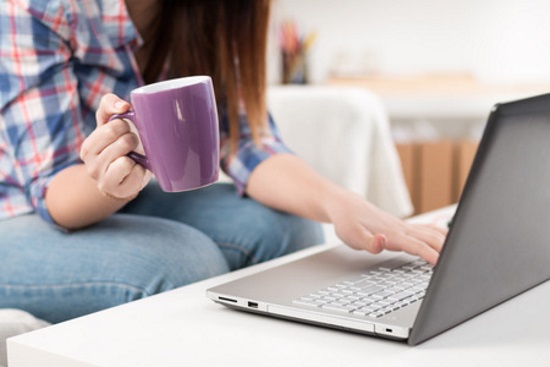
Image Copyright: amaviael / 123RF Stock Photo
Image Copyright: morganka / 123RF Stock Photo
About the author: Melissa A. Bartell
 Melissa is a writer, voice actor, podcaster, itinerant musician, voracious reader, and collector of hats and rescue dogs. She is the author of The Bathtub Mermaid: Tales from the Holiday Tub. You can learn more about her on her blog, or connect with her on on Facebook, Instagram, or Twitter.


 Bella Cirovic is a photographer and writer who lives with her husband and daughter in the suburbs outside of NYC. She writes on the subjects of self care, body love and nourishment, crystals, essential oils, and family life. Catch up with Bella at her blog:
 The book’s structure mirrors thought, so it feels as if we’re inside Shapiro’s head as her thoughts bounce back and forth between the present and various memories of her 17 year marriage to film-maker Michael Maren (whom she refers to only as M. throughout that book). She quotes from her own journals, the ones written on their honeymoon and in the early days of the marriage. She recalls events in their lives that illustrate the complexity and steadfastness of their relationship. She interjects pertinent quotes from writers and philosophers that illustrate her thinking, like this one from philosopher William James that stands alone in the middle of a page: “The constitutional disease from which I suffer is what the Germans call Zerrissenheit, or torn-to-pieces-hood. The days are broken in pure zig-zag and interruption.”
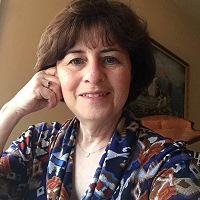 Becca Rowan lives in Northville, Michigan with her husband and their two dogs. She is the author of

 Melissa is a writer, voice actor, podcaster, itinerant musician, voracious reader, and collector of hats and rescue dogs. She is the author of
 Patricia Wellingham-Jones is a widely published former psychology researcher and writer/editor. She has a special interest in healing writing, with poems recently in The Widow’s Handbook (Kent State University Press). Chapbooks include Don’t Turn Away: poems about breast cancer, End-Cycle: poems about caregiving, Apple Blossoms at Eye Level, Voices on the Land and Hormone Stew.