For the Love of Bread by Joy Plummer

I first made bread in 1994. I bought a bread machine from a friend for $75. I made one loaf, and it came out perfectly. I made a second loaf, and it was about half right, half edible. The third loaf was completely wrong and inedible. I had no idea why.

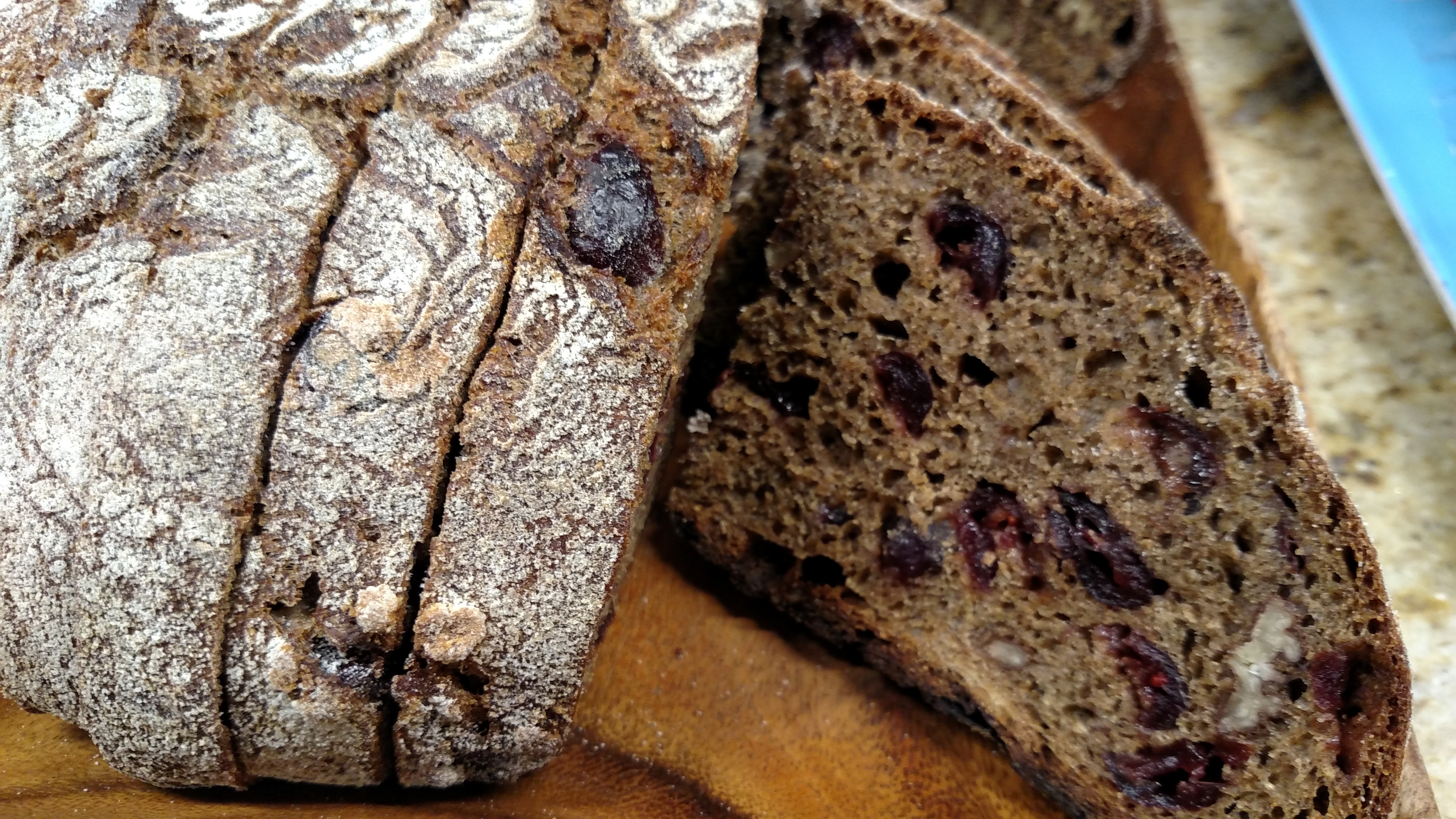
[interior crumb of sourdough]

At the same time, my mother gave me an old hippie cookbook called Laurel’s Kitchen, a vegetarian cookbook published out of Berkeley in the mid-1970s. The vegetarian recipes were awful – way too bland for today’s palate. But the bread recipes were wholesome and excellent. While I was failing with my bread machine, I started attempting bread by hand. It was awesome! I made whole wheat bread, rye bread, and I don’t even remember what else, but it was all so good. I sold my bread machine for $75.

sliced multi-grain with cranberries

When my oldest daughter was born, I found freedom by carrying her everywhere in a Baby Bjorn. I remember the first time I decided to make challah. I put Sophie in her carrier, and mixed my dough. I remember kneading the dough on the counter, and noticing that the gentle rocking, back and forth from my heels to my toes, had put Sophie to sleep. It was, indeed, entirely soothing to me, too.

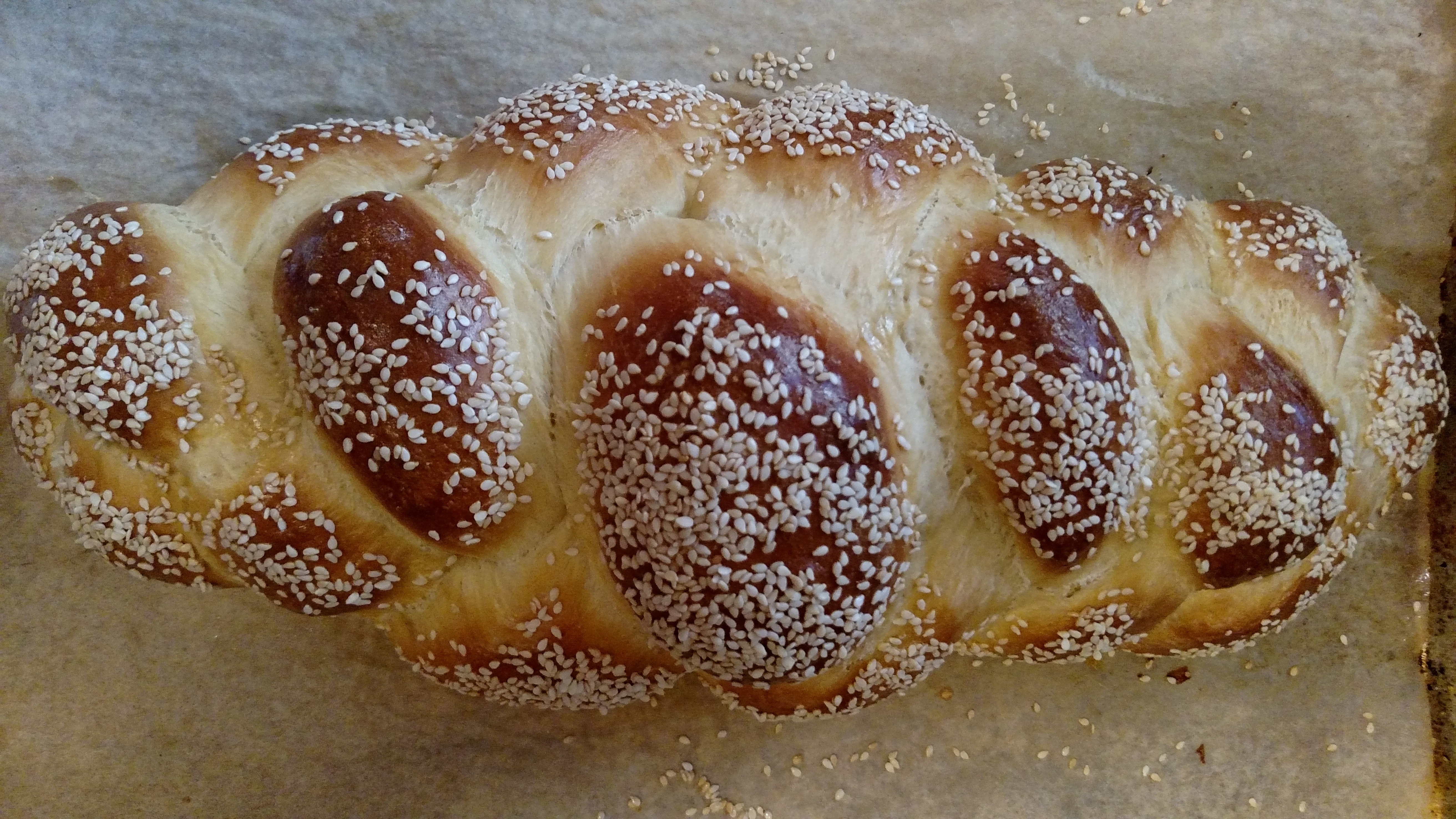
sesame challah

And then, I discovered a bread revolution happening around me. Jim Lahey’s no-knead bread method started sweeping through the DIY foodie community, so of course, being somewhat undaunted by the bread process, I tried it. CRUSTY BREAD!! And it was so easy and OUTSTANDINGLY delicious! I joined a bread group on Facebook, and someone recommended Ken Forkish’s Flour Water Yeast Salt. Now this was serious. I read every page and followed the instructions exactly as written. And I was becoming more advanced with every boule I made.

4 boules of sourdoughThe next big step was attempting sourdough. I’ve failed many attempts at growing things. I used to say that I could grow anything, as long as I could nurse it. But again, I followed Forkish’s instructions, and I made sourdough! I was making bread rise with a precious mix of flour and water!

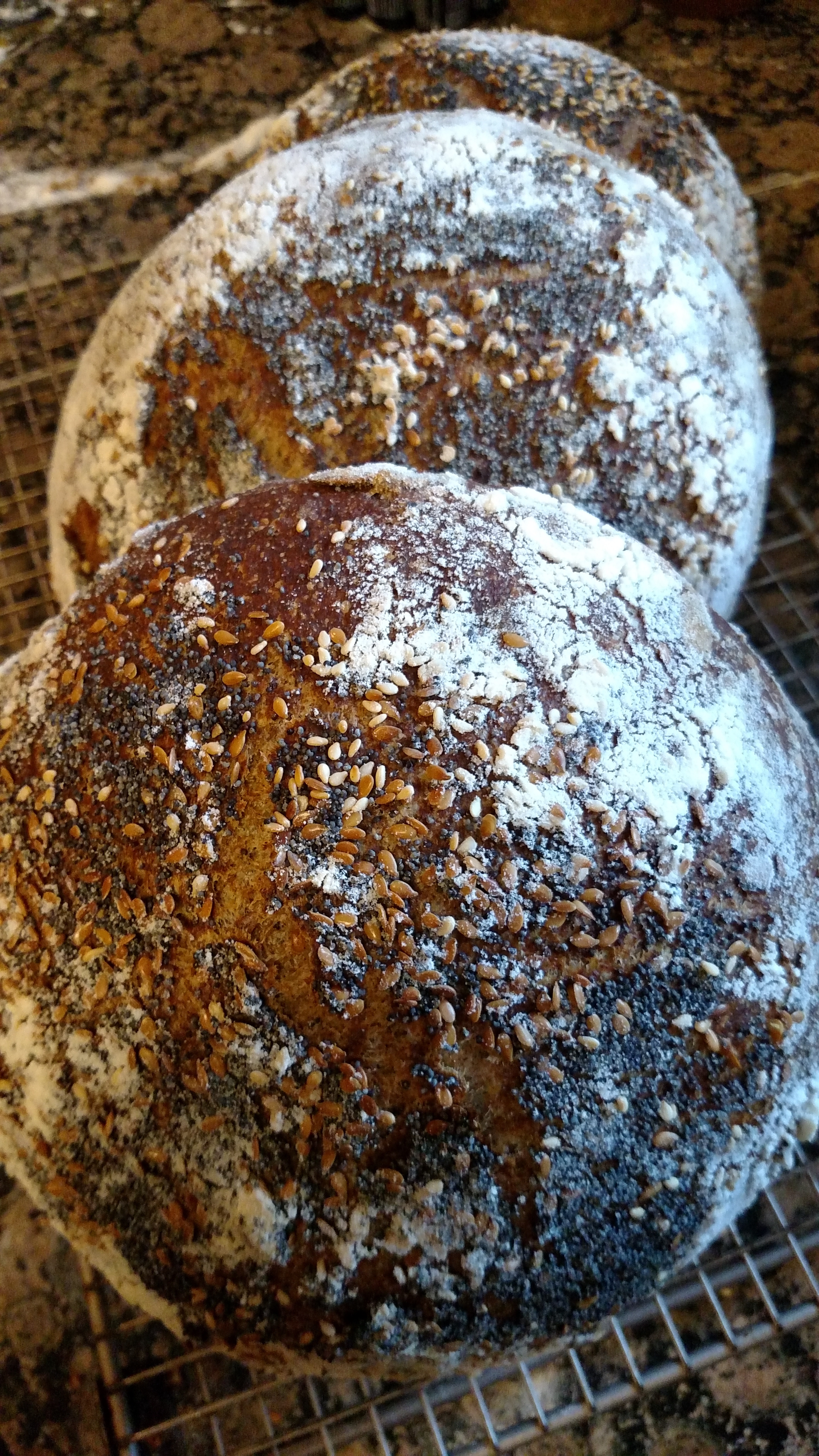
3 seeded boules

I noticed that every time I put my hands in dough that any tension, stress, or frustration I had, dissipated. I was calm, focused, content. Making bread requires presence. All the mathematical calculations (it’s a ratio, yo), the weighing, the testing, and then working the dough to where it feels right, feeling how it changes over time…. You breathe into the process. It’s a meditation.

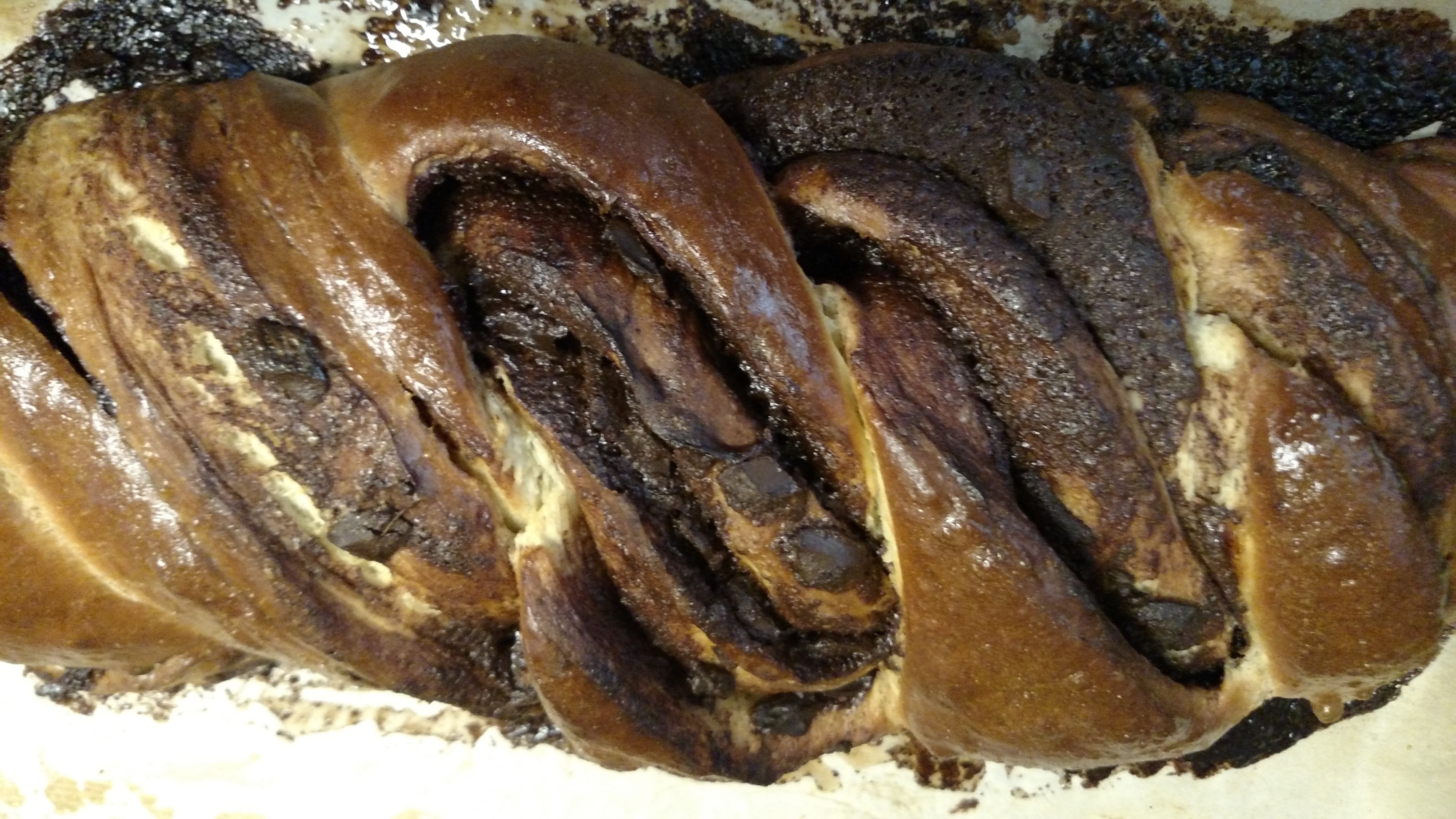
twisted chocolate challah

Now, I’m a member of a global community of people who nerd out on milling grains into flour, trying different kinds of breads from all around the world, and who strive to perfect our craft. But bread people are also generous and kind. Someone posts a picture of a crusty boule that pancaked when they put it into the oven. “Does it taste good?” That’s all that matters. Everyone makes a loaf that doesn’t perform the way you expected sometimes. It doesn’t matter. Try again.

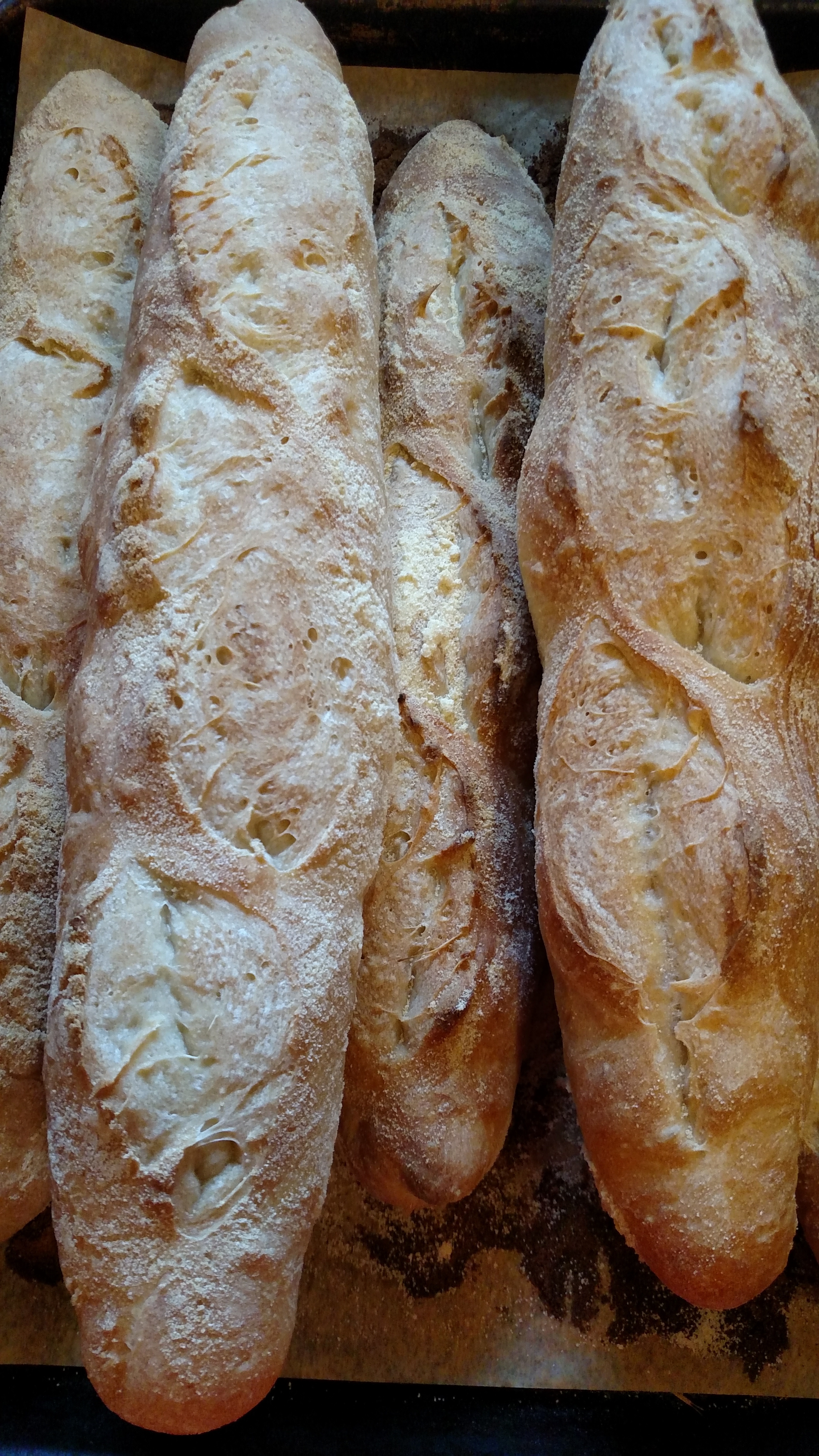
baguettes

I started selling bread to friends less than a year ago. My first week, I took 25 orders. The week before Christmas, I took 73 orders. Every week since I began, I have gotten one to two new customers. People are hungry for fresh bread. People are so happy when they get bread from me. Bread is goodness. Bread is for feeding your body and your spirit. Bread is for feeding your family. Bread is for sharing. Bread is love.

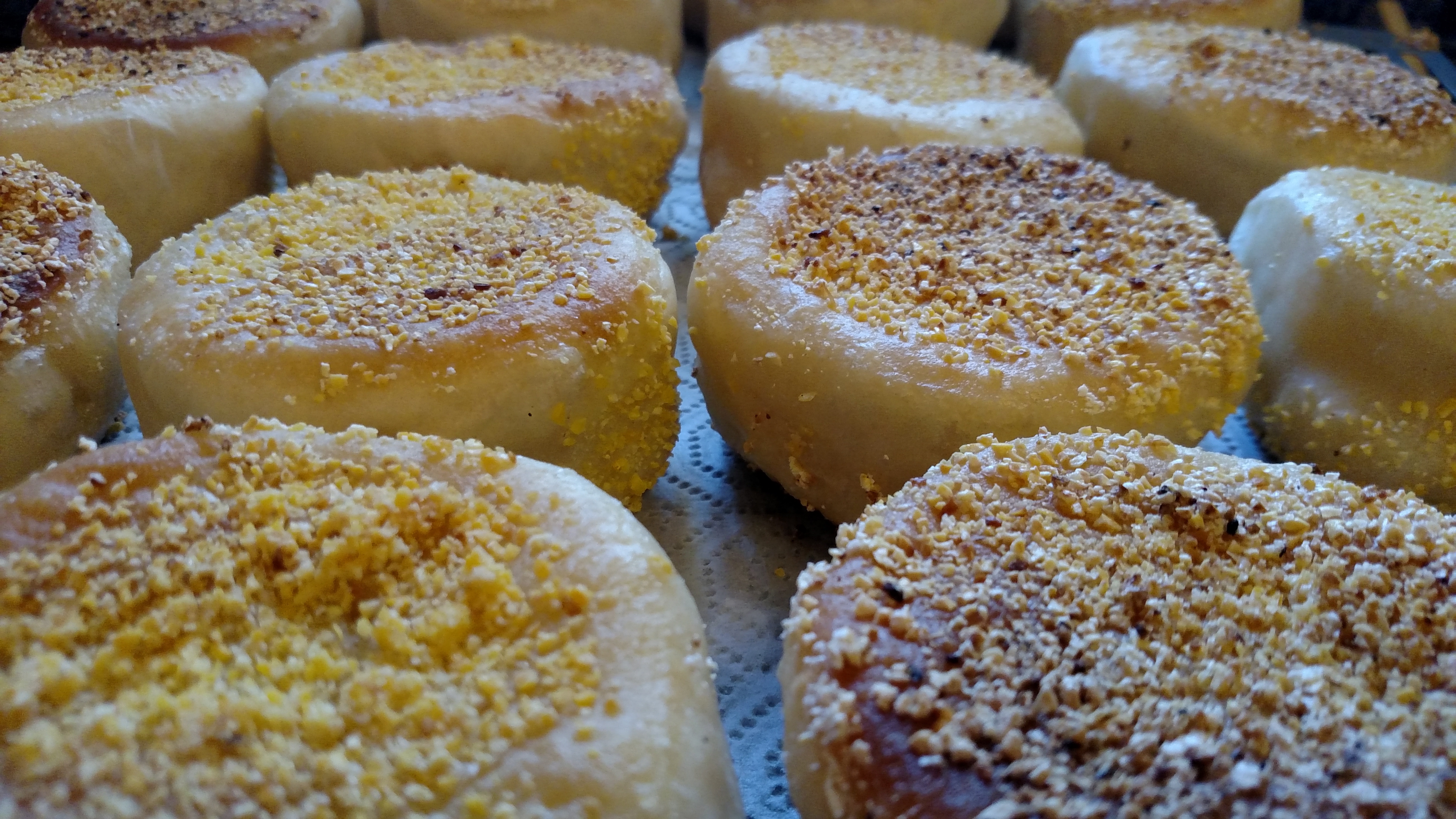
English muffins

About the Author, Joy Plummer

Joy PlummerJoy Plummer has been working in the food industry for seven years as a baker, caterer, and personal chef. A desire to set boundaries on food intake led her to a brief 2-year stint as a vegan, but she decided that she loved food adventures and her zaftig body more. She continues to serve personal chef clients, but bread is her true love. She plans to open a bread-centered restaurant in 2018. Joy lives in the San Francisco metropolitan area with her husband and three kids. Learn more about her on Facebook.

Sunday Brunch: On Silence

Silence. Most of us either love it or hate it, sometimes both depending on the circumstances.

From our earliest ages we’re taught that certain places are meant for silence. We are shushed in church, and reminded to be quiet when we visit libraries. We write poems about silence, repeat proverbs about it, and even sing songs lauding it, or, in the case of lullabies, we sing songs to coax it from others.

But those early types of silence, the enforced silences, are radically different from the kinds of quiet, of silence, that we embrace as adults. We might take our morning coffee out to the deck or patio to enjoy the quiet of an early morning. We make time in the middle of a busy day to meditate or pray. We seclude ourselves in the bathroom and soak in a scented bath in the evening.

And in all those moments, we think we’re experiencing silence, but really, we’re not. What we’re truly hearing is the lack of intentional sound. We may have turned off the radio, set our phones to do not disturb, or locked the bathroom door against chattery interlopers, but that isn’t really silence.

Fireplace

Last Wednesday evening, my husband and I sat in our darkened living room and listened to the crackle of the fireplace. We’d just finished eating tacos by candlelight. It wasn’t the meal I’d planned for us – I try to limit our ‘wrapper food’ to the occasional lunch – but the power had gone out late that afternoon, and our house has an all-electric kitchen.

It was late enough in the day that neither of us had fully-charged phones or laptops. We’d received an initial text that power would be restored at five pm, then seven, and finally midnight. It was supposed to dip below freezing that night – not as cold as the conditions our friends and family in the Midwest and Midlantic states were experiencing, but cold for Texas, where houses are built to shed heat, not retain it.

So we stoked the fire, and we lit all the candles and we brought blankets out to the living room and cuddled on the couch. We played games on our phones while we could, but eventually, we lapsed into quiet.

Into silence.

It’s a strange thing about modern life. We so rarely experience true silence. Even when snow blankets the world with its special, magical hush, we are still surrounded by electrical hum.

But when the power is out… when the fridge ceases cycling and the clocks stop blinking in digital blue or green… when light pollution is suddenly dimmed… that’s when silence truly falls.

As a rule, I’m not a fan of silence. I can’t sleep without white noise distracting me from the external house sounds that come with life in outer suburbia and muting the often too-loud thoughts inside my own head.

Last Wednesday, silence was an annoyance. I complained loudly to my husband. I even texted one of my friends that it was too quiet, that instead of being soothing, the silence felt oppressive and creepy.

But eventually, I relaxed into the softness, the cool darkness, and the almost perfect soundlessness. I went to the bedroom to curl up with my dogs and let the steady sound of their breathing – the only discernable noise – lull me into sleep.

My husband guarded the fire until it had burned low enough that it was safe to leave it, and then joined me in the bed. We lay together in the darkness, not speaking. Not really touching. Just breathing in the silence.

Shortly after midnight, the power returned, jarring us out of our quietude and into wakefulness. I wish I could say that we looked at each other, laughed, and turned the lights back off, but we’re tech addicts and habitual night owls.

We went back to bed around two in the morning, our usual hour, but something of our evening of enforced silence lingered. We were gentler with each other that night and the next day, more mindful.

I’m still not fond of silence.

But I like quiet.

And I love the peacefulness of snuggling on the couch with my husband, not talking, not watching television, just being together.

About the author: Melissa A. Bartell

Melissa is a writer, voice actor, podcaster, itinerant musician, voracious reader, and collector of hats and rescue dogs. She is the author of The Bathtub Mermaid: Tales from the Holiday Tub. You can learn more about her on her blog, listen to her podcast, or connect with her on on Facebook, Instagram, or Twitter.

In Theory by Æverett

Open Book

I have faith in impossible things.
in angels and airwaves and mystic tarot.
angels with black wings and blacker eyes.

A metric ton of sound bursts overhead, ringing and vibrating and thrumming. Alive. Real. It digs in, it melts, it Becomes. It grows at an exponential rate and tears the flesh before its rampage to shreds. It reverberates and the onslaught repeats. It hums. It swells. It smashes all the windows.
Glass on the floor cuts my naked feet.


I believe in heartfelt androids—
he smiles so sweetly, you know.
I believe in Tongues—
it just takes learning.
Saints are just dead men. Don’t worship them.

that’s blasphemy.       It is.

I have faith in impossible things.
in the end of everything and the kindness of others.
a touch on the shoulder…

a gentle kiss—       I miss that.

I pray for impossible things. I always will.
go on, fight me! *thumps on chest*

The book sits there, untouched, and weeping. He bleeds for her. And she doesn’t even care. The ache is raw— and the cacophony is shredding his every. damn. page. Flesh thrown asunder in all directions, splattering on the walls, the ceiling. And the voice laughs. And she echoes it. It’s a friend of hers, and she loves that sound; it always makes her joy. She is, in fact, in love with him. And he is so very jealous. So very, very fucking jealous.


He lets it go, lets himself die— And cries with regret when she begins picking up his disparate pieces, still crying with laughter in echo. Crying with laughter in echo.

I love you.
damn do I love you.
Seeing your name on the caller ID makes me so happy.
Thank you for being.

Thank you for being.
On an empty street, I hear a familiar voice. I guess the street isn’t so empty. I follow it, and for the first time, see the face. It echoes in my memory with so many accompanying images. But not this one. Never this one.

Fear. Thrill.

I have never felt unsafe in a dark parking lot. I have always felt the Predator. I am a Predator now. But I will not hunt this. I back away. I watch. And I etch it in my memory— the sound of your laughing and the sight of it leaving your lips. I turn from you, completely unseen, unknown, undisclosed, and I walk away from you.

The sound of laughter chases me.

I will remain undisclosed.
You will never know.
It is my sick little secret.
sick little secret.

Little do I know, you saw me there, watching. And you knew.

You too are the Predator.
Kindred. Trouble.

I have faith in impossible things.
Theoretically, every reality is possible. So this isn’t even irrational.
String theory, man. String theory.
Shut the sound off.
and put the angel to bed—      kiss him to sleep.
And the laughter will never end.
Und das Lachen wird niemals enden.

Niemals enden.
In theory, anyway.


Photo by Cathy Mü on Unsplash

About the Author: Æverett

ÆverettÆverett lives in the northern hemisphere and enjoys Rammstein and Star Trek. He writes both poetry and fiction and dabbles in gardening and soap making. She has two wonderfully old cats, and a dearly beloved dog. He also plays in linguistics, studying German, Norwegian, Russian, Arabic, a bit of Elvish, and developing Cardassian. Language is fascinating, enlightening, and inspirational. She’s happily married to her work with which she shares delusions of demon hunters, detectives, starships, androids, and a home on the outskirts of a small northern town. He’s enjoyed writing since childhood and the process can be downright therapeutic when it’s not making him pull his hair out. It’s really about the work and words and seeing without preconceptions.


Male Voices by Patricia Wellingham-Jones

That I don’t understand a word
adds to the soaring sound.

I have no need of the richness
of gilded wood and sacred icons.

The male voices exalt
in Russian Orthodox chants and hymns.

Tenors coil crystal chimes,
baritones thread intricate melody,

and the basso profondos
hold the whole firmament aloft.

Their earth-deep, cave-dark rumbles
lodge in shuddering bone,

quivering heart, and deliver me
past the elements.

About the Author: Patricia Wellingham-Jones

PatriciaWellingham-JonesPatricia Wellingham-Jones is a widely published former psychology researcher and writer/editor. She has a special interest in healing writing, with poems recently in The Widow’s Handbook (Kent State University Press). Chapbooks include Don’t Turn Away: poems about breast cancer, End-Cycle: poems about caregiving, Apple Blossoms at Eye Level, Voices on the Land and Hormone Stew.

Hope is Never Lost by Dona Murphy

I had a client who was very anxious about the development of a relationship say to me, “I know you’re always honest with me. I just don’t want to have false hope.” That set me back a little – to me, hope is never “false” at least not as I define hope. Hope is dynamic and evolving.

Hope is not an attachment to a specific outcome to the exclusion of all other possibilities.

I watched a beloved relative of mine battle cancer for several years. His hopes and ours – our desires – changed form and expression as circumstances changed. Life happened. First we hoped for his disease to go into full remission. Then we hoped for a good quality of life for as long as possible, and finally we hoped for a peaceful death with dignity.

None of those hopes were false.

The false belief that only one person, situation or outcome is the best and most desirable leads us to give up hope. The belief that only one specific thing will make us happy can render a situation hopeless.  We mistake our preferences which are temporary and mutable as the absolute best thing for us.

We forget that our conscious, ego-minds operate from a limited perspective. We lack objectivity. Our conscious minds see through a narrow filter. We have the power to create and influence our circumstances. We define our own experiences.  But we forget that we are neither all-knowing nor all-powerful. Our ego-minds need and want control. We forget that we are co-creators. The divine spark of creative power within us doesn’t guarantee lives free of pain and loss. Pain and pleasure, gain and loss, happiness and sadness are the birthright of every life.

The Universe (the All-Mind) contains and resolves our experiences through unity, oneness, wholeness.

Another way we fall into error is that sometimes we don’t realize all the possibilities that are open to us. If anything most of us make the mistake of dreaming too small; we don’t ask for or expect too much, but too little. We cheat ourselves by fixating on something that might represent a fraction of all that could be ours. What we long for may not serve our highest good. It might disappoint us rather than bringing us the joy and fulfillment we desire. Having hope allows us to receive in ways that can far exceed our expectations.

It’s not hope that is false, it’s the limits we impose either on ourselves or on the Universe. There are limits not to what we can desire or hope for but to what we can control. The Universe is limitless. All we need is to gratefully and graciously receive. Falsehoods eliminated.

I know these things: “What is yours will not pass you by” (anonymous) and “What you’re seeking is seeking you” (Wayne Dyer).

You will hope. If you claim your desire knowing that its own fulfillment is contained within it, you will not hope in vain. Hope is asking for what you desire and then opening yourself to receive what the Universe gives you. If you will hope, you will find your desires fulfilled. Hope is an invitation to believe and trust. Believe that you are part of a limitless, loving Universe. Trust that the Universe always provides exactly what you need, exactly when you need it.

If you will, hope.

About the Author: Dona Murphy

Dona Murphy is the owner of Destiny Tarot. She lives and works in Lake Bluff Illinois as a Tarot reader, Intuitive Counselor and Life Coach. Dona combines her metaphysical and spiritual studies, natural gifts and real-world experience to help her clients solve problems and live their best lives. As she says, “The cards don’t predict your future, they help you create it”.

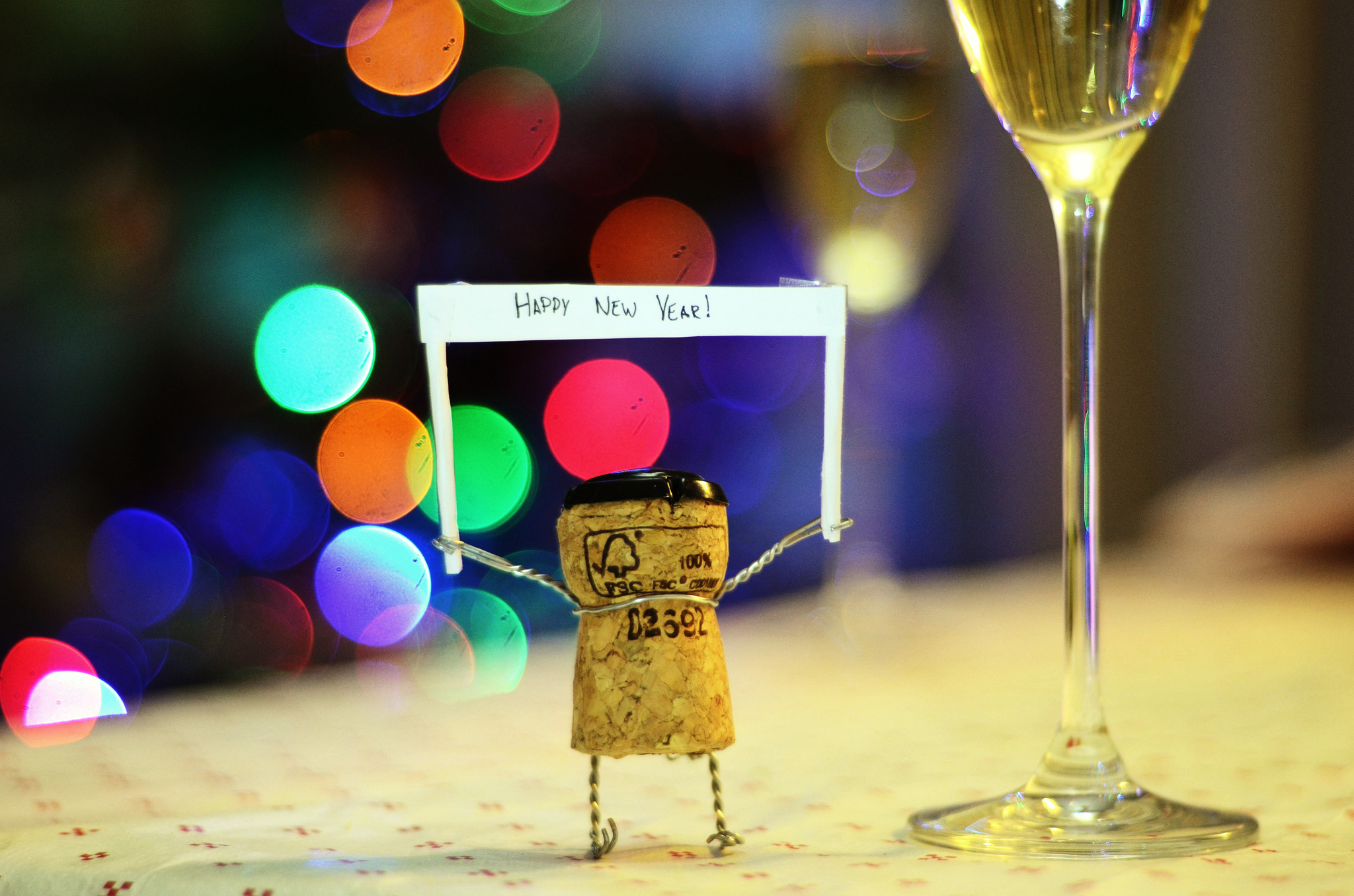
Happy New Year from Modern Creative Life

Happy New Year from all of us at Modern Creative Life.

A new year is like a blank page or a fresh canvas. It’s our opportunity to declare our intentions for the future (because resolutions never work) and to bid a fond goodbye to the things of the past that no longer serve us. It’s not just a fresh calendar page, but a whole, new calendar.

To open the new year, we’re sharing some of our favorite quotations about hope, wonder, and possibility.

“Hope
Smiles from the threshold of the year to come,
Whispering ‘it will be happier’…”
~Alfred Tennyson

“Take a leap of faith and begin this wondrous by believing. Believe in yourself. And believe that there is a loving Source – a Sower of Dreams – just waiting to be asked to help you make your dreams come true.”
~Sarah Ban Breathnach

“Write it on your heart that every day is the best day in the year.”
~Ralph Waldo Emerson

“Hope and faith flower from the cheerful seeds of the old year to the sprouting garden of the new year’s dawn.”
–Terri Guillemets

“I hope that in this year to come, you make mistakes. Because if you are making mistakes, then you are making new things, trying new things, learning, living, pushing yourself, changing yourself, changing your world. You’re doing things you’ve never done before, and more importantly, you’re doing something.”
~Neil Gaiman

“A Happy New Year! There is a glow of cheer and optimism in the very words “New Year.” The old year, with its anxieties and worries, is over. It too brought happy days and sunshine, and in memory we must cherish the bright places.”
~May Louise Crane

May the hope and wonder of the holiday season carry you through the New Year and beyond.

The Staff of Modern Creative Life

Image: Edd Sowden for Flickr Creative Commons

Through the Lens: on Woodworking by Keva Bartnick

Through the Lens

There has always been an artist that has lived inside of me. From the first moment I drew breath there has always been one. Maybe, it stems from past life experiences, maybe something else quite different. One can never be 100% certain where the muse comes from within.

Some chalk up creativity as the soul speaking magic out into the world. I hear it as a small voice inside my heart, whispering, “that’s it…that’s the one.”

I have found Pinterest to be of great help and influence to which project I’d like to tackle next. I find it a great repository for great ideas, and great projects a like.

My husband is a wonderful help as well. Where I lack, he is right there next to me offering up advice, thoughts, suggestions, and love. He is a muse all in of himself. Many a day he looks at me with a sideways grin, it’s like he knows…and says, “what’s next?”

I have a great board of projects, ideas, things I’d like to accomplish; small and large alike. I have heard many a suggestion that Pinterest makes people, woman especially, feel that they need to do more, be more. Perfection is something that they try hard to attain. I’ve never looked or wanted for perfection. Just something to sink my teeth into, to reach my muse, to touch that part inside my heart that speaks to my soul.

I have worked hard over my 40 years to try all the artistic outlets that have spoken to me. Pencil drawings, charcoals, paint, ceramics, printmaking, sewing, sculpture, metalsmithing, weaving, and paper mache.


Woodworking has become my newest passion. I find so much wonder in it. I’ve always wanted to make furniture. In college I took a black smithing class and made a papison chair out of half round mild steel. I had so much hope at the beginning of the project, and was overjoyed at its completion. There is something to be said for handmade pieces made from the heart.

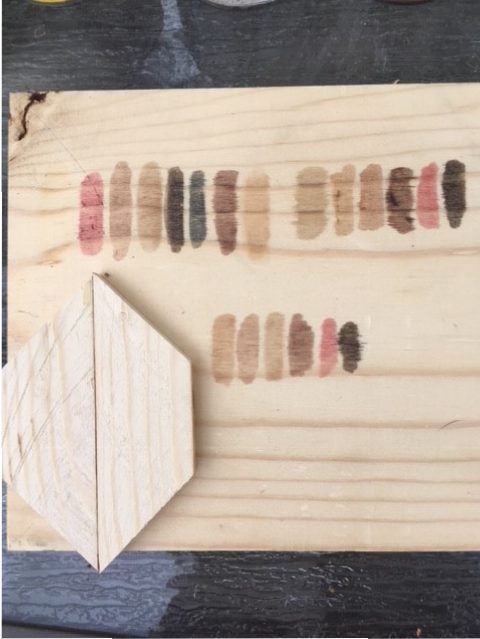
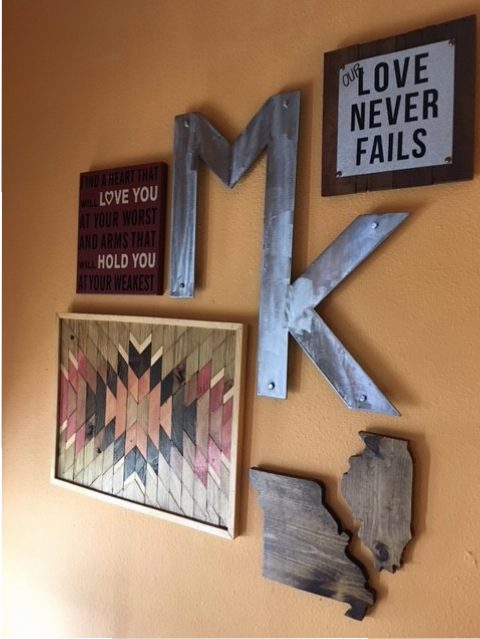
We recently repainted our foyer. It reminded me of what it would be like to paint with liquid cheddar cheese. I’m a huge Packer fan so the coloring seemed to fit well with football season on the way. I’d also been looking at gallery walls as well. Seeing how everyone’s personal style gets reflected on a blank canvas like that of a long wall.

I find that looking at peoples personal style you can learn a lot about how eclectic their style can be. How far off the beaten path they like to walk, how much they like to express themselves out in the open.

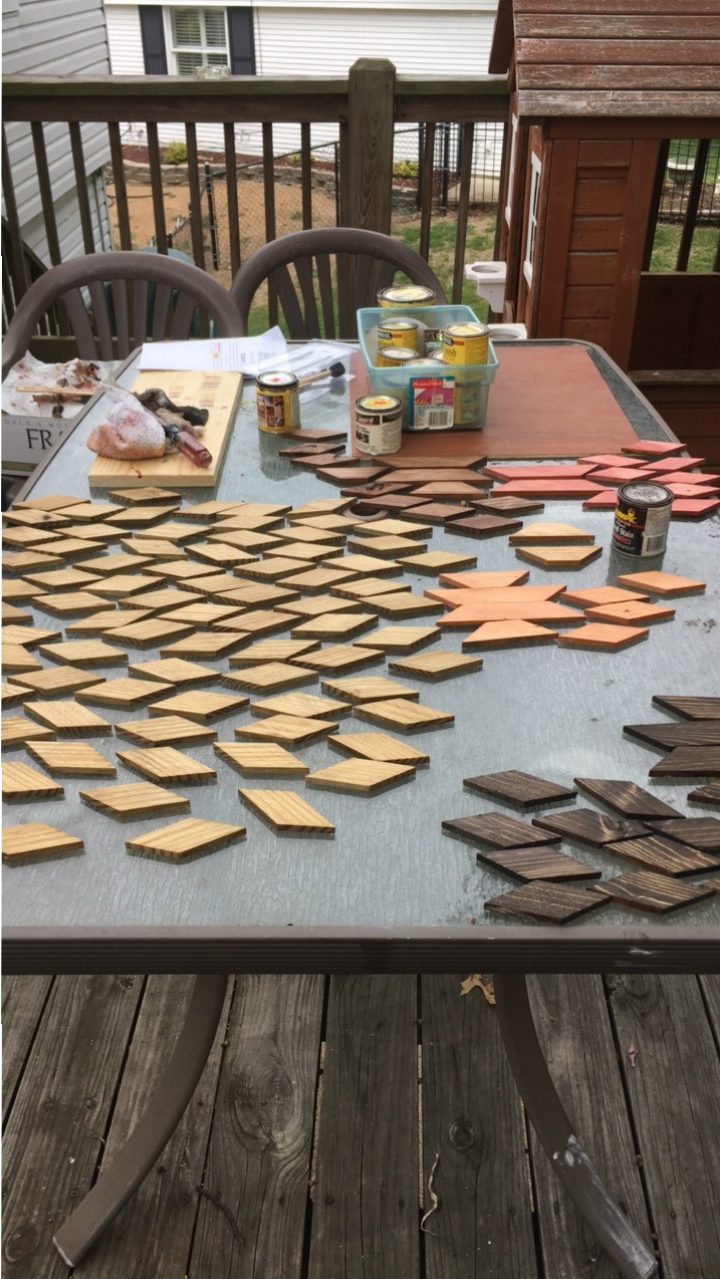
I started this project with the idea that I could complete it from start to finish all by myself. With all things in life I have found that we are never alone. At least, I am never truly alone. I was mistaken to think that if I brought this project up to my husband he’d let me do it all on my own. It was even more foolish to show it to my wonderful father-in-law. Before I knew it this had become a group effort full of wonder and hope for what it would become.

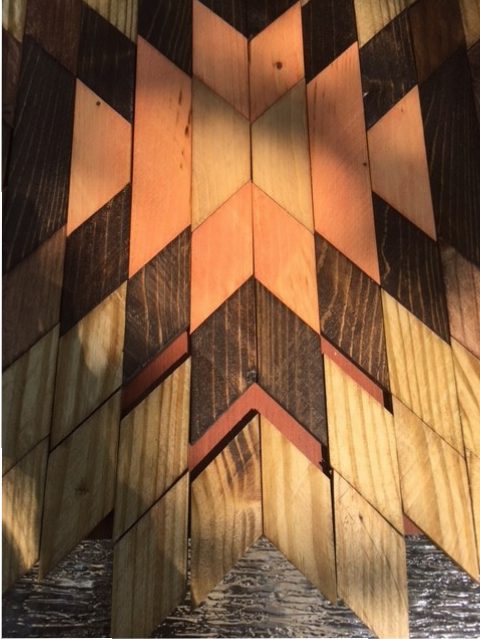
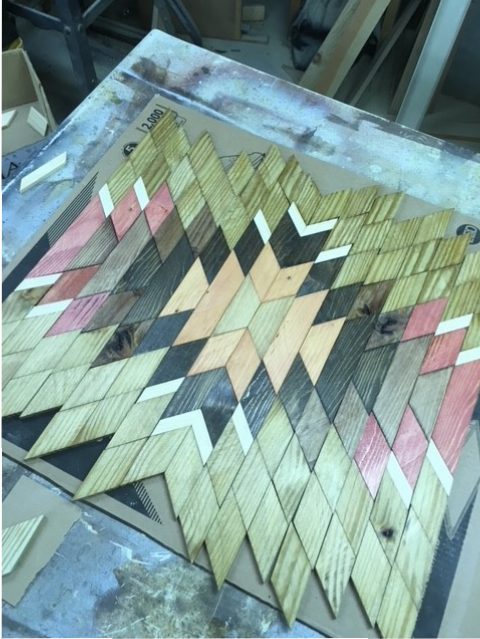
My father-in-law with his woodworking shop in his basement took all the measurements. He cut all the pieces. He worked out everything I would need to put my puzzle together. To make my project work he did what he could to help; to be a part of it all. My husband offered support. Over the weeks our project slowly came together. In the end we were all the closer for it.

We now have a piece that we love, it hangs in our foyer. A testament to a group effort, to our fortitude to create something beautiful. Our wonder at what our project could become, and our budding hope that we’ll be building together again soon.

About the Author: Keva Bartnick

Keva Bartnick is an artist, writer, and lightworker. Happily married mother of three; she’s been inspiring people to be their most courageous selves since 2015.

She can be found at Taleoftwofeathers.com

Sunday Salon: The Gift of Art

It’s that time of year, the countdown to the holidays. People hustle and bustle, make lists, check them once, twice, thrice. Amazon’s server is on fire with orders flying in from around the world.  If you haven’t finished your shopping by now, well – you’re in a bit of pickle, aren’t you?

Photo Credit: Ben White for Upsplash

For quite a few years I’ve eschewed the whole holiday shopping enterprise. My husband and I are at the stage where we don’t need or want much of anything, and if we do, we get it for ourselves. We might treat ourselves to a concert or dinner out, maybe a little trip somewhere. But buying more “stuff” for each other has lost its charm. As one of my elderly friends put it: “If I can’t eat it, read it, or go to it, I don’t want it.”

But in these often troubled times, when materialism and greed run rampant throughout our society, there is one still one gift well worth investing time and money to give.

The Gift of Art.

Sadly, this gift is not valued highly in the modern world. Artists struggle for recognition, for funding, for space to do their work. When budgets need cutting, the arts are the first place to point the knife.

For the past three weekends, I’ve been out performing with my group, Classical Bells. We’ve watched our audiences come in tired and cold, stamping snow from their boots, looking weary and downhearted. If we do our job well, the music helps thaw those icy places in their lives and even provides a few moments of transcendence from the mundane problems of daily living so they go back into the world with a quieter, softer heart.

“Every piece of art, every performance, is a state-of-the soul address,” wrote poet Jane Kenyon. “The love of the absolute beauty of art, the longing for the well-being of the planet and all its creature, the awe we feel in the face of life and death, the delights of the inward eye and inward ear, the understanding and nurture of the soul – these are the gifts of art.”

And it’s not only the recipient but also the maker of art benefits from this gift. This has been a horrible week for me. Our little dog Molly died unexpectedly Monday, just five months after we lost her brother, Magic. I grieve mightily for these precious companions of my home and heart. But the hours I spend playing music are a balm for that ache, directing my focus away from sadness and toward the task of creating something beautiful.

“Artists report on the inner life,” Kenyon continues, and the inner life distinguishes us from centipedes.” The inner life – our imagination, our compassion, our spiritual awareness – these are the places art touches in us. Art allows us to glimpse something larger than ourselves, that “awe in the face of life and death” as Kenyon put it. We ignore our inner life at our peril, Kenyon warns, for when we do, we “become capable of extreme cruelty and destruction.”

The evidence of that abounds in the world right now, doesn’t it? So this holiday, commit yourself to making art and sharing it widely with young and old. If you’re a writer, volunteer at a local library to do a reading or host a workshop. If you paint, set up your easel in a public place and invite questions and comments. If you’re a musician, take your instrument or your voice to a hospital, a nursing home, your neighborhood coffee shop. If you knit, make scarves and socks to pass out to the homeless.

The possibilities for gifting are endless.

And the gift of art is PRICELESS.

About the Author: Becca Rowan

becca_rowan_bio_may2016Becca Rowan lives in Northville, Michigan. She is the author of the books Life in General, and Life Goes On, personal and inspirational essays about the ways women navigate the passage into midlife. She is also a musician, and performs as a pianist and as a member of Classical Bells, a professional handbell ensemble. If she’s not writing or playing music you’ll likely find her curled up on the couch reading with a cup of coffee (or glass of wine) close at hand. She loves to connect with readers at her blog, or on Facebook, Twitter, or Goodreads.

The Puppies by Patricia Wellingham-Jones

Cleaning house in her nightgown
Donna spots me on my morning walk,
leans out the door and yells,
“Hey, wanna see the babies?”
I do, of course .

We stand over the nursery,
gaze at the ten huddled scraps
of multi-colored poodle puppyhood,
barely four days old,
wearing teeny collars.

First time mama Paris
is surprisingly cool, supplies faucets
as needed to ten seeking mouths,
tolerates giants looming
and fingers poking at her children.

Donna coos, I try hard not to,
and grandpa Shadow keeps an eye on us all.
As he nudges my hand, black and white
stuffed toy in his mouth, Donna says,
“He wanted his own baby
so I bought him one.”

She looks down at her flowered gown
and bare feet, grimaces then says,
“Forgive the mess.”
I don’t see anything
but beautiful babies.

About the Author: Patricia Wellingham-Jones

PatriciaWellingham-JonesPatricia Wellingham-Jones is a widely published former psychology researcher and writer/editor. She has a special interest in healing writing, with poems recently in The Widow’s Handbook (Kent State University Press). Chapbooks include Don’t Turn Away: poems about breast cancer, End-Cycle: poems about caregiving, Apple Blossoms at Eye Level, Voices on the Land and Hormone Stew.

Instrumental: The Holiday Grieving Survival Kit by Jeanie Croope


It’s the season of hope and wonder, of parties and cookie and decking the halls. We are told to have a Merry Christmas or Happy Hanukkah and we say the same in return.

And sometimes we are neither Merry nor Happy.
The winter holidays can be stressful even for those who love them and “Martha to the Max.” But for those experiencing grief and loss, the first winter holidays without someone they love, they can be especially challenging.

This year there will be many who have lost loved ones in fires and hurricanes, through accidents and illness. Add to that the loss of a home or a job and the holidays don’t seem so merry and bright. For many years I volunteered at a family grief center and clearly the winter holidays were the hardest time. If you are dealing specifically with grief or loss issues, these tips on getting through the holidays might be helpful. And if you are not currently on that grief journey, you may see some ways you can help someone who is.
Sometimes Tradition, Sometimes Not

A dear friend facing a challenging holidays said recently, “I’m dreading the traditional this year. The new experiences I am looking forward to, but the old ones — I don’t know.”

Too much food, too much stress, too much pressure and too little time. Add to it a major life change and the old-familiar may be a little too tough.

So, give yourself a break. I’d never advocate changing traditions that work, but consider trying something new. Good grief, even if you’re happy as a clam, try something new, whether it’s a cookie recipe or a change of venue! It may become a new tradition or maybe it’s just an event for this year to help shake things up in a good way.

You may see your best (and most unexpected) holiday concert ever. Enjoy a walk through a dazzling winter wonderland on a zoo walk. Sample far too many treats as you stroll through a holiday gallery walk. Go caroling for the first time since college. Watch “The Nutcracker” live or on video.

Consider a road trip. If being home is too hard, venture to a new place or accept the holiday invitation to spend it at the home of friends or relatives. It doesn’t have to be a permanent tradition, but it might make the first year under new circumstances a little easier.
And if your friend is grieving? Help out with a surprise meal of pasta, salad (in a bag makes it easy, if not exciting!) and some crusty bread. And if you can, join them. Dinner alone can be tough for the newly widowed.

Be willing to listen — to sadness, to memories, to fears for the future. And remember, loss can be complicated. Not everyone is sad for a death — they may be sad for what was and now can never be. Don’t assume you know how they feel. You might know how you think you would feel but everyone’s experience with a person who died is unique.

Welcome the Person Who Is No Longer With Us by Remembering

You might light a candle in someone’s honor — whether it is at the dinner table or privately. Honor the light they brought to your life. Or stop by the cemetery to lay a pine bough or some holly.

I have the “Dad” Christmas tree (with ornaments that reflect things he loved) and the “Mom” tree, with ornaments that were some of her favorites along with new ones that I know she’s love.

Try a helium balloon flight — write a note to the loved one, tie it to the string of the balloon, then let it go high in the air. This is especially meaningful for children. When I was volunteering in the grief center, the annual balloon launch was the “event of the year” and the kids and adults alike valued sending up their thoughts to their loved one.

If stitching is your thing, consider making ornaments from one of their clothing garments or jewelry or use something that was part of them as part of your holiday decorating. Or ask your crafty friend if they can make you something in the year ahead — a stuffed bear or tree ornaments, for example. This year my friend Suzanne gave me several necklaces of her mother’s, whom I knew and liked very much. She thought I might pass them on to charity. They are costume jewelry but that long strand of pearls and another necklace are now a beautiful beaded garland on one of my trees. The others will be given away but these memories of Nolda will remain on my tree for years to come.)
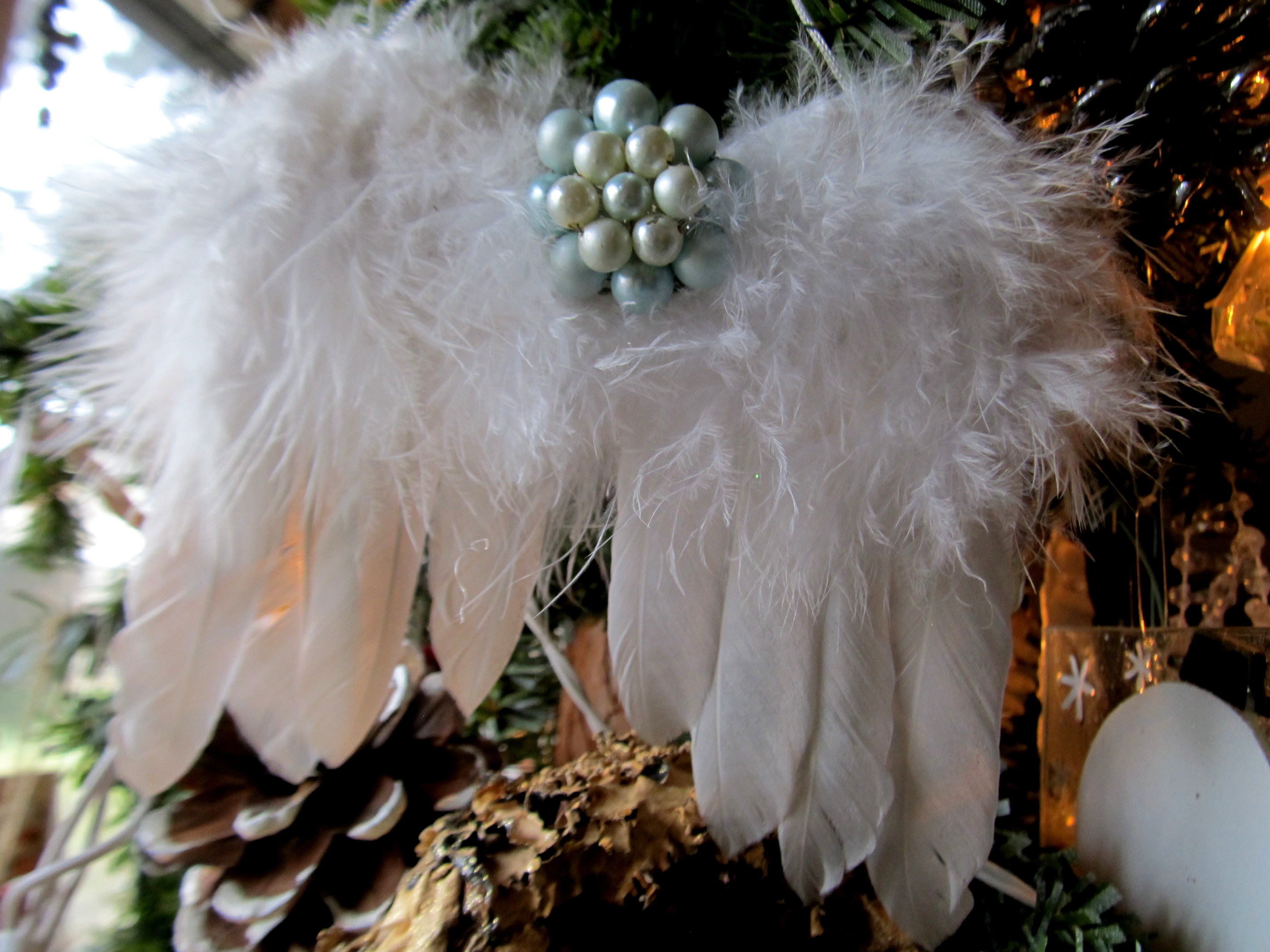
Do Something that Might Make You Feel Like You Are Making a Difference. 

It can be hard to give back when you feel you have nothing left to give, but volunteering doesn’t mean just working at an organized activity with a major time commitment. You may have an elderly neighbor who might not easily be able to wrap gifts for the family. A couple of gift
bags, some tissue and you’re good to go — you’ll make that person’s day and you’ll feel pretty great yourself. Park yourself in the lobby of the nursing home or assisted living site or in a room at your church after Sunday services, loaded with wrapping paper.

Often I do what I call my “Random Acts of Christmas” — chipping in $5 at the grocery cashier to go toward the order of the old man behind me, anonymously of course. Priming the meter or parking attendant with another dollar’s worth for the next user. An anonymous gift to someone who needs a lift. Once you start, it is really hard to stop.

Most of All, Be Gentle with Yourself

Remember, holidays can be tough on a good day. There are parties when you don’t feel like partying, a whole lot of sugar and butter, things to do, like shopping and wrapping and mailing — presumably with a deadline, and so much more. Sometimes it’s good to
go out, see friends, make merry. Sometimes that’s even very healing.

But there are other times when you just can’t. Don’t beat yourself up over it. People will understand. If the cards don’t get out, it’s not a crisis. If you can’t bear to write the holiday letter that covers your year, skip it and just send a card or an e-card.

Pick a few things to do — not everything. Talk it over with your kids (young and older, too) and let them know where you stand, and learn where they do. You can probably come to consensus.

As a friend, if you are headed to the store or the post office, ask if you can pick up groceries or stamps. Bring a tray of crudites instead of cookies, maybe with a light dip or cold shrimp and sauce. There are loads of ways you can help someone take care.

Remember, There IS Hope. And There IS Wonder.

It may feel impossible to find hope when things dark and sad. But it’s the time we need it most. And seeing the wonder of the world may just be an important part of the antidote. The twinkling lights, whether on your own tree or in a shop window. The smile on a child’s face. The grateful appreciation for an act of kindness. The quiet snowfall on Christmas Eve. The blanket of stars in an inky night sky or the dazzling pinks and lavenders of the perfect sunset. There is wonder in the love we have known, that great gift that carries us through.
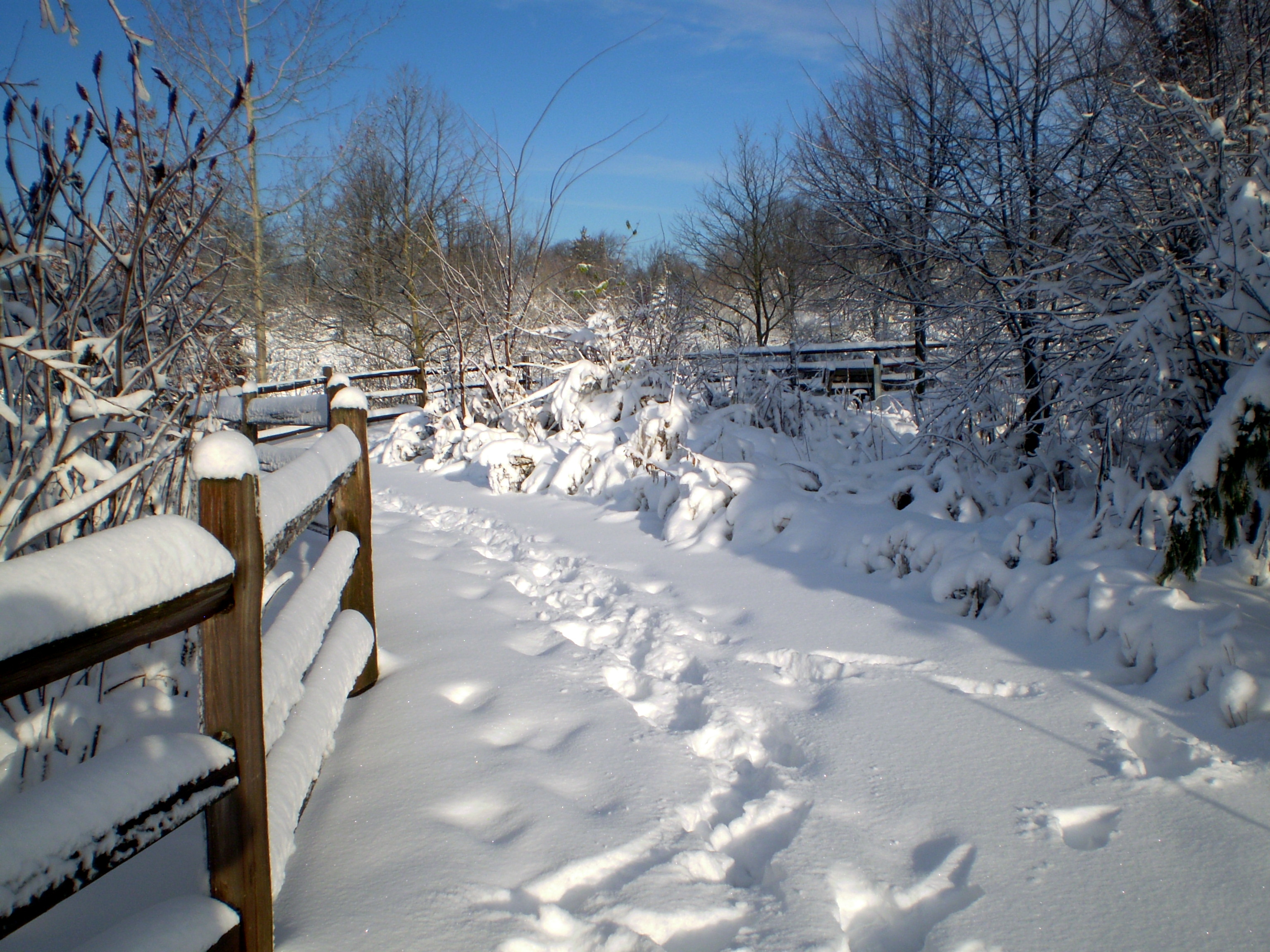
 

And there is wonder in the cycle of life, of knowing that flowers will bloom, leaves will change into a glorious array of colors and snow will fall. The sun will rise and set and the world will spin its orbit. And with it comes the hope that next year will be a little kinder, a little easier, a little more settled.

I will not wish you a Happy Holiday — I’ll leave that to you, and it may be hard. But I will offer my wishes for peace and healing and the hope that you will find even just a wee bit of wonder to help you in your journey this season. May that star shine brightly to lead you into a new year of hope.

About the Author: Jeanie Croope

Jeanie Croope bioAfter a long career in public broadcasting, Jeanie Croope is now doing all the things she loves — art, photography, writing, cooking, reading wonderful books and discovering a multitude of new creative passions. You can find her blogging about life and all the things she loves at The Marmelade Gypsy.