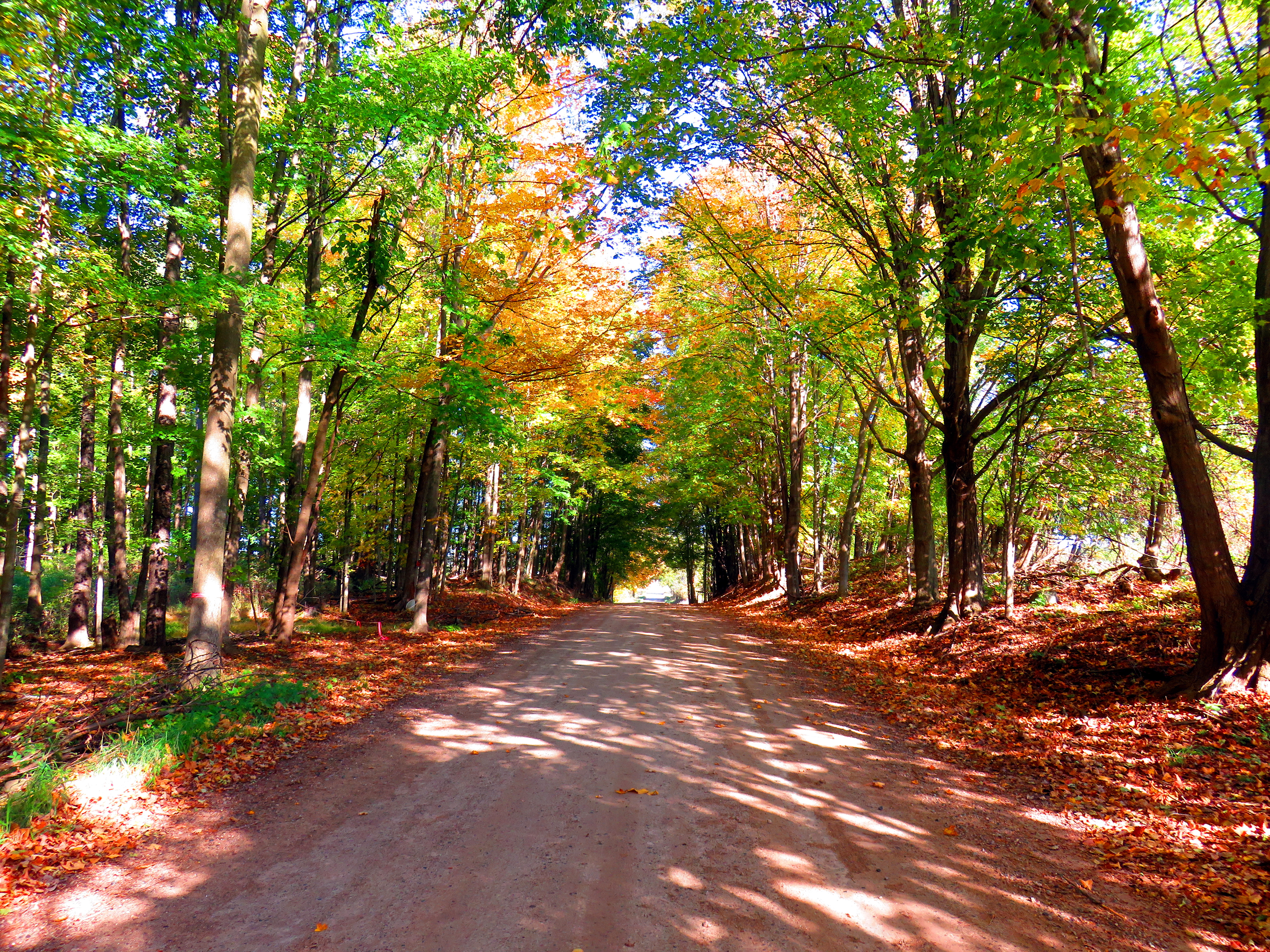
A Journey of Self Discovery Through Family History by Jeanie Croope

I like to say it’s all Dr. Henry Louis Gates’ fault.

For many years I’ve enjoyed his PBS shows on tracing genealogy and I had plenty of questions about my own. Last year I decided to dig into my past in earnest.

Anyone who has engaged in family history research knows that there are a million rabbit holes into which one can fall. Start googling or using one of the several more common genealogy web services out there and you begin to find names you never heard of and stories you never knew. I knew that the results would be interesting. What I didn’t realize was the effect those revelations would have on my sense of self and family.
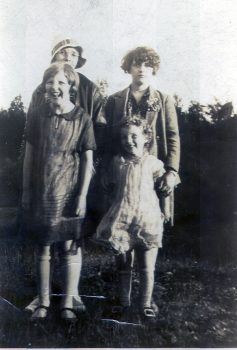
My mother’s family was a bit of a mystery to my cousins and me. We had a few stories on my grandmother’s side, but Grandpa’s family was a complete unknown, never discussed. Mysteries evoke speculation (there was plenty of that!) and I was determined to learn what happened to my great grandparents, Henry and Angeline (whose names I never knew until I started this journey).

It took awhile but I discovered things I never would have imagined, some sad, some inspiring, some just interesting. As this information was revealed, bit by bit, like layers of an onion gently falling off to reveal its core, I realized that I, too, am part of this story. These men and women and the struggles and challenges they faced, were all part of my DNA, my true self.

Call me ignorant, uninformed or too far beyond the American history I learned in school, but I had long forgotten that not all American settlers in the 1700s came from England and for a variety of reasons. I had no idea that the first immigrants of my great grandmother on my grandfather’s side came as a result of religious persecution that began in Switzerland during the 1500s.

Switzerland? Really?

They were Mennonites and part of a group that came to Pennsylvania in the 1700s from Germany known as “Pennsylvania Dutch,” a group that also included the Amish. My Swiss ancestors, those of our great grandmother, Angeline, after fearing torture and even death for their beliefs, fled to Germany and from there to America. They would later move north, to Canada.
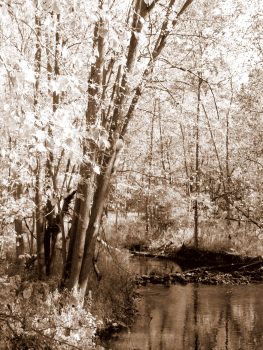
My grandfather’s paternal side also came to Pennsylvania in the 1700s, but their initial motivation was to find a better life during a period of financial challenges in Germany that lingered after the Thirty Years War. Many sons in this family also joined the Mennonite movement and my ancestors were among them.

These brave families were indeed pioneers. Pennsylvania had just been established as a commonwealth by William Penn and promised religious freedom and the hope of prosperity. My ancestors, as did many of yours, came thousands of miles on a ship that took months to arrive and on a journey that for many resulted in death at sea. Quite literally, they had nothing but the clothing on their backs and what they could pack. They built the towns, the stores, the schools and farmed land never before cleared.

Think about what it would be like to move into a new community with no ready communication sources, no schools, no stores, no doctor or dentist unless one came along with you. It puts things in perspective.

As the generations moved on, Henry’s ancestors moved west, first to Ohio. In fact, his father walked to Ohio alone, purchased land, established a farm, and then returned to Pennsylvania to bring back his parents and wife in a covered wagon. It was in Ohio where Henry was born and raised. As an adult, he came to Michigan to settle about an hour from where I now live and started his family, my grandfather being one of the youngest of his six children.

I unraveled all sorts of stories about relatives on both sides but the mystery of Henry continued until we learned that he had been committed to a mental institution and in a stroke of great luck, found his commitment papers, which tell a sad story of mania and perhaps schizophrenia.
His counterpart, my grandmother’s father, William (presumably born “at sea” but I’m still looking for documentation), emigrated as an infant to Buffalo, NY and set out on a long career as a confectioner during the booming years of candy making in New York. It was a life of relative prosperity and comfort, much unlike the life of a farmer in the 1800s. Their stories simply couldn’t be more different.

As I’ve studied these stories and others in the family line, I have more than once pondered how I feel about this history and how I fit into this narrative.

And the short answer is proud. And sad. And impressed, in a way.

I have lived in the same city since the day I was born. Sure, I travel, I get around. But I’m not what one would call adventurous. I’m not a risky person. And so to consider that my people lived in such conditions where leaving their homeland was the only reasonable solution to their life situation evokes such a feeling of respect and awe. There are many who would simply deny their faith, fit in with the norms of the time and live in relative safety. But my family took a different path. To make that very long, often dangerous trans-Atlantic crossing required commitment and courage, a courage I’m not sure I have.
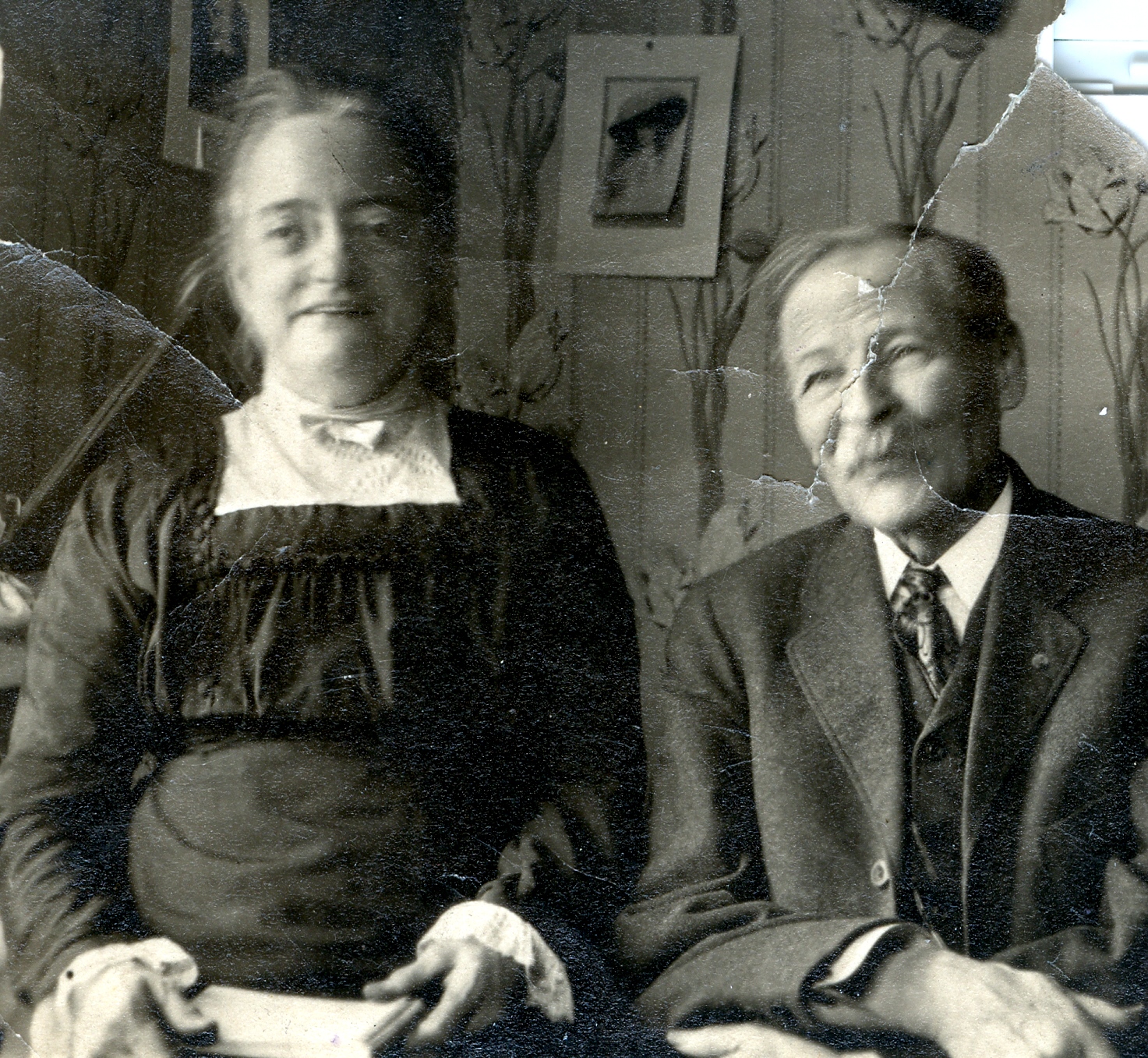
I am filled with admiration for their dedication to a faith that provided so many obstacles. While this is not the faith I practice, I admire the Mennonite’s basic tenets of belief, particularly the strong emphasis on peace and not bearing arms, and my ancestors’ willingness to die for it, to hide in caves and to worship in secret. It takes strength of character to defy the rules for one’s beliefs. I like to think I have some of that — but I’m not sure I am that strong.

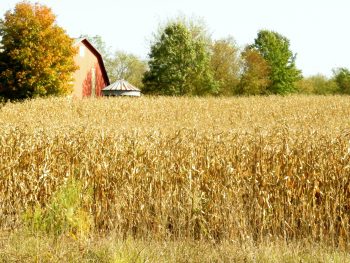
As I’ve learned about farming in the American Victorian period, I’ve realized how difficult it was when technology had not brought tractors and other farming implements to make the work easier. We all know this, rationally. But it wasn’t until I both read more and then actually saw the property that was my great grandparent’s — 100 acres of farmland in western Michigan — that I realized the challenge of it all. Farming was a family job. The children worked alongside their parents and that work was done manually. Michigan winters are tough and west Michigan tends to have some pretty rugged weather due to the lake effect snow. My people had to work hard, very hard, relying as farmers today do for weather conditions throughout the growing season to provide the best crops.

I have trouble growing tomatoes. In pots.

I am so soft.

I’ve learned I am much like my grandmother — a creative soul who loves to laugh. I had heard stories from my mother, her sisters and my mother’s best friend about my grandmother and her wonderful sense of humor, her creative streak and her good nature. What I didn’t know was that her parents had come to America in the 1800s from England to settle in a new city. Why they left remains a mystery. But somehow, through the chance happening of two people working in the same confectionery business, Minnie’s parents met.
Try as I may, my candy making ventures will never be store-worthy. (Witness the peanut butter fudge epic fail at Christmas.) Yet to know my great grandfather William was a candy maker — and indeed, I have his handwritten recipe book — gives me the confidence to try again.
My ancestors were not academically educated. I believe my mother’s generation was the first in her family to attend college. But they had a toughness and determination to build a good life, a new life, in a new land and to thrive.

I look at today’s news, stories of refugees fleeing oppression and seeking a freedom — religious or otherwise — they do not have. They are no different than the families of Angeline and Henry, William and Bessie. I find myself nurturing a desire to help those who come to my community settle into a new life. I haven’t quite figured out how to do this yet, but if there is one legacy I hold dear from the stories of my past, it is that in challenge we can triumph, over generations we can soar. These new immigrants deserve the same chance as my people did.

Perhaps one day, their descendants, too, will look back with awe, admiration and respect at their courage and strength and feel a little bit changed. I know I do.

About the Author: Jeanie Croope

Jeanie Croope bioAfter a long career in public broadcasting, Jeanie Croope is now doing all the things she loves — art, photography, writing, cooking, reading wonderful books and discovering a multitude of new creative passions. You can find her blogging about life and all the things she loves at The Marmelade Gypsy.
I Carry with Me by Pat West

Memories of old army blankets
slung over the clothesline,
a tent built when I was seven.
The front steps
of every house I ever lived in
thinking this is it,
this will be my home
from here on out.
My phone
and all the numbers
of people I call
and those who don’t call back.
Every fresh new start,
every last turn of the lock
and final drive away.
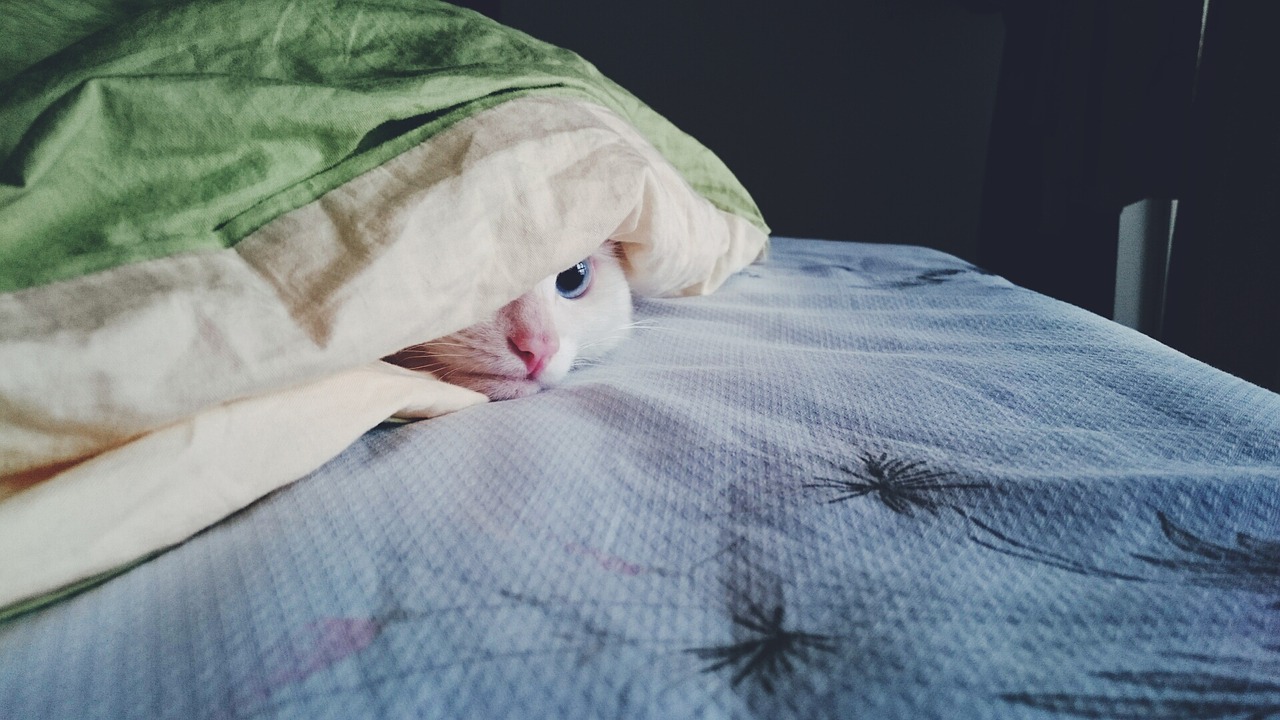
The tabby’s gentle footfall
on the bed. A shiny crescent scar
on my knee. Grocery lists
and birthday cards to send.
Flashbacks of the first funeral
I attended decades ago
and all the ones since.
The ceaseless chug of days
that pull me forward. The sour hope
that I’m among the ones
who get to grow old. I carry with me
an image of my father’s ropey hands,
the redness of my mother’s lips,
my brother laughing
crazy hard that time he ordered frog’s legs.

About the Author: Pat West

Pat Phillips West lives in Olympia, WA. A Pushcart and Best of the Net nominee, her work has appeared in Haunted Waters Press, Persimmon Tree, VoiceCatcher, San Pedro River Review, Slipstream, Gold Man Review and elsewhere.

Sunday Salon: Framing Life


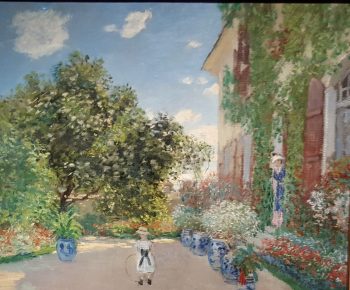
The Artist’s House at Argenteuil

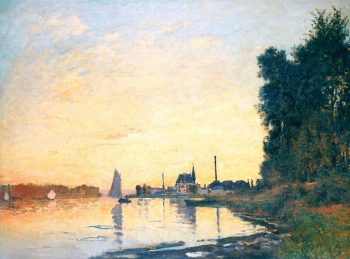
In 1871, the great Impressionist painter Claude Monet (1840-1926) left London where he had  been living with his family during the Franco-Prussian war, and moved to Argenteuil, a suburb of Paris. Monet painted almost 200 paintings during the four years he lived in Argenteuil, often standing outdoors (or en plain air) to capture his impressions of life outside the hustle and bustle of the city. They were paintings that depicted family life – his young son Jean playing with a ball in the backyard of their home, his wife Camille peering out the front door expectantly waiting for him to arrive home from the train station after traveling to Paris for a meeting with his patron. They were painting of his friends, Renoir and Manet, who visited him with their own easels and palettes, the group of them painting together, each one recording their own impressions of the world around them. They were paintings of Argentueil itself – an idyllic harbor scene with the intruding pinnacle of industry as the factory smokestack becomes the focal point, drawing one’s eyes away from the blue water and white sails of the ships.

Argenteuil, Late Afternoon

Earlier this month I attended a small and carefully curated exhibit of these paintings at our Detroit Institute of Arts. Aptly titled, Framing Life, the curator expertly chose the paintings from this period that demonstrated Monet’s ability to capture the beauty of family relationships, friendships, our natural surroundings, ordinary moments, and everyday objects and places.

Looking at these paintings, which were really just scenes from the artist’s daily life, I was reminded of the ways creative people try to capture the essence of our personal lives in our work. We want to cherish and keep this moments with us forever – the way the sun shines on the sidewalk where our child bounces a ball, the movement of white clouds across the azure blue of the sky, a friend smiling at us over the backyard fence, the trees laden with snow on a cold winter morning. We attempt to immortalize them in words, in melodies, in photographs, in soft water color “impressions” on canvas.

Monet, and his colleagues in the Impressionist School, were criticized by the art world for this focus on the everyday. Art was supposed to depict life at its largest – the lifestyles of the rich and famous, the lofty visages of royalty, the glory of battle. Instead of using art to illuminate mythological and Biblical themes, the Impressionists left their studios and went into the real world, literally by painting en plain air, and figuratively, with their subject matter.

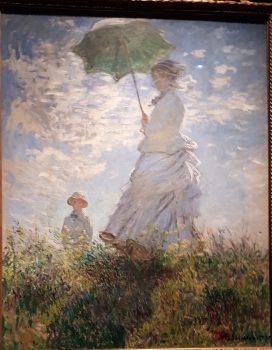
Woman With A Parasol

But before long people began to appreciate the rebellious Impressionist artists for just these very reasons. “Ironically,” writes art historian Ann Dumas, “the Impressionists former status as renegades enhanced their appeal to the connoisseurship and speculative skills of the bourgeois collector…(it was) a new art for a new class that wanted images of the world they inhabited.”

Sometimes it’s difficult to make the real world beautiful, but the artist is compelled to try. When the wider world becomes too dark, we turn to the beauty of our own small worlds, cherishing and immortalizing that beauty with our words, our images, our impressions.

Framing Life. As I sit at my desk, looking out the window at the bare tree branches etched before me, I place a mental frame around this moment, this space. As I walk through the quiet streets of my little town, looking into shop windows, stopping for a coffee and the bookshop, smelling the scent of fresh bread oozing from the bakery, I place a mental frame around the sights and sounds. As I wake on a cold winter morning, my husband sleeping peacefully beside me, the promise of a new day ahead of us, I place a mental frame around that picture too.

That’s how I frame my life.

How do you frame yours?

About the Author: Becca Rowan

becca_rowan_bio_may2016Becca Rowan lives in Northville, Michigan with her husband and their two dogs. She is the author of Life in General, and Life Goes On, collections of personal and inspirational essays about the ways women navigate the passage into midlife. She is also a musician, and performs as a pianist and as a member of Classical Bells, a professional handbell ensemble. If she’s not writing or playing music you’ll likely find her out walking or curled up on the couch reading with a cup of coffee (or glass of wine) close at hand. She loves to connect with readers at her blog, or on Facebook, Twitter, or Goodreads.

Conversations Over Coffee: Krista Davis

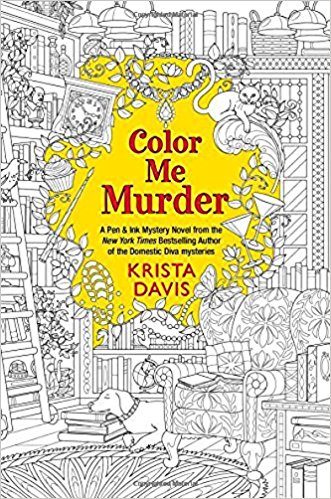
Want to know what I love more than a new book from a favorite author? The first book in a new series from a favorite author, which promises more books to come! When Krista Davis  – author of The Domestic Diva series and the Paws and Claws Mysteries – announced her new book, Color Me Murder, was the first in a new series set in Washington DC, I was thrilled.

And I was right to be excited about it: I’ve read the ARC and it’s an awesome book. Set in a bookstore in the Georgetown neighborhood, the main character, Florrie, likes to bake, creates adult coloring books, and manages the bookstore. (So, as a bonus: the cover of the book is color-able!) It got me thinking about characters, so I asked Krista if we could have a little chat about that. A great insight into writing, characters, and more – a perfect fit for our Selfie issue.

We call this series Conversations Over Coffee because it’s the things I’d ask you if we were sitting across the table from each other over a casual cup of coffee….. so, let’s set the stage: where would you suggest we meet near your current home….and what is your go-to beverage and/or snack were we to meet?

I live out in the country so I’d suggest meeting in my kitchen. I’ll put on a carafe of French Press coffee, or English Breakfast tea if you prefer. It’s too cold right now to sit on the terrace, so we’ll just meet at the kitchen table. If we’re talking in the morning, we might indulge in some home baked cinnamon rolls. If it’s afternoon, we’ll nosh on cupcakes or a slice of chocolate cake.

Color Me Murder is the first book in a new series for you. They say it takes a village to raise a child, but it seems it also takes a village of characters to create a book (and series). How do you go about creating your main character – choosing their names, traits, personalities? And all the supporting cast? Do you include traits of YOU and folks you know in them?
Some characters seem to jump fully blown into my head. I knew everything about Florrie’s boss, John Maxwell, immediately. Florrie herself was a little bit more complicated. But I love writing about someone who isn’t a bold superwoman. Florrie is a calm sort, who loves reading and drawing. She’s smart, but hesitant—not the type to boldly jump in unless it’s necessary. She’s very compassionate, though, which will probably get her involved with other murders.

I’m sure I include some of my own traits. For instance, Florrie likes to bake. We’re all multi-faceted, so while I’m not as shy as Florrie, I have my moments, and draw on those.

I suspect all authors are people watchers. We can’t help but include traits of people we know or observe. Haven’t you ever heard a news story and wondered how someone could have done some crazy thing? For instance, I heard recently that some genius burglar got stuck in a chimney. Did he really believe he could fit through a chimney? What possessed him to think that was a good idea? You see where I’m going with this. I might not know the person, but I start to wonder about his or her motivation and what kind of situation might have led the person to do something peculiar.

As for names, I’ve been known to change a name midstream because it just didn’t suit a character. Let’s face it, a Delbert is quite different from a David or a Dallas. They all conjure up different types. Lately I have been meeting a lot of people with unusual names. Florrie stuck with me and seemed just right for an artist.

And do you consider the settings – for example in Color Me Murder – Georgetown, the Bookshop, the mansion, and the carriage house –  their own characters in a way?

I think all authors must be picky about settings. I considered a small university town, but Georgetown won because I love the diverse population there. The professors and diplomats might not be in every book, but they attracted me because they offered so many intriguing plot ideas. The bookshop went without saying. It was such a perfect place for Florrie to work. The mansion suited her boss and the carriage house soon developed as I was thinking about the story. I suppose they are characters in a way. The story wouldn’t have been the same if the human characters had been lifted out of those locations and plopped down somewhere else.

Of course, we can’t forget all the animal characters in each of your series. Why do you include pets and how to you write them so delightfully?
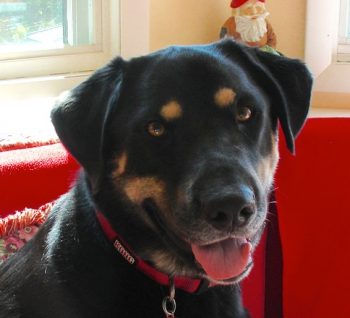
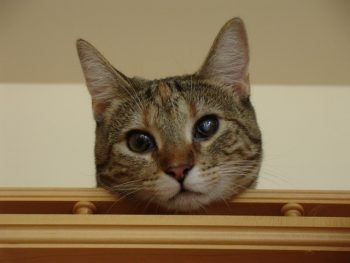
Since you’re in my kitchen, you have probably noticed that two cats and two dogs have checked you out. Well, maybe not Sunny, my calico kitty. She waits a few hours before making a special appearance. Cats and dogs are a big part of my life, so my protagonists usually feel the same way. Thanks for saying that I write them delightfully. My furry gang offers me a lot of inspiration—even when they don’t behave as they should!

You write three amazing series now – the Domestic Diva series with Sophie Winston and the Gang, the Paws & Claws series with Holly Miller and friends, and now the Pen & Ink Series with Florrie Fox and Crew. How do you keep ‘em all straight  and consistent – from book to book? What tips can you share? And is any one character your favorite?

Each series has distinct differences. It’s almost like going to different places on vacation. You’re still on vacation, but everything is different at the beach than it is in the mountains or in the desert. Maybe it sounds strange, but each of the protagonists seems real to me. They all have their own quirks. For instance, Florrie is young and not yet worried about her waistline, while Sophie is a little older and often succumbs to elastic waist trousers because of her fondness for good food. They are all sufficiently different that it’s not a problem to slide right back into their lives. I have to say though, that I don’t write more than one book at a time. That would confuse me!

Are you asking to pick my favorite child? <gasp!> I truly do love them all. Even the obnoxious characters are fun to write. People are so different. We’re all products of our experiences. Characters are the same. They may not always act the way you think they should, but people don’t do that, either. We see things differently depending on what we’ve been through in our lives.

What do you know now that you wish you knew at 42?

Oof! That’s a really difficult question. In terms of writing, the world has changed enormously. I think it’s a good thing that we don’t have crystal balls. They might stop us from moving forward while we wait for certain things to happen. That said, it’s always good to know that a writing career is in grasp for anyone who perseveres. It rarely happens overnight.

There were two big things that I learned. By nature, I am a helper and a problem solver. My first reaction is always to help. I don’t think that’s a bad thing, but there are times to shove over and let someone else do it. I had to learn to tell myself that it wasn’t my problem. I had to learn to step aside.

The other thing is that people are what they are. Accept them on their own terms or move on. People don’t change unless they want to. It has to come from within.

About the Author: Krista Davis

New York Times Bestselling author Krista Davis writes the Paws and Claws Mysteries set on fictional Wagtail Mountain, a resort where people vacation with their pets. Her 1st Pen & Ink Mystery: Color Me Murder debuts February 27th. Don’t forget about her 5th Paws and Claws Mystery is NOT A CREATURE WAS PURRING, which came out earlier this month. Like her characters, Krista has a soft spot for cats, dogs, and sweets. She lives in the Blue Ridge Mountains of Virginia with two dogs and two cats.

Connect with her on Goodreads | Twitter | Facebook

I am the Seeker by Keva Bartnick

I’ve always wondered exactly “what” I was, you know when you are little you feel better if you belong to a group, a clan, a tribe. I’ve heard several arguments for and against putting yourself in a box; defining yourself as a person. If I wanted to define myself I could use several hundred boxes in which to put myself.

If I wanted to describe myself by astrological standards I could say I’m a Gemini. This is true unless you go by the 13th symbol, then I’d be a Taurus. I could also say that I’m an INTJ; some days I am more E than I. It doesn’t change where I get my energy from that’s for sure. I’m also less J than I’ve ever been so the scale keeps sliding.

I keep expanding, I keep changing. I have always loved the saying, “the only person you should try and be better than is the person you were yesterday.’’

My dear friend Melissa Cynova, she wrote ‘Kitchen Table Tarot.’ Her cards have her name on them and one word; Reader. She was asked what that was all about. Her answer was brilliant as always. She said something to the effect that she didn’t want to be called a fortune teller, or anything like that, she was a reader.

She reads cards, she reads energy, she reads people. She’s freaking great at it too! She IS a reader. So I texted her the other day, and it went something like this:

Me: “I have a question for you. Since you call yourself a reader, which I believe is the most accurate description of you in the whole entire history of eva. What would I call myself? If I had to define myself or what I do in one word I wouldn’t even know where to start. Do you have any suggestions since you are the only wordsmith guru that I know.”

Lis: “Seeker”

Me: “I love it!!” *heart eyed emoji*

Lis: “;)”

Then I started the list, and I kept listing and listing……and listing. Would you like to see what Melissa knew about me? Pull up a chair, and grab something to drink, this might take a couple of minutes. So let’s begin, and in no particular order, this is me…”the seeker.”

I AM a Seeker of insight, of direction, of knowledge, of information, of wisdom, of the ways of truth.

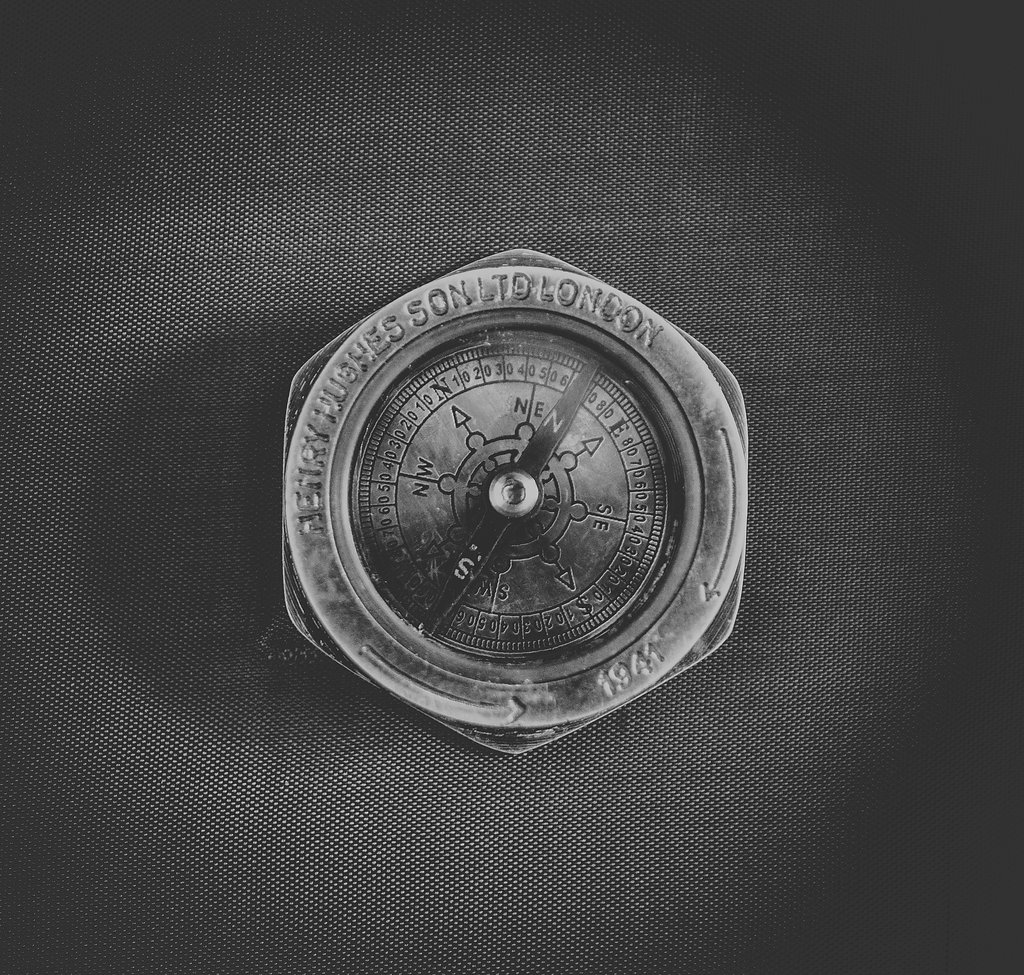
I am a seeker of great books, and of beautiful stories. I am a seeker of alchemy, of adventure, of life, of Northstars and compasses, and also of the mysteries.

Sometimes I’m a seeker of approval and praise, because who doesn’t like a little of that sometimes? I don’t need it to thrive though. I’m a seeker and seer of signs, of spirit, of the Universe and of God, the Holy Spirit, of ghosts and energetic signatures. I am a seeker of validation every once in awhile, but not all the time. I am a seeker of healing modalities and of shamanic journeys, of ancestral roots, of tools for healing toolboxes, and wonder.

I am a seeker of good coffee and good food, of great whiskey, of red wine and dark chocolate.

I am a seeker of inspiration, of the ancients, of guides (spirit and otherwise), of rocks and minerals, and of projects to complete. I am most definitely a seeker of recipes to try, of ideas, of art, of weather phenomena, and of great clouds.

I am seeker of wonder and feathers. A seeker of gift ideas for my loved ones, of places to go, of things to do, of people to see.

I am a seeker of patterns in the universe, of scientific discoveries, and of scientific theories.

I am a seeker of animal totems, of soul selves, of energy in general.

I am a seeker of great music that speaks to my soul, of kick ass dance offs, and of meanings to life.

I’m also a seeker of angelic touch points or symbols and signs. I am a seeker of heroes, of pay it forward moments, of finding kindness in the world. I’m also a huge seeker of small gestures with loving intent. Those moments that might not mean a whole lot to you, but that could change the destiny or the direction of the recipient.

I’m a seeker of the small magical moments, of deep belly laughs and giggles of children. I am a seeker of living IN the moment, of precious smiles, and of cups running over.

I am NOT a seeker of revenge, or anything hurtful or hateful. I will leave that to others, because it’s not me.

I have to admit a couple of things though; I am a finder too. I am a finder of happiness, of paths, of love in my life, sometimes great parking spaces, and tables in bars. I’m also blessed to also find part, even if it’s a small part, of my purpose. Finding after seeking, and being content with what you do find is one of those heaven on earth moments. I can be content with what I find. It totally is a thing, but that doesn’t stop me from seeking; sometimes it just deepens the quest.

I’m also a builder of foundations, but foundations take time, effort, and a “wanna”. That wanna makes you dig real deep down in your soul for change. Rome wasn’t built in a day, and neither are we. We take time, because we are worth it. I’m a builder of esteem, mostly of my own, but a girl has to start somewhere. I’m a builder of life paths. If you are interested in finding your own, I could help with that. With the right questions, and some elbow grease you too could stumble on part of your own.

Life is about the journey to unfold the purpose of why we are here. I’m on my journey, and will be till I die; constantly seeking, finding, building my dream that I’m living everyday. My life is never a dull moment, and neither is my journey. Honestly, I wouldn’t want it any other way; live well, dream big, seek often.

Seeking is a lifetime obsession of mine, actually it’s been the one thing that’s been a constant throughout. There are things that may change, but being a seeker I hope isn’t one of them. If I’m not seeking something then I don’t believe that I’m learning, if there is one thing that I do it’s learn. Learning is genetically encoded in my biology, in my DNA. I wouldn’t be me if I wasn’t seeking to glean copious amounts of information.

The thing about me is that I never ask or expect anyone to do anything that I’ve not already done, and experienced myself. If I don’t want to do it why should I ask anyone else do to it either. To me that just makes sense, ya know? Being a seeker you have to be okay with, and up for just about anything. Seeking takes a certain lifestyle, to which I am completely committed.

My motto: Learn, Experience, Practice, Share (Repeat)

About the Author: Keva Bartnick

Keva Bartnick is an artist, writer, and lightworker. Happily married mother of three; she’s been inspiring people to be their most courageous selves since 2015.
She can be found at Taleoftwofeathers.com

Portrait in Pen and Ink by Melissa A. Bartell

Paper and Ink

She didn’t collect selfies on her phone, and rarely allowed photos to be taken at all. When asked why she would joke that she was the most unphotogenic (which isn’t a word, but should be) person in the world.

But it wasn’t true.

The truth was that when she was five, her mother’s first husband (NOT her biological father – that’s a different story) said that when she smiled she looked like she’d swallowed lemons.


She lived a lifetime of avoiding photos because no matter what she did the image on the film or the screen was always sullen, or silly, or stupid, and she was none of those things.


She never kept a journal.

Why write things that no one will ever read? she asked, not really rhetorically.

But no one ever gave her a satisfying answer.


So she filled spiral notebooks with stories, stacks upon stacks of green-lined paper filled with glossy black or peacock blue. Wet ink. Roller balls. Micro-fine points. And when writing online became accessible to the masses, she did that, too, coding her first website in Lynx, creating her first blog in OpenDiary because LiveJournal hadn’t yet been invented.

(But you don’t keep diaries, she was reminded.)

(No, she said, I don’t write words that no one will read; people read this.)


The archives on her current blog, which is too infrequently updated these days, go back sixteen years. For a long time, she posted content daily, until she realized she didn’t want to write who she was.


She wanted to write who she wasn’t.

She wanted to take reality and give it a twist – just there – and a tweak – and in so doing, she revealed far more of herself than people realized.


She doesn’t keep journals. She doesn’t save photos of herself or others.

She doesn’t need external sources to help her retain the things that are printed indelibly on her memory: her mother’s singing (off-key, but enthusiastic), her husband’s eyes (twinkling blue, like the ocean she loves, and full of adoration), her grandmother’s gnarled hands and crooked fingers, her grandfather’s slightly bow-legged walk, the way her dog comes to visit her when she’s in the bath – biting at the bubbles and then shaking his head in confusion.


If you want to see me, she doesn’t say out loud, but expects people to understand, read my words.


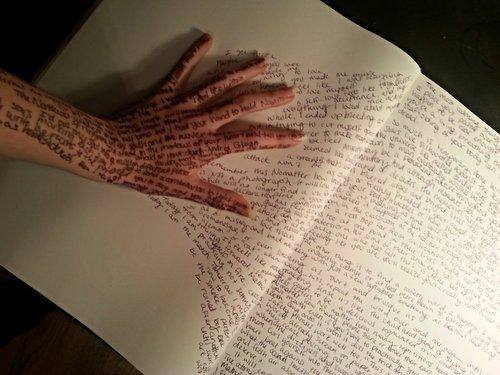
That ink is my blood.

That paper is my body.


Handwritten scenes stuck to the fridge on brightly colored post-its.

Scrawled phrases in purse-sized Moleskine notebooks.

Digital files full of stories, some that are ready and some that are still perking.


She thinks in music, because music was her first language. (Foghorns and sea birds and boat horns and her mother’s singing. )

But she lives in lines of text.

About the author: Melissa A. Bartell

Melissa is a writer, voice actor, podcaster, itinerant musician, voracious reader, and collector of hats and rescue dogs. She is the author of The Bathtub Mermaid: Tales from the Holiday Tub. You can learn more about her on her blog, listen to her podcast, or connect with her on on Facebook, Instagram, or Twitter.

Instrumental: How to Be an Ex-Drama Queen by Dona Murphy

I’m a sun-sign Pisces with a Leo moon sign: very emotional, definite flair for the dramatic and not shy about performing. It’s no mistake that in my younger years my Mom used to call me Sarah Bernhardt. Before your time? Heck, Sarah B. was before my time AND my Mom’s. Called the greatest stage actress in the world, the Divine Sarah ruled at a time when stage acting was very much larger than life.

Through the phases of childish acting out, teenage histrionics, and young adulthood I learned that drama wasn’t all it was cracked up to be. That lesson came with having to face and deal with real-life crises rather than ones I created from nothing. The real world can be a pretty tough and uncaring place. Drama Queens often learn the very hard way that frankly my dear, no one gives a damn.

There are plenty of Drama Kings – the male counterpart of the Drama Queen – and I’m not overlooking them here. For ease of discussion, I’ll use the term Drama Queens (or even DQs) as all-inclusive.

You can whine, cry, lock yourself in your room, throw yourself on your bed, weep and wail. Unless someone’s paying attention only you will feel and suffer the effects of your drama. The plain truth? Often no one is paying any attention.

Being a Drama Queen has never solved a problem and it often makes an existing problem even worse. We can start with an honest self-evaluation of our behavior. Ask, “How does this contribute to solving the problem?” If the answer is, “It doesn’t”, we’re on the way to overcoming the non-productive, destructive behavior. Logic can help us get over ourselves.

Drama Queen syndrome grows from self-centeredness and self-absorption.

For the DQ, “It’s all about me, all the time”. The growing-up process resolves a lot of this and we’re excused while we’re young and in our developmental years (toddler to teenager). It’s getting old by the time we reach young adulthood and is unappealing and ridiculous beyond that. It’s not easy being around someone addicted to drama.

So what about the people we know – or ourselves – who live from one crisis to another? There are people we know – or see when we look in the mirror – who seem to crave drama, create drama and appear to seek drama. You will find the Drama Queen who swears that she (or he) wants a drama-free life but drama seeks her (or him) out.

I’m not buying. Anyone who wants a drama-free (notice I didn’t say “problem-free?”) life can have one. It’s a choice. But being a Drama Queen can be like other emotionally-addictive behaviors. It can be a challenge to stop even when we’ve identified that the behavior doesn’t serve us or our best interests.

So what does it mean when we say someone is – or we describe ourselves as – or someone else says we are – a Drama Queen?

It usually means a person who over-reacts in a highly emotional way to any minor event, problem or setback. These are negatives – DQs don’t go over the top about the happy, lucky, even miraculous moments in life. The DQ has an emotional outburst that’s completely out of proportion to the event, problem or setback that has caused the upset (the “trigger”). Quite often, there is no trigger. The Drama Queen produces not only a tempest in a teacup, but also creates the teacup, saucer and tea from thin air.

The DQ is often the center of a constant whirlwind of frenzied but mostly unproductive activity. There is a sense that things are already out of control or are on the verge of going out of control. They navigate everyday life with overly-dramatic, negative thoughts, words and actions. They go off the emotional deep end whenever there’s the smallest disturbance in their world.

Movies, soap operas and other works of fiction – including reality TV programs – are full of examples. If you’ve seen “Gone with the Wind,” you’ll recognize Scarlett O’Hara as a classic drama queen. She was a beautiful, strong-willed survivor capable of withstanding and overcoming tremendous hardship. She was also her own worst enemy – a spoiled brat, vain and self-indulgent.

Some of the most enduring and charismatic fictional characters are DQs. The reader or viewer understands that this isn’t a real person. Drama is conflict and tension, and we’ve come to expect and accept over the top, bigger than life characters.

Popular, pervasive so-called reality TV has brought the dysfunctional lives of neurotic and outright psychotic men and women right into our living rooms. These are Drama Queens in their full, uh – glory.

All I can say is – if you enjoy these shows, check your own level of DQ. Why? Because the more over the top and extreme behaviors we see, the easier to excuse or rationalize own behavior. Enjoy these shows for their outrageousness. Do not use them as a model for your own behavior or for what’s acceptable behavior from others. Have fun and take them with the proverbial grain of salt. They’re supposed to entertain, not instruct.

What are some of the reasons for being a Drama Queen? What do they (or we) get out of it? What’s the payoff? Can we make it stop? How?

There are times when a person is in real trouble – emotional pain and turmoil, grief, loss, illness, extreme financial, personal or professional crisis. Needing and asking for help, support, encouragement and genuine sympathy is appropriate at those times. Not all extremes of emotion are the result of an addiction to drama.

Aside from these situations, here are some reasons Drama Queens create drama and some healthy alternatives:

Boredom

Simple as it sounds, this is one of the main reasons why drama queens behave the way they do. They’re just plain bored, and they haven’t found better, more creative and adaptive ways to deal with it.

Creating drama and a scene makes them feel that something interesting is happening. When boredom combines with underlying insecurities, the creation of drama serves as a distraction. No one sees that the DQ feels vulnerable, sad or frightened.

How much more effective it would be to turn to a trusted friend and say, “I’m sad. I’m scared,” and receive comfort and reassurance. Acknowledging and accepting the insecure feelings can bring real comfort from caring others and give the individual an opportunity to self-soothe.

A first step is to get – and be willing to stay – bored. Dealing with the comparative boredom of a life without created drama is a useful tool. Then consider finding an enjoyable, engrossing hobby such as drawing or painting, beading or other craft. It doesn’t matter if you’re good at it, you don’t need to be a fine artist. Redirecting the same imagination used for whipping up drama creates activity that gets you outside of your own head and into something positive, relaxing and fun.

Family background

Parents or other important adults who use high-level drama to deal with life’s challenges, frustrations and problems become role models for growing DQs.

You or someone you know believes their problems growing up were monumental (and sometimes, they were). You or they may also believe that no one else ever had it worse than they; that everyone else lived a happy, carefree, perfect childhood. Both of these things are untrue. This is the basis for justifying behaving like a Drama Queen. We’re not kids anymore. We can choose different, better ways to deal with our problems. First, by realizing that no matter how bad things were or are, they could actually be worse. Next by understanding that if they couldn’t be worse, drama will not resolve them.

We can achieve a balance. Self-care that includes changing our internal dialog combined with time spent focusing on and helping others creates a balanced world view. It can help us gain a more realistic perspective on our problems. We can find a new appreciation of all the things in our lives for which we can be grateful.

Seeking sympathy

This is a classic trait of a drama queen – poor little me! DQs often cultivate a sad, down, or worried demeanor. If asked, “How are you?” The answer is never “Good” or even, “OK.” They – and things in their lives – are always terrible, awful, dire and in an unstoppable downward spiral. Life always sucks. The DQ’s story is: “I’ve had such a bad life and I never get a break. Please, please feel sorry for me”.

A DQ who learns to engage in gentle, positive self-talk, practices daily rituals, prayers and meditations is able to support and comfort themselves. In this way, others need not be the only source of love and sympathy for the DQ.

Manipulating others

Manipulating others combined with sympathy-seeking takes advantage of other people. It makes them responsible for our well-being. The DQ’s story: “Now that I have you feeling sorry for me, of course you must help and rescue me! I’m in so much trouble and pain, you must take care of me!”

The need to have others come to our rescue reinforces the belief that we are victims. With practice we can learn to see ourselves as responsible and competent. Finding our own solutions to life’s problems and setbacks (especially the real ones!) is empowering. Then, it’s ok to ask for help. We don’t need to do it alone, but no one else can do it for us without our active participation.

Avoidance

Many DQs don’t want to deal with real issues and would rather cause a scene and seek attention – even if it’s negative attention. Heaven help you if you offer constructive solutions. They will shoot every one of them down or dismiss them. Their story is: “I can’t deal with that right now, there’s too much going on in my life”. There will always be too much going on in their lives so they don’t have to seek ways to create productive change.

DQ behavior is not about problem-solving, whether the problems are real or imagined. Go back to step one – and allow yourself (or the DQ in your life) to get and stay bored for a while. Along with several of the alternatives already mentioned a DQ can stop avoiding and start living.

Seeking attention

Drama Queens often have low self-esteem and believe that they aren’t noticed for anything positive; or aren’t noticed at all. They believe complaining, whining and blowing things out of proportion are the best ways of getting the attention they want and need.

Many people can only take Drama Queens in small doses and many others can’t take them at all. The result is that this type of attention-seeking works in reverse. DQs end up making a negative impression on other people who then distance themselves from the DQ rather than form a close relationship.

Go to a trusted friend (not everyone in your contacts list). Ask that person to share honestly with you a good quality they appreciate about you, or one memory they have of you that is positive and affirming. Do one small, anonymous act of kindness and don’t tell anyone about it. Enjoy it for the good feelings you get from it and notice yourself doing something good. You don’t have to change the whole world to make a difference.

The Rush

DQs enjoy creating drama for the adrenaline rush it provides. Living the Drama Queen life can be an emotional addiction. Emotions and behaviors create chemicals in the body. The body gets used to having those chemicals around, then becomes dependent on the chemicals. This sparks the craving for more of them, the way a physically-addicted person’s body demands their drug of choice.

Unlike physical dependencies where we know what it is we’re hooked on, with drama addiction we’re not aware of the fact that we’ve got a monkey on our backs. We know that we have a habitual way of acting or reacting and think that is who we are, it’s our identity. It’s not our “self” – it’s our brains and bodies trying to keep a stable chemical balance.

They (or we) feel pleasure, enjoyment or a rush – the reward for creating an uproar. A DQ may need professional help in kicking the habit.

Living in the present, self-talk that provides reassurance and comfort, and mind-body integration through deep breathing and regular, moderate physical exercise are useful coping strategies in stressful situations and times of crisis. With practice, these learned behaviors offer a happier, healthier outcome than drama-creation and drama-seeking.

Using pleasurable but calming sensory techniques and tools – aromatherapy, a walk in a beautiful park or other natural setting, even purchasing or gathering a bouquet of beautiful flowers to arrange and enjoy can all produce feel-good chemicals in our brains too – without the “side-effects” of drama.

Being able to tolerate the discomfort of not going into Drama-Queen mode helps one realize how unproductive and unsatisfying it is. Drama addiction doesn’t serve our highest good and only brings us temporary satisfaction. It doesn’t bring us any closer to the things we really want: happy, healthy relationships, peace of mind, to have and enjoy the good things in life. When we know what we’re doing isn’t working, it’s time to let it go and do something different.

A DQ deciding to abdicate the throne will probably find life dull, empty and boring at first. But that means finding and developing real ways to make life pleasant and fulfilling. Nature abhors a vacuum – and there are other, more meaningful and genuine experiences available to fill the void.

Understanding what makes a Drama Queen behave the way they do is unlikely to change their behavior. You might encourage them let go of some of the underlying causes for their habit. Remember that the choice to change is theirs alone.

You need to manage your own boundaries and maintain your own methods of healthy self-care, including knowing when to walk away. Of course if you’re the DQ, you now have some tools to help you hang up your tiara for good. Not ready yet? No worries – remember, “Tomorrow is another day.”

About the Author: Dona Murphy

Dona Murphy is the owner of Destiny Tarot. She lives and works in Lake Bluff Illinois as a Tarot reader, Intuitive Counselor and Life Coach. Dona combines her metaphysical and spiritual studies, natural gifts and real-world experience to help her clients solve problems and live their best lives. As she says, “The cards don’t predict your future, they help you create it”.

The Rules by Fran Hutchinson

Airplane taking off at sunset

smiling, smiling
when at last we meet again, hello

smiling,smiling
juggle time again
goodbye, too fast
and then you go

but well enough i knew the rules
and still i was fool enough to start

so it’s smiling, smiling when we meet
and smiling
slightly faded
when we part

Photo: satit_srihin / 123RF Stock Photo

About the author: Fran Hutchinson

Fran HutchinsonCurrently a resident of New Bedford, MA, Fran Hutchinson experienced a “poetic incarnation” while embedded in the 80’s folk scene in Boston.  Occupied variously as live calendar producer for WGBH’s Folk Heritage, contributing editor at the Folk Song Society of Greater Boston’s monthly Folk Letter, artist manager and booking agent, and occasional concert producer, she was surrounded by exceptional music and musicians, including those she had long listened to and admired.  The result was a rich source of inspiration for verse, of which she took full advantage. No longer writing poetry, Fran has recently been the recipient of a surgically altered back and two new knees, and spends her time reading and listening to music (natch), texting and emailing long-distance friends,  and hanging with her posse at the Community center.

Are Selfies Selfish? by Molly Totoro

The idea for this post came in the middle of a back-to-school meeting. As part of our professional development, we seek to understand students in order to teach effectively. We read relevant articles and then share as a group.

One such article identified today’s Generation Z as “intimate exhibitionists” – an interesting label that fostered discussion. One fellow colleague used this as an opportunity to voice her frustration with selfies. She interprets them as narcissistic. Why must they post every meal they eat?

While many agreed with her observation, I wasn’t so sure.

First of all, I’m not convinced this obsession with sharing selfies is limited to the younger generation. My newsfeed is filled with images of Baby Boomers sharing their latest adventure, or Millennials taking part in local political protests. While some of these pictures are frivolous and perhaps place too much emphasis on self, I enjoy this sneak-peak into the lives of others. And often, they inspire me.

For example, my high school friend posts pictures of her before-and-after weight loss of 80 pounds! She has maintained a healthy weight for three years and wants to encourage others they can do the same. Her self-discipline and honesty (she still occasionally gives in to her sweet-tooth) motivate me to take the necessary steps to ensure a healthy retirement.

Another example is my co-worker who recently learned her cancer returned after a three-year remission. Her gaunt face and scarfed head demonstrate a different kind of beauty. She faces this deadly disease with courage and bravery. I do not view her selfies as narcissistic. I applaud her vulnerability and willingness to show us true authenticity.

Unlike my teaching colleague, I enjoy mealtime selfies. From a practical standpoint, I find new restaurants to visit or recipes to try. These posts help me get out of my rut and experiment. But more than that, these everyday photos show me how to celebrate ordinary moments.

I spend too much of my life on autopilot. I can’t tell you what I had for dinner last night. I just know I didn’t go to bed hungry. I can’t tell you what I did all day, but I know I was exhausted when I got home.

Taking the selfie forces me to slow down. Setting up the food shot before taking the picture increases the anticipation of that first bite. I am more likely to savor the flavor and appreciate the texture. I learn to eat with my eyes as well as my mouth. I taste rather than gobble. I sip rather than guzzle. A simple meal becomes a memorable experience.

Selfies are also important because they draw us out of the shadows and into the light. As someone who suffers from low self-esteem and Impostor Syndrome, my comfort zone is behind the camera. But as I sort through boxes of family photos, I realize how few images I have of my mother and grandmother. And what I would give to have more tangible memories of them.

This “intimate exhibitionist” generation is teaching me to ignore what others think. Instead, I need to embrace who I am and share what I have to offer with the world around me. If I’m not willing to do that, I become invisible and ineffective.

In her book, The Gifts of Imperfection, Brene Brown discusses the difference between fitting in and belonging. She defines fitting in as assessing a situation and becoming who you need to be in order to be accepted. Belonging, on the other hand, does not require us to change who we are; it requires us to be who we are.

Selfies help us learn to accept ourselves. They force us to slow down and live in the moment. And they reconnect us with our past and inspire us toward a brighter future.

About the Author: Molly Totoro

Molly Totoro is a Connecticut Yankee currently residing in the Midwest with her husband and trusty basset. While Molly retired from full-time teaching in 2014 to pursue her writing dreams, she continues to work with students to achieve their writing potential. Molly recently published her first book, Journaling Toward Wholeness: A 28-Day Plan to Develop a Journaling Practice with the hope of inspiring others to experience the health benefits of writing their inner thoughts.
Connect with Molly at her blog, My Cozy Book Nook and on social media: FaceBookTwitterInstagramPinterest

Eyes on the Enter-Prize by Theresa Reed

Although I hire people for various tasks, my business is a one-woman show. I manage all the main details myself. Partly because I like being in control, but also, because of the nature of my work, strict client confidentiality is a must. Which means: I cannot have someone poking around in my inbox.

I do a pretty good job at managing all the different aspects of my work but over time, I began to feel overwhelmed. It’s a lot to handle and made even harder by my tendency to be an idea machine – cranking out posts, podcasts, and new offerings in record time. When you add that aspect on top of the daily grind, you can guess how tough it is to maintain at that output level for long.

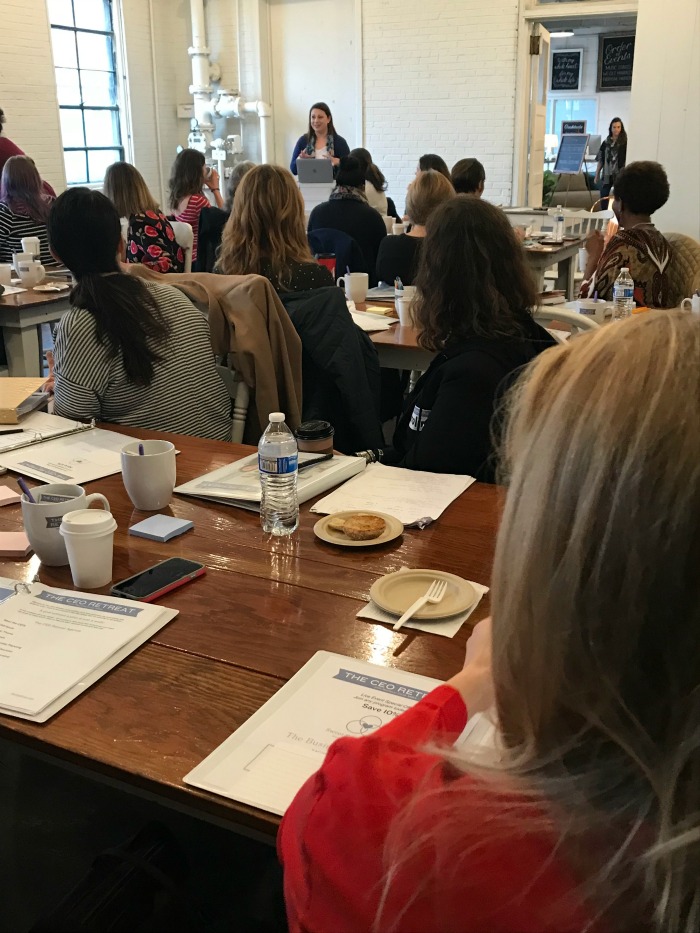
This winter, I did myself a little favor. I took a short weekend break in the middle of January to attend the CEO Retreat, hosted by Rachael Cook, a business coach that I admire. This was a big leap for me – I never travel in winter due to weather fears but also: it’s the heart of my busy season. That being said, the stars were aligned (yes, I always check what’s happening in the cosmos before making a business decision) so off I went.
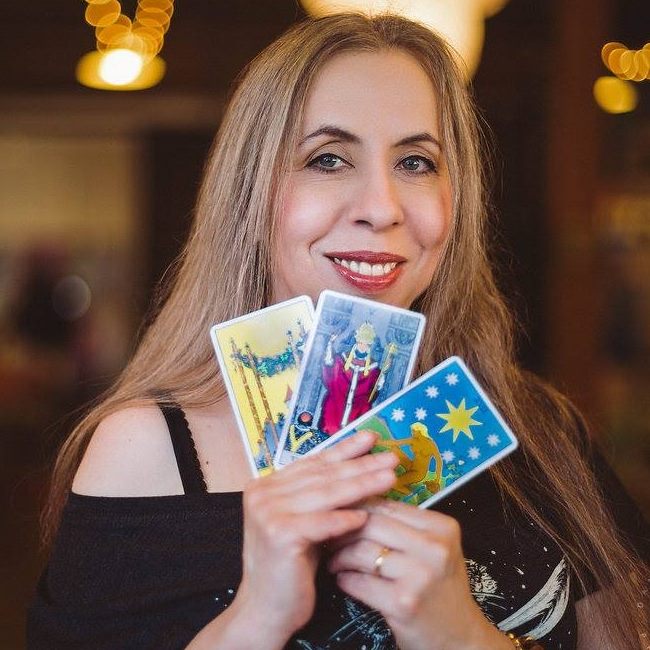
It turned out to be just what my business needed.

For one, I was able to spend time with successful female entrepreneurs, something I crave. Also, that time-out from work was a much needed break in a jam-packed schedule. But the most important thing for me was getting someone else’s eyes on what I was doing in my business.

The exercises that Racheal lead us through revealed something that I needed to see: I was doing too many things and my calendar for 2018 was beyond ambitious. It was outrageously full with too many ideas that I wanted to pursue. The risk of shiny object syndrome, or in my case, shiny idea syndrome, threatened to take me down a path that would have left little time for breathing room – or work that paid. This was no good.

I ended up scrapping 90% of my ideas.

I’m not kidding. They went back into the vault, where I could check back on them perhaps at a much later date.

This simple act freed me up more than I could imagine. No more wasting my time or energy on situations, products, or services that didn’t make sense or pay well. I’m crystal clear on my right audience and perfect offerings.

Better yet? I have time to do things that I haven’t been able to do in a while. Like finish a stack of books on my shelf. Take more cooking classes with my buddy, Jackie. Talk on the phone with friends that I haven’t spoken to in a decade. This is essential stuff that I often neglect due to work.

Sometimes you need to get other eyes on your business because you can’t always see what is plain as the nose on your own face. I’m happy that I took the weekend to look under the hood of my business with the support of someone who knows how to see the forest though the entrepreneurial trees. If you’re running a business and  perhaps running yourself into the ground, you may also benefit from getting an expert opinion on your business.

Another pair of eyes sees clear.

About the Author: Theresa Reed

theresareedTheresa Reed (aka “The Tarot Lady”) is a full time professional tarot reader. She’s also the author of The Tarot Coloring Book an illustrated romp through the tarot cards, and The Astro-Biz Digest, a weekly astrology forecast subscription service for entrepreneurs.

In addition to doing private Tarot readings, teaching Tarot classes, and speaking at Tarot conferences, Theresa also runs a popular website—TheTarotLady.com—where she dishes out advice, inspiration and tips for Tarot lovers of all experience levels.

Follow Theresa on Twitter and Instagram for her daily “Six Second Tarot Reading”—plus photos of her extremely handsome cats, TaoZen and Monkey.

Top and bottom photos by Danielle Cohen. Middle photo by Theresa Reed