Instrumental: The Shadow Side by Dona Murphy

“I have a little shadow that goes in and out with me,
And what can be the use of him is more than I can see.”
~ Robert Louis Stevenson

Stevenson wrote this as a children’s poem. He was definitely on to something well beyond the physical shadow he describes here. The unknown, dark side of our personality may seem at best to be a nuisance and better off repressed or ignored. At worst, it is uncharted territory filled with everything we’d rather not do or be. It is the side of our own human natures containing the dark, the shameful, the primitive. The frightening and the unacceptable.

The shadow resides in our unconscious minds. It helps us adapt to the demands of socialization. We begin learning from a very young age what is and isn’t acceptable to those around us – our families and society. We learn to repress and reject thoughts or actions that fail to meet family expectations or don’t conform to social norms. We banish them underground – into the under-conscious, abandoning them to the shadow world.

It’s that banishment and attempt at abandonment that causes a lot of trouble and grief. We reject parts of ourselves or refuse to recognize them to gain approval and acceptance. What usually happens is that these disowned feelings come out in the form of a projection. What we reject and deny in ourselves we then see in the behavior or motivation of others. We then label them bad people, our enemies.

If only we could see the gold hidden in the dark corners.

The child in Stevenson’s poem disapproves of the antics of his physical shadow much as we do with our psychic one. We judge these aspects, we want them to change. We want them to be well-behaved, predictable “good” little girls and boys.

Like most dangerous things, the shadow is a better servant than it is a master. Much of what we find there is dangerous and damaging. When we act on our most primitive, violent impulses – killing, dominating or preying on weaker beings – our lizard-brain denies us the chance to realize our highest human purpose.

Knowing and accepting that we feel these things is ok. Acting on them is not ok.

We can exercise good judgment without being judgmental. By acknowledging the full spectrum of human nature from the highest aspirations to the lowest urges we can mine the gold of self-discovery and self-knowledge. We gain deeper understanding and compassion for ourselves and our fellow human beings. We find a great source of empowerment and a wellspring of creativity.


The author who wrote the poem quoted here also wrote the novella, “Strange Case of Dr. Jekyll and Mr. Hyde.” The term “Jekyll and Hyde personality” describes a person whose behavior is changeable, unpredictable and frightening. The doctor struggles with his own good and evil tendencies. He creates a potion meant to hide and control the evil within himself. Instead, he unleashes it. The potion transforms him into a mysterious, cruel and violent being. His inner demon becomes his outer being and runs loose in the world. In this Victorian gothic cautionary tale, Jekyll completely transforms into the evil and repulsive Hyde. What we resist does persist.

We can turn our mistakes and wrong actions into opportunities for change. Instead we hide them out of guilt and shame.

Failure is a learning experience, not a reason to discount or belittle ourselves. Was there any shame in being an infant and not yet knowing how to use language or do arithmetic? No – we didn’t know how to do those things, but we learned.

We all do things wrong. Sometimes it’s purely accidental. Sometimes it arises out of momentary thoughtlessness or selfishness. Either way, these can be a source of healthy remorse. There is a healing process when we honestly own our behavior and offer an apology: “I’m sorry, I didn’t intend to hurt you” or “I’m sorry, I won’t do that again”. It’s healing for us and for others. Instead of a hidden shame we have an opportunity to learn and grow in our humanity.

I’ve been on a long journey to discover and befriend my own shadow. I’ve had the privilege in my tarot reading and intuitive coaching practice to assist my clients with their own shadow work and to facilitate healing and self-love through self-knowledge. When we can clearly see our shadow, we can also see our light.

Seeing both creates not perfection but harmony and creativity. We have within each of us both the light and the dark; together they generate tremendous transformative and transformational power.

I can’t think of a better way to close than by quoting Carl G. Jung, the psychiatrist who first proposed the theory of the shadow or shadow self:

Taking it in its deepest sense, the shadow is the invisible saurian tail that man still drags behind him. Carefully amputated, it becomes the healing serpent of the mysteries. Only monkeys parade with it.”

About the Author: Dona Murphy

Dona Murphy is the owner of Destiny Tarot. She lives and works in Lake Bluff Illinois as a Tarot reader, Intuitive Counselor and Life Coach. Dona combines her metaphysical and spiritual studies, natural gifts and real-world experience to help her clients solve problems and live their best lives. As she says, “The cards don’t predict your future, they help you create it”.

The State of the World Today by Keva Bartnick

What if I told you that it will in fact get better, that it does get better. Would you believe me? What if I told you that we all have to go thru a lot of darkness to make it thru to the light. Would you believe me still?

Here’s the kicker though, it takes time, lots and lots of time. Time is the magical word that will transport us to our desired destination.

Time unfortunately is also an illusion. The past is a memory, the future isn’t here, so all we have is the present. Our present is vital to our healing. The act of being present should be our salvation. Unfortunately, how many of us actually live there?

I’ve read one way is to practice mindfulness. Mindfullness starts with taking a few minutes each day to BE in your body. Sitting in silence, alone with ourselves, with nothing to keep our minds busy is torturous to some. Not running away to check our phones, checking Facebook, or other media outlets. Sitting, breathing, being. Feeling all the feelings when they arise.

We have a duty to ourselves to heal. We believe that the fight is outside of ourselves, and sometimes it is. What if I told you the greatest fight is not outside, but inside. If we heal our own darkness bringing it into the light, the outside starts to become lighter somehow.

Working through our own issues is the hardest work we will ever perform outside of being a parent to a child. When we shine the light into the darkness it seems scary at first. Like the boogie man under your bed, you believe him to be MUCH scarier than he is. When we get the courage to climb out of bed, tip toe to turn on the light, we find that the scary monster is nothing more than a pair of crumpled up socks. Looking inside ourselves works like that too.

When we bring our darkness to the surface time and time again with mindfulness eventually less will come to the surface. Overtime we will have worked through all the issues healing ourselves. When we do that work first, I can promises you that the world will indeed look very different than it did before.

What if World Peace actually starts with being mindful of ourselves?

About the Author: Keva Bartnick

Keva Bartnick is an artist, writer, and lightworker. Happily married mother of three; she’s been inspiring people to be their most courageous selves since 2015.

She can be found at Taleoftwofeathers.com

Sunday Sensations: Feels Like Home

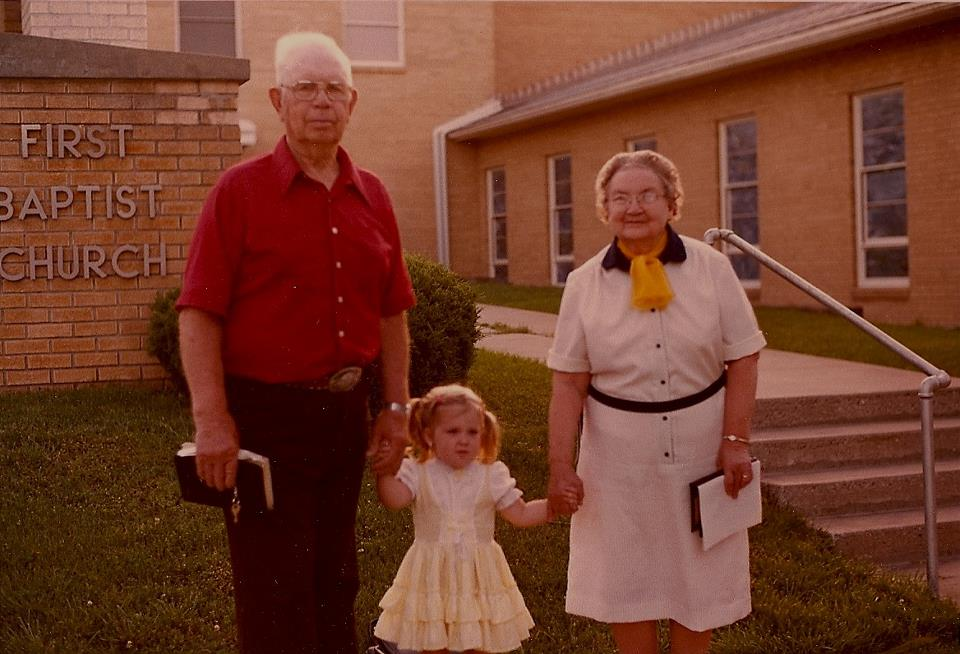
My great-grandma, Golda, was home.

No one in the world smelled like my great-grandma, Golda. She was a small woman, yet her hug could engulf you. To this day, I can’t tell you what exactly she smelled like, but it was a smell all her own.

To an inner city kid, the drive from Los Angeles to Missouri never entirely made sense until we got to Grandma Golda’s house. The long hours. The boredom. The tension. The countless times I had to pee, but it was awhile to the next rest stop. All those things melted away when we saw her on her front porch. Everything slowed down once we got there. Suddenly, there was time again. As if we’d traveled back in time and could reclaim some we lost.

Missouri felt different too. This was the place I learned about sulfur in the water, the evils of humidity, the joys of dressing up “to go to town” and how happy a pizza delivery could make one person.

There was a comfortable familiarity whenever we’d go to Grandma’s house. There was the ceramic deer in the lawn that every grandchild and great-grandchild had posed by. I can still hear her grandfather clock ticking away if I close my eyes. Everything sat in the same place. Even if a couple years went by, I could count on those things. They were just always there. In a world where it seemed everything changed in a whirlwind around me — Grandma Golda’s house was a constant.

Golda


Grandma was a storyteller. We’d have a meal and not leave the table for hours while she told stories and talked. She had a twinkle in her eye that I often saw reflected in my grandfather (her second child). The family’s history, our legacy, everything was contained in my Grandma’s stories.

Sometimes, when life gets too hectic or stressful, I sit out on my front porch, close my eyes and remember my Grandma Golda saying “come in, I’m so happy you’re here.”

For a minute, it feels like home again.

About the author: Tabitha Grace Challis

Tabitha Grace ChallisTabitha is a social media strategist, writer, blogger, and professional geek. Among her published works are the children’s books Jack the Kitten is Very Brave and Machu the Cat is Very Hungry, both published under the name Tabitha Grace Smith. A California girl (always and forever) she now lives in Maryland with her husband, son, and a collection of cats, dogs, and chickens. Find out more about her on her Amazon author page or follow her on Twitter: @Tabz.

Wax Lips by Anita Marie Moscoso

Milo and his wife Jingle were riding the 377 Commuter Bus into Seattle, just before nightfall last Halloween.

The 377 made a special run on Halloween Night through Chestnut and Post Street where, according to the Weekly Entertainment Guide, Wax Lipsthere were over 50 “Spooktacular” Halloween Attractions to choose from for a night of “Blood Chilling” fun.

The bus was nearly full of Witches, Pirates, Vampires, Mummies, at least three Frankenstein’s monsters, a variety of aliens, and one guy who had “Beer” written on his forehead and tinfoil wrapped around his head.

Then there was Milo and Jingle.

Jingle was sitting next to the window, and when she sighed it frosted up a bit and he watched her take her finger and draw a frowny face into it.

“Feeling a little down, Jingle?”

She shrugged.

“Come on Jin, cheer up, it’s your favorite day of the year!” Milo reached into the front pocket of his worn, soft brown leather jacket and he fished around for a bit.

“Your favorite.” He held up a set of big red wax lips. “Look it says they taste like cinnamon.”

Jingle looked at the wax lips and then she went back to drawing on the window.

After a minute or two she held out her hand. “Give.”

He handed her the bag and she tore it open with her teeth and popped the lips into her mouth and started to chew.

“So, what should we do first? The Haunted Morgue? The Haunted House on King Street? Oh. No wait. I know. The Haunted Fun Run.”

Jingle stopped mid slurp and smack. “What the hell is that? A Haunted Fun Run? What do they do –  get dresfiery pumpkin - moscososed up like Sexy Nurses and Vampires and run from Bar to Bar?”

“No. It’s this bicycle club. They get dressed up and decorate their bikes and ride around town. How’d you like to race around town for a bit? It’s a great night for it. We can hop on a couple of those Ride Free Bikes and -”

The Bus turned a dark corner and bumped down a poorly lit street and thumped along neglected train tracks.  “That’s the dumbest thing I have ever heard of in my life. Who started that one?”

Milo slid away from Jingle a few inches and said, “Gracie Frost.”

Jingle spat the wax blob out of her mouth and it hit the floor with a very unappetizing splat. ” Why is that old cadaver organizing anything for Halloween?”

“Well. It’s a free country for starters.”

Jingle glared at him and didn’t stop until he looked away. “She’s trying to fit into the Halloween scene.” he almost whispered.

“I wish she’d fit herself into a body bag and leave the work to the professionals.”

“I know, Jingle. I know. But you know. Gracie Frost cramping your big night aside, I’d like to check out the Haunted Morgue. If you don’t mind.”

Jingle shrugged.

“Or. We could check out the Haunted House on King Street. I heard that this year they’re going to have a Paranormal Team show up and film everything. It won’t air till next year of course. But it would be fun to show up and try to get on camera. Don’t you think?”

“I think you are a simple creature Milo. However, you do come up with some great ideas.”

Jingle was visibly starting to cheer up. ” It’s a shame what happened to that Paranormal Team at the Haunted Morgue last year. I’ve heard they STILL haven’t found all of their, you know, parts.”

Jingle burped behind her hand and Milo shook his head. ” Don’t DO that Jingle.”

“Well. If it wasn’t a Haunted Morgue before, it sure as heck is now. I’d bet Snickers Bars to Caramel Corn Balls on that.”

There were two Princesses sitting behind Milo and Jingle and they looked at each other and then back down into their phones.

Street scene- moscosoWith a hiss and a thump against the curb the bus came to a smooth stop in front of

SEATTLE’S MOST TERRIFYING HAUNTED HOUSE

and everyone got up with their own special Halloween battle cries and started to file down the aisle.

Just before they got to the doors, the alien with bright silver paint on her face and “BEER” stopped Milo and Jingle.

“Love the costumes man and” Beer said to Milo and then he took a look into Jingles dark orange eyes and slightly down turned smile set in her heavy jaw and he said, “Ma’am.”

“You guys are going to win the Costume Competition for sure. Those are the BEST Werewolf costumes I’ve ever seen.” The Alien reassured them.

Jingle stood there with her mouth open, her long white teeth turning a little blue under the lights shining from above them. “Son of a bi- what is your problem E.T.”

“Happy Halloween.” Milo trilled as he shoved Jingle out the door and down the steps to the sidewalk.  ” There’s a costume shop around the corner. I can’t believe we forgot to dress up AGAIN.”

About the Author: Anita M. Moscoso

Anita Marie Moscoso Anita Marie Moscoso was nine years old when she decided to become a Writer/Pirate/Astronaut. She is now so far away from the age of nine that it’s comical, but it turns out that she did become a writer, and she’s told stories about Pirates and Astronauts. Anita has also worked in a funeral home, explored the cemeteries of New Orleans alone, and has a great dog named Hamish and had a cat named Wolfgang.

More about Anita (in parts) can be found at her blog: Enduring Bones.

I Sit at a Table for One by Bella Cirovic

I sit at a table for one. I order a drink and settle in while listening to the conversations around me. I wonder how many people have sat here before me and how many will come after.

I remember one Friday night I had a group of women gathered around my table talking about everything from weight loss and gain, to love, to lost love, to friendships and relationships gone good and gone sour, to where we all find ourselves now in our life journey. We had champagne cocktails and little bites of different cheeses, crackers, almonds, fig spread, salamis, and our staple: blue corn chips and salsa. The spread felt extravagant in a way. The oracle cards came out. We went deep.

In both scenarios, alone or in a group, I do fairly well. I believe it’s because I possess the qualities of both an introvert and an extravert. I also have a kind of confidence that has come a long way since my 20’s minus the bravado or aggressive need to let my presence be known. Silence speaks volumes. So does a smile.

Side note: I smile more often now at strangers. I make conversation with the elderly at stores and lunch spots. It makes their day (and mine) and they have the best stories to tell. This you must try at least once.

There are so many different flavors of people. We adjust our seasonings to fit how we want to feel in our daily life, in our skin, and who we want to become next. We evolve. We change. It is a blur of onward motion, a train that keeps moving. Some people stay on for the ride, some jump on or off when they need to, and some just fall away because they’re comfortable at a different pace.

I so get this now.

I used to wonder if it was just me. What was wrong with me?

Gathered around my table (and for the sake of all that is good, I have been gathered in circle around many fires but have never GOT THIS) I realized that I am not the only one who goes through these achey growing pains. We’re all moving at a pace that is right for us, going through our own evolution, experiencing what our light and shadow looks like.

My daughter is inside of her own evolution. She is going back and forth on decisions around school and life choices. She is thriving in both theater and music. She wants to couple those skills with a degree in education and see where she lands with it. She’s driving and working and living the typical teenager life.

Mine, right now, requires massive amounts of space. My home needs tending. My body needs some love. My spark has reignited and I am ready to do great things but my body wants to move slow. So I listen.

I sit at a table for one. I listen to the stories that swirl up into the ethers. I tune in, absorbing the details. I feel less alone in my own life when I’m privy to hearing what others are going through. I don’t find that creepy if I find myself alone within earshot and I am NOT an eavesdropper. Well. I may be.

I sit at a table for one and pour out my heart and soul to the person sitting across from me. I let the tears go. I wonder if anyone is listening or if my release just floats on up into the celestial bubble above me.

And still, I feel blessed. Because it doesn’t matter. I know what I need and I allow myself that so that I might level up. It opens up a big amount of space within me for more salt, more mercy, more love.

About the Author: Bella Cirovic

Bella Cirovic BioBella Cirovic is a photographer and writer who lives with her husband and daughter in the suburbs outside of NYC. She writes on the subjects of self care, body love and nourishment, crystals, essential oils, and family life. Catch up with Bella at her blog: She Told Stories

Instrumental: In Light & Shadow by Kelli May-Krenz

Being seen fully in light and knowing strength can be found in the shadows.

For me being in the light is living fully and being seen. There is a beauty in embracing all that you are with truth. I think our pasts are like shadows. Finding ways to take the hard pasts, the shadows if you will and turn them into light. Living fully and practicing putting light around dark places that no longer serve us helps us breathe new life into our days.

Practicing seeing the light out of shadow is much like a yoga practice, a new walking routine – the more we practice the more we are allowed to start feeling better.

Learning to live on the bright side of light is freeing to your soul.

One of the most incredible strengths we can give ourselves is to practice daily on letting go. Letting go of old patterns, old hurts, dark stuff gives us the permission and room to fill up with more light and goodness. Perhaps inside those shadows are the lessons that give us peace, hope and more self love.

I often admire at the end of each day, dusk. You know that moody time when light seems to quietly pass and rest. The soft shadows that remain show us a new way of seeing, searching, listening to how these moments make us feel.

What if we could write down, hold onto those feelings we have when we see the light become a shadow. I believe it is at that time we start really seeing and noticing. In the noticing we can learn so much about who we are, what makes us special.

Once we start noticing and looking at moments from different perspectives we begin growing in new ways. Light sneaks in.

I know that my daily practice of noticing has helped me live in the moment. Living in the moment is living in the light. Learning from the shadow lessons.

I find magic in these shadow lessons. Being aware of what shadows you hold inside and really taking time to explore those feeling can help us learn comfort in our own skin.

Being a light  for others is a very sacred gift to give – simply showing up to listen. So many times it is in the listening we actually fill ourselves up.

I love knowing that from shadows comes light. Without the dance of the shadow and light movement seeing life would remain the same. Taking the really hard moments and gathering light around them (by listening hard to your truths) will forever chase the shadows.


I have taken some very hard events in my life and practiced seeing light around them. Looking from above these dark shadows and seeing my light lesson, it is not easy but, I promise with practice it starts becoming a habit.

Often, I write what I am seeking until light appears to show me how to find peace. Start simply by looking, listening and writing down moments that fill you up. What about those moments have a common thread? Simple acts of slowing down and being kind to you will start you on your way.

Creating a daily journal of what you notice, how you feel in the morning versus how your feeling a night helps you to see what makes you feel most alive. Goodness is always waiting for you to see, listen and love more. Loving your shadows and light in your life will be a changing force. I wish this for all of us with great love.

About the Author: Kelli May-Krenz

Kelli May-Krenz BioKelli May-Krenz is an award-winning graphic designer and illustrator with more than 20 years’ experience. Her ability to capture, express and visually communicate the needs and visions of her clients has produced designs and promotional materials for everything from independent boutiques to Fortune 500 companies.

Her new stationery line, Pearl Button’s World, recently debuted at the National Stationery Show – where two of her designs were selected as finalist for Best in Show – and she has been featured in an array of print publications including Somerset Studio, Art Journaling, Somerset Life, Somerset Memories, Somerset Apprentice, Room to Create and Uppercase magazine.

Connect with Kelly on Facebook and Instagram.

Direct Hit by David Bontumasi

This was trouble. The front lobby door was locked and it had just started to rain. Douglas wasn’t due back for another couple of hours – two maybe – and I would lose my light by then, anyway. I stood on the small step at the base of the doorframe and leaned my shoulders flush against the door, trying to stay dry. The overhang above the door was short, and water dripped from the corners in streams as steady as the rain. Across the street and into the park, the rain glinted and shimmered in the deep black night. It hadn’t even sprinkled, the sky opened and it just started coming down. Hard. I watched the rain and tried to catch my breath. I could hear a woman’s laughter above me, from an open window somewhere in the building, in conversation with a man whose words I couldn’t quite make out. Sounded like the guy next door. Big mouth, big talker. I’m sure he was telling some stupid lie of a story — his hands tied, fighting a tiger in the African plains with only two toes on his left foot and his manly wits. I heard her giggle and moan as I watched the drops spear the night. The night sky was ugly and wet. I just hoped Douglas has his key this time.

I shook my head. I should have known better. I should have never let myself get into a situation like this. Seriously. I was old enough to avoid shit like this, I had told myself countless times. I’m too smart for this. No cell phone, no connections to family, and having a roommate at the age of thirty-nine with a tiny apartment in a rundown neighborhood on the far southwest side, drinking too much, spending too much time alone — not wise moves. Hell, I knew that.
It wasn’t until after midnight that I realized the rain wasn’t going to let up any time soon. No Douglas, no apartment key and I was stuck. I was wet, angry and a little drunk. A losing combination, I know, but it was a fact I couldn’t change. Not then. The streets were relatively free of cars and besides an errant city bus plowing through the black puddles, the only foot traffic was couples, crouched under their own outstretched coats or umbrellas, moving between the lights. My head pounded. The sound of the rain was deafening, an echo so loud that I had to close my eyes to concentrate. My brain wouldn’t move and I had to roll it and knead it to get it going again. I pushed my thumbs against my temples, rotating, erasing any errant thoughts. Who else had a key? Who had a key and how could I get it? I needed it now. Right now. Fuck man, no one had a key. It was useless. I was clean now and part of being clean is trying to control the flow of people in your life as much as possible. So I had made a point of that – no friends, no family, no one beyond Douglas Mac, and even he didn’t have a key half the time. He was useless, though his name was on the lease.

I saw Kaz Kajinski out of the corner of my eye, a solid black figure coming down the street. He had a way of walking on his toes, almost bouncing, that always made me leery. It was as if he couldn’t wait to get where he was going and he was ready to pounce, left or right, once he got there. He didn’t seem to care that it was raining. His hands were shoved into his front pockets, and he held his head up, letting the rain drip along his cheeks. I could not hide, the doorway was too shallow, and besides, I was sure he would see me anyway. And he did.

“Hey Curtis, man, whatcha doin’?”

“Nothing,” I said, defensively. “Hey Kaz. What’s up, man?”

He stopped and faced me. The rain poured over him, falling from his eyebrows, water streaking around his cheeks and under his chin. He stood in the night with a glow encircling him, like an apparition. Or a god. It freaked me out. I hunched my shoulders and started to shiver as I wrapped my arms tighter across my chest.

He cleared his throat and cocked his head a little. He asked if I had seen any action tonight.

“No, man. I haven’t been looking though. I’m done, man, you know that. I’m doing well, feeling good.”
His eyes flickered and he shook his head. “Yeah, yeah, yeah,” he said and I could tell he was high. His eyes darted around and his head bobbed, repeatedly. I knew he was anxious to keep his groove going. The first lesson on the streets is that a junkie can’t be a junkie on his own. It was all about “keeping the next high close by.” You had to know who to know, and which cluckers could get you in contact with some good stuff. Quickly and safely. I used to have great connections, and junkies knew that. I was never a junkie. I used, yeah, of course, but I wasn’t a junkie. I didn’t have the same needs they did. I brought people together, bridging the gap between those in need with those who had the goods to fill that need. But everything can change in three and a half years, man. Two years in prison was bad enough but, I’m telling you, you lose everything on the streets when you try to go straight. You may as well be dead. You’re like a man with no arms. Kaz knew that. He scratched at his shoulder, and looked right through me like I didn’t even exist.

Kaz gazed down the street and then turned and looked up, past the dimly lit shops to my right. Man, he was geeked. He was searching but nobody was coming to save him, no quick fix suddenly appeared. I could feel his rhythm, and I knew that feeling. The high was just starting to come down and the panic was kicking in. He had to score quick to continue to ride. He had to reverse the slide and he had to do it quick. His panic fed my own. I could feel it. I could feel my skin tighten, my veins beginning to jump. I had an itch all over my body.

“Yeah, you try Peanut?” I asked, running the back of my hand against the small of my back.

“Huh?”

“Have you seen Peanut? He usually has something.”

“No. No, last time I saw him,” he started shaking his right hand, down near his side, flipping it from side to side. “No, he fucked me up, man. He went bad. Zoomer and shit. And when you do that shit, it comes back fast. He fucked up way too many people. He’s probably dead by now, anyway, for all I know.”

“Oh shit,” I said. “Well, what about Barrio? You seen him lately?”

“No, no,” he mumbled. He stopped shaking. “Barrio? No, man.” He ran his fingers through this hair and squinted. “Barrio? Is he still around?” He looked at me and then up at the rain, his expression taking in each drop. He ran his hands over his face.

“Shit, man. It’s fucking raining. I am on an inter-planet-ary mission and it is fucking raining on me. All I know is that I need to score some jum. I need to score now.”

“Yeah.”

I could feel the itch, his need — that’s all he was thinking about. I missed that feeling of going from high to high, connecting the dots, keeping it going, never touching down. Of knowing what you needed, even if the need quickly escalated to desperation. When you’re clean, you don’t have the same drive, that singular goal – just score some scratch, some money, somehow, and keep your bedbugs close by, keep the next hit skin deep. It was all you had to think about, all you had to do. Being straight was hard, man. I hated to admit it. It was really hard. I missed having that focus.

The rain continued to fall in sheets beyond Kaz and I felt my skin tighten with a dampness that went deeper than my pores. Christ, I wish I could slide past this door, climb those stairs and get into my apartment, climb into my bed. I thought of my couch, two floors up. Comfortable and dry. Well, it wasn’t a couch, really. It was the backseat from some old car but it was warm and dry and that was what I was thinking about when Kaz leapt at me. His right forearm jammed into my chest and his right fingers gripped my chin and cheek. The weight of this illiterate meatball forced me back, the force slamming me against the door.

“I need to score, man! I need it now!” he cursed into my cheek.

I tried to push him, but his full weight was flush against me and I couldn’t get my arms in place. I couldn’t budge him. He was much further gone than I thought and I remembered what my old man used to say, “Never fight with an ugly man, he has nothing to lose.”

This man was not only ugly but this man was high and this man was desperate. And he had me pinned, my back against the door. I don’t know what my old man would have said about that. I had no intention of fighting but I didn’t want him passing out on me either or throwing up or totally freaking out. I couldn’t keep him away from me, instead he collapsed on top of me. I couldn’t budge this dumb fuck, not an inch.
“Kaz, come on, now, man, I know what you want, I know what you are going though man, but I’m trying to help you, man. I tell you, I ain’t got nothing. I’m clean now.” I tried to push again but he was still too heavy. “Shit man, get off me.”

“I’m trying to help you think of someone. I’m on your side, man.” I had to keep talking, saving my strength. “Okay, what about Peterson? Peterson, little black guy over on Longrove? He’s good, he usually has something. C’mon man, I’ll take you. Let’s go, c’mon, get off me. You gotta move if you wanna groove. That’s what Mac says, right?”

Kaz took his weight off me, and I lightly pushed him the rest of the way back. His lips were curled, his eyes were closed and his face was contracting in a wince. The liquor in my body was beginning settle and I sensed his high was stating to slip away too, literally oozing out of his pores.

“Ah fuck,” he said, without moving his lips. He rocked back on his heels, his arms at his side.

Something was not right. I didn’t know what was wrong with him or what he wanted. He seemed to have given up.

“Ah, man.” His eyes opened just a sliver. “Fuck, fuck, fuck.”
I looked down and saw that his right hand was covered in blood, all the way up his arm, over his sleeve. Kaz stood in front of me, his body weaving softly left and right, his face in a pained grimace.

When I looked to my stomach, it too was drenched in a red so deep it was black. The stain spread up my shirt in a definitive line like ink, and yet, there was a softness to it, soaking the fabric, inching its way up to me, welcoming me to sleep. I hadn’t felt the knife at all, but knew instantly what had happened. I couldn’t understand it. Why now? I’m clean now. I’m doing good. Why now?

Kaz turned quickly and ran down the street, disappearing in a sheet of rain and darkness, as I slid down the front of the door, my butt resting on the stoop. I tried to just breathe. My lids got heavy and the sky turned light. I closed my eyes.

About the Author: David Bontumasi
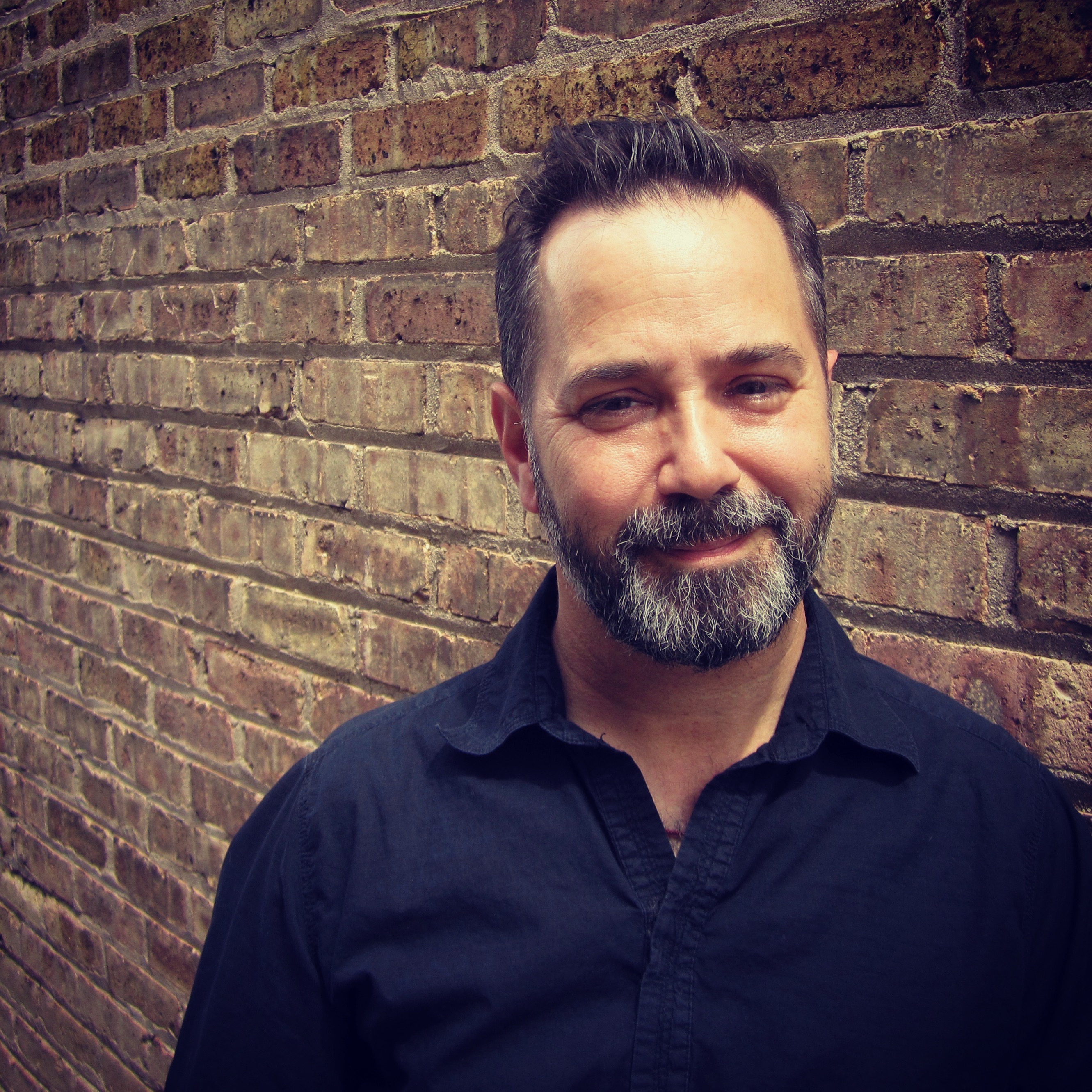
David BontumasiDavid Bontumasi’s short stories have been featured in several publications, including HyperText Magazine, The RavensPerch, Black Mirror Magazine, ETA, The Deadline and Back to Print. His novella Of This Earth, set in Sicily and Michigan in the 1920’s, was published in 2015. He is hard at work on his second book, a collection of short stories. Originally from Flint Michigan, David now lives in Chicago with his wife and two sons.


Out of the Fog by Therese Wood

I wish I could say that my thirteen years in a religious cult were just a bad experience, or that I’ve been out for so long now that they’re a distant memory. For my everyday life this is true, but when I reflect on my inner life I am faced with the fact that I have distanced myself from almost every form of spirituality because of those thirteen years.

I rarely share my experiences of this time in my life because inevitably there are comments from people that are either ignorant “How could you be so gullible” to arrogant “I would never fall prey to anything so extreme”.

If it were only that simple no one would ever join, but cult recruiting and the subsequent group assimilation is complex and most often misunderstood.

During those years, when life was black and white, I felt confident and righteous. Life was very easy and compartmentalized-there was right and wrong and it was dictated by the word of God, period. Of course the interpretation of the word of God was filtered through a warped and craven ego-driven philosophy of bible-believing cult leaders. There was a clearly defined “us” and “them” that was cultivated by culling us from our families and friends and slowly building a sense of “community”.

There was also a repugnant sense of elitism instilled with a hatred of anyone who was not “us.” The current political climate has reminded me of how easy it is to hold firm to ideology that appeals to a sense of being right, even if at the core you fear it isn’t. The fervor at rallies often builds a sense of belonging, and affirms one’s sense of truth with others that believe the same.

One of the distinctive constructs of any cult is that they keep you busy serving others and keep your mind occupied with the tenants of the common beliefs. Our days and nights were full and we were committed to constant meetings, prayer times and work. We were constantly told to remain free from the world and to refrain from engaging with others or participating in anything that smacked of popular culture.

Anyone who might meet me today would never suspect that I was ever a cult member, or that I was obedient to a code of conduct that the Amish might find restrictive, but I was. Every small decision in my life, I gave over to the higher authorities who, I was told, knew better. This of course never turns out well and after years of struggle I left the cult having given many years of total commitment to the group, and almost none to myself.

I had to find out who I was again, who I had come to be.

Now, all these years later I realize that my spiritual life then was like a bright colored helium balloon. So full, so buoyant and light. Full of lies, but easy to carry. When I left the cult it was like someone took a pin and popped that balloon hard. In an instant my life went whirling, crashing and spinning until I stopped. It felt good to stop, and it also felt empty.

If all those things I learned were lies, and I knew they were, then what was true?

Over the years I have looked high and low for the truth about God, about life and about me. I still have no solid ground to stand on. I know more about what I don’t believe and less about what I do. I cannot give myself to any church, can no longer read the bible without bile seeping up my throat and have been unable to say I have any solid space to call my spiritual home.

Here is my philosophy, born out of tattered scraps of soul searching- I believe there is something more, something hidden, something larger than us, unseen and ever present. I hope that this true, but I don’t know for sure. As I get older I don’t have to have all the answers anymore.

I just continue to hold to the truth – that my past is just a shadow and there is still more light ahead.

About the Author: Therese Wood

Therese Wood is an essayist and has written most extensively on the topic of death and dying. She enjoys reading and writing poetry, collects sacred kitsch, practices Tai Chi and dabbles in art just for pleasure.

Long Journey by Patricia Wellingham-Jones

Photo by Jesse Bowser on Unsplash

The river we paddled together,
skirting brushy banks,
avoiding boulders, portaging
around the crashing splendor
of waterfalls, that river
changed character
when you died.

I was becalmed for awhile,
drifting in aimless circles
on a still backwater
until I picked up my paddle,
continued downstream.

The river formed a new channel,
curves and flows more gently now
through grain-filled fields
and lowland woods
with shy browsing deer.

I paddle, one side then the other,
keep the canoe steady, on course,
admire the broad sky,
the herons and kingfishers,
splash of a trout.

About the Author: Patricia Wellingham-Jones

PatriciaWellingham-JonesPatricia Wellingham-Jones is a widely published former psychology researcher and writer/editor. She has a special interest in healing writing, with poems recently in The Widow’s Handbook (Kent State University Press). Chapbooks include Don’t Turn Away: poems about breast cancer, End-Cycle: poems about caregiving, Apple Blossoms at Eye Level, Voices on the Land and Hormone Stew.

All in Its Time by Tamara Palmer

In retrospect, like the best-laid plans, it all worked out great. This past spring I released my novel, Missing Tyler, twenty years after I began the first draft. To the world my launch appeared nuanced and executed with amazing precision. But what I know now, being in the driver’s seat, is that the years building up to the release are what enabled my novel to receive such a tremendous reception. The novel and I grew up together.

I take comfort in the knowledge that the years my novel went unpublished was not wasted time. I often scolded myself for not doing more at various times and society further reinforces that notion for all unpublished authors. But not only was that period not wasted time, it was perfect and necessary. Now that I’ve launched my novel into the world, I can honestly say it was released at just the right time.

I began writing Missing Tyler in the mid-nineties in a writing group in Lafayette, Colorado. At the time I was Tamara Wachtel. I was a few years out of college, bursting with creative energy to finally see a story all the way through to the end – to write a damn novel. Prior to that point, the most I’d written was a fifty-page screenplay as a senior thesis in college. I had various novel starts, all around the same page count. One of my favorites of the unfinished novels featured a main character who mainlined caffeine the way others shoot heroin.

As I matured past my early twenties and moved into a house with my fiancé, it was time to tackle a novel. To completion. One story was screaming for attention over the others. It wanted to be told. Those early drafts of Missing Tyler still exist somewhere on a floppy disk in a box buried in the house I now call home.

As I grew, Missing Tyler grew with me. I matured from girlfriend to fiancée to wife, becoming Tamara Palmer. Then I became a mother. I grew in my day job, carving out a career path from recruiter to manager to director to career coach.

It’s tempting to regret life achievements not having happened sooner but twinges of regret are tempered with understanding that if I had had my daughter when I was younger, my second novel, Finding Lancelot, would never have been written. The freedom I felt to attend a ten-day creative writing retreat in England in the early 2000s likely won’t return for many years to come. And when it does, I’ll be a different woman, post-menopausal, with a lifetime of history to fuel a different story.

According to my original plan, I was supposed to have sold Missing Tyler in 2008. At that time, I had secured a reputable New York agent who was shopping the book around. It was a terrible market though, and while there was some interest, no one was willing to take a stab at a newbie writer tackling death and grief. After my agent accumulated a substantial pile of rejection letters from all the big publishers, she told me she was out of ideas. Being seven months pregnant, I countered that I was out of time. With a baby on the way, I didn’t have time to continue exploring a creative venture.

Besides being immersed in new motherhood, the next group of years found me entrenched in learning the ropes of running a business. I gained exceptional knowledge in marketing and, more importantly, social media marketing. These have been my secret weapons in getting Missing Tyler launched into bestseller status on Amazon and, I hope, will be my ticket to getting Missing Tyler known beyond the confines of my communities.

The years I spent raising my daughter coincided with the burgeoning acceptability of self-publishing. I couldn’t have published Missing Tyler on my own in 2008 and achieved anywhere near the reception I have today. The backbone of social media has been the key to marketing my novel and social media has grown up a lot since my daughter was born.

And while I crave the legitimacy of inclusion in the writing club that a check from Random House confers, with self-publishing I was able to design my book cover exactly as I wanted. I didn’t have to modify my ending or change my title or make myriad other creative adjustments that the establishment likely would have insisted upon. Retaining complete creative control reminds me that this is truly my accomplishment. Even if one day Random House comes calling and offers a check in exchange for my book, I’ll know the offer is rooted in wanting a piece of what the world already loves and that I created on my own.

Also, had I published in 2008, I would not have had the last five years of public-speaking practice, during which I have honed my voice and have come to understand what it is to command a crowd and truly engage an audience. I’ve loved the book signings I’ve had thus far, feeling comfortable speaking to an audience about my journey and the importance of creativity in my life. I am a captivating speaker because I’ve learned what people respond to in my delivery. I look forward to every new speaking event.

And, had I published in 2008, I would not have had the years of maturing that allowed me to fine tune the manuscript. I would not have been able to read my novel through the lens of a mother. I would not have met my critique partner, David, who edited Missing Tyler through the eyes of a father.

They say everything happens in its time. Some say it’s God’s will, some say it’s just the roll of the dice. Whether it was fate, God, or a fluke, I’m grateful that I sit here at 45 reflecting back on a lifetime (to date) of experiences that brought me to this doorway. I crossed the publishing threshold armed with good writing chops, social media savvy, public-speaking ease and comfort, and a twenty-five-year working history of strong connections. Into the proverbial Crockpot they went to bring my novel into the world with force.

No regrets.

About the Author: Tamara Palmer

Tamara Palmer knew she was going to be a writer before she could even write. She would play elaborate dramas out with her Barbies for days, even weeks, on end. As she got older, the stories made their way onto a typewriter. Tamara obtained a BA in English/Creative Writing from Eastern Illinois University, and has had a handful of short stories and essays published online and in print.

Tamara blogs frequently for the career advisement business she founded in 2012, greyzone. “Missing Tyler” is her first novel. She lives just outside Chicago with her husband, daughter, and assortment of pets.